

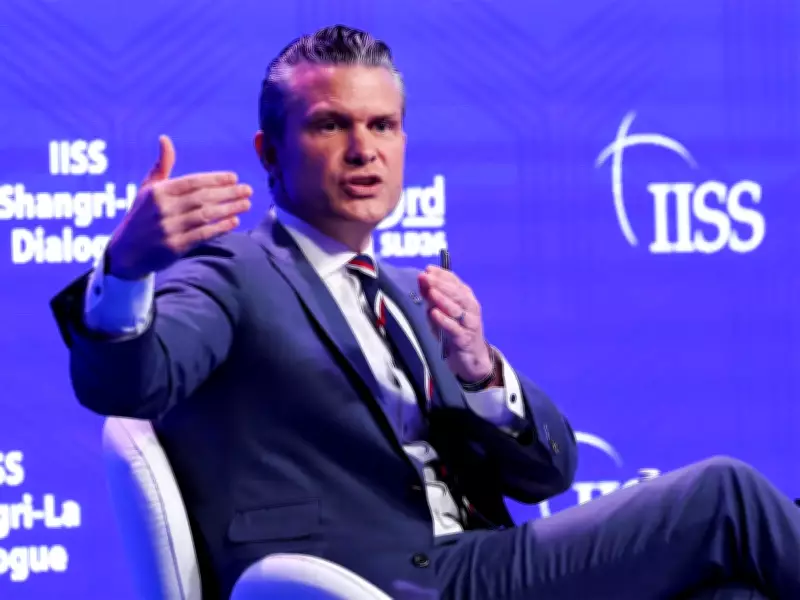
United States Secretary of War Pete Hegseth has lauded India as a critical anchor for maintaining stability in the Indo-Pacific region, while also pitching the co-production of Javelin anti-tank guided missiles in India.
Hegseth's Remarks in Singapore
Speaking at an event in Singapore over the weekend, just days after US President Donald Trump's visit to China, Hegseth emphasized India's strategic importance. In South Asia, India is a critical anchor to hold the line. A powerful India acting in its own self-interest advances our shared goal of maintaining a balance of power in the region, he stated.
Javelin Co-Production Plans
Hegseth also discussed plans to manufacture the Javelin anti-tank guided missile (ATGM) in India. The Indian Army had originally selected the Lockheed Martin and RTX (Raytheon) Javelin system, but eventually procured the Israeli Spike family of ATGMs after disagreements over transfer of technology (ToT). Both RTX and Lockheed Martin currently have a strong presence in India.

We have also committed to pursuing co-production with India to advance capabilities like Javelin anti-tank guided munitions. Real, tangible steps to improve the collective readiness of our forces. This kind of industrial muscle is not just a long-term goal; it is an immediate operational imperative, Hegseth said.
Addressing US Stockpile Shortages
The United States experienced shortages of the Javelin system after sending more than 10,000 units to Ukraine during its conflict with Russian forces, according to a US military report. The Washington, DC-based Center for Strategic and International Studies (CSIS) warned that US stockpiles fell after large transfers to Ukraine, which production at the time could not immediately replace. Opening a production line in India could help address that shortfall.
India's Own MPATGM Development
India is also developing a similar system, the Man-Portable Anti-Tank Guided Missile (MPATGM), which could complement or compete with the Javelin.
Growing Interoperability
Hegseth highlighted growing interoperability between the two countries, noting the Master Ship Repair Agreements (MSRAs) that allow each country to repair the other's ships in port. It is building heavy industry and logistics capacity to sustain high-end military operations, including the ability to repair and maintain our shared platforms and support US Navy vessels operating forward in the theatre, he explained.
The remarks come just days after the QUAD foreign ministers' meeting in New Delhi, underscoring the deepening defense ties between India and the United States.






