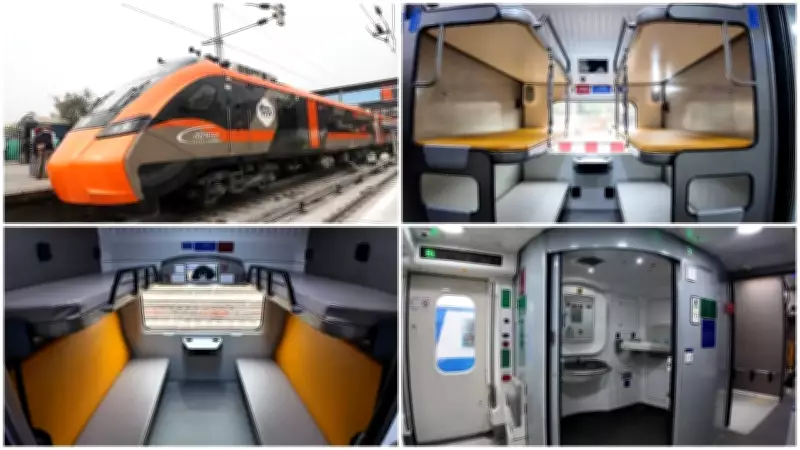
Indian Railways is set to transform overnight travel with the introduction of Vande Bharat sleeper trains, which promise enhanced passenger comforts and higher average speeds compared to existing premium trains like Rajdhani and Tejas Express. Over 250 new trains are planned for rollout in the coming years, aiming to revamp long-distance rail travel and offer a world-class service experience.
First Vande Bharat Sleeper Train
The first 16-coach Vande Bharat sleeper train was introduced earlier this year on the Guwahati-Howrah route, substantially reducing travel time and upgrading passenger amenities. This train has a design speed of 180 kmph and an operational speed of 160 kmph, where permitted. However, the project has faced delays, with the first ten train sets behind schedule due to extensive testing and feedback-driven improvements.
Manufacturing and Design
A total of 260 Vande Bharat sleeper trains will be manufactured. The first ten are being built by BEML in collaboration with ICF, Chennai. A multi-thousand crore project for 200 train sets has been awarded to two consortiums: Kinet, an Indo-Russian joint venture, will produce 120 trains, and the Titagarh-BHEL consortium will make 80. The first prototype from Kinet is expected by the first quarter of 2027, with annual production targets ramping up to 25 train sets by the third year.

The Kinet variant will be comparable to the BEML sleeper but includes design enhancements such as improved stair ergonomics, enhanced seat cushioning, reduced noise and vibration, optimized lighting, and better space utilization. Additionally, ICF will produce around 50 Vande Bharat sleepers with 24 coaches and a pantry car, with designs being finalized.
Speed and Operational Advantages
Vande Bharat sleeper trains use distributed power without a locomotive, enabling faster acceleration and deceleration, thus increasing average speed and reducing travel time. Railway experts highlight that this technology offers effective competition to air travel, with premium features surpassing Rajdhani and Duronto trains. Jagannarayan Padmanabhan, Senior Director at Crisil Intelligence, notes that the sleeper is a technical and commercial tool to offer true premium overnight alternatives to short-haul aviation and extract higher revenue per asset.
Shri Prakash, a retired Railway Board member, explains that operational advantages include higher average speed, lower transit times, and reduced terminal detentions. The trainsets eliminate the need for locomotive reversal at terminals, further enhancing efficiency.
Revenue Potential
The Vande Bharat sleeper project holds immense revenue potential for Indian Railways, which currently runs most trains at a loss due to subsidized fares. Padmanabhan states that the project is materially positive for revenue in the premium overnight segment, where airlines have been attracting higher-yield AC passengers. A faster, hotel-like sleeper can convert flyers who value overnight time savings and city-center convenience, while pricing below last-minute air fares. With premium/AC travel as a growth driver, Indian Railways projects ~16% passenger revenue growth in FY26, and the sleeper is a yield and market-share defense tool.
Shri Prakash suggests that the new trains will be useful for Rajdhani and Duronto routes, allowing higher prices for faster service, though cautioning that higher prices may shift passengers to air travel. He recommends confining Vande Bharat sleepers to Delhi-Kolkata and Delhi-Mumbai routes initially, where dedicated freight routes exist, to avoid slowing freight trains on mixed-traffic routes.

Infrastructure Upgrades Needed
Experts emphasize that to fully realize the project's potential, Indian Railways must upgrade infrastructure. Padmanabhan advises coupling rolling stock rollout with targeted corridor upgrades, modern signaling, disciplined route selection, and commercial yield management. Achieving effective average speeds of 80–100 kmph over 500 km in 5–6 hours with only two stops can make railways competitive on door-to-door time. This requires dedicated premium paths, strict dwell time control, and a clear overtaking strategy. Removing speed restrictions through track, turnout, and overhead equipment upgrades on key corridors is crucial, along with running longer formations, increasing frequency, and using balanced dynamic pricing.
Future Outlook
Indian Railways is focusing on speed, with bullet train projects and the semi-high speed Ahmedabad-Dholera project recently approved. Vande Bharat sleeper trains, like their chair car versions, aim to offer a premium experience with faster, safer travel and minimal turnaround time. The success of these trains will depend on coordinated infrastructure upgrades across major routes.