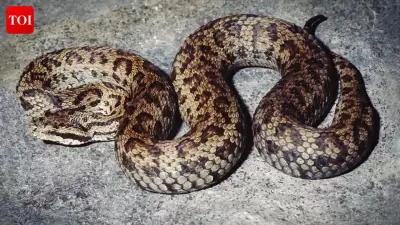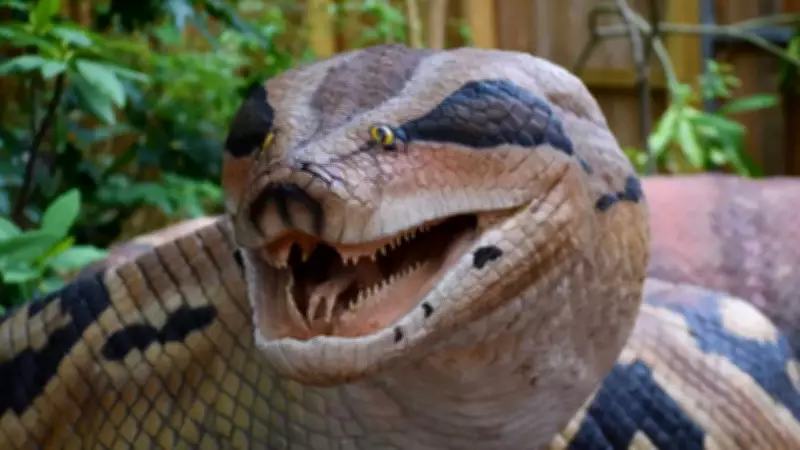
From travel enthusiasts to residents of Australia, few topics spark more campfire intrigue than the continent's terrifyingly toxic reptiles and creepy crawlers. For decades, Australia's wildlife statistics have repeatedly warned locals and travelers about its venomous snakes. Indeed, Australia is home to 20 of the world's 25 most venomous land snakes. But how did this happen? Read on to find out.
The Scary Situation
From crawling around backyards to hiding inside houses, Australia is gradually experiencing an increased number of snakes. To understand how one continent became a snake hotspot, one must peel back millions of years of evolutionary luck, isolation, and predator-prey dynamics.
How Did This Happen?
According to wildlife experts, the secret behind Australia's deadly reptilian roster comes down to two major factors: ancient hitchhikers and harsh landscapes. About 100 million years ago, Australia split from the southern supercontinent Gondwana, isolating its native wildlife. Roughly 60 million years ago, a massive disaster wiped out the vast majority of reptiles on the isolated landmass. When the continent drifted north into warmer waters, it was a biological blank slate. Around 40 million years ago, the first snakes successfully colonized Australia by swimming from Asia. By pure evolutionary chance, these snakes belonged to a single family: Elapidae.

What Are Elapidae?
Elapids are a specific family of venomous, front-fanged snakes that includes cobras, mambas, and coral snakes. Almost all modern land snakes in Australia evolved from this single lineage of venomous ancestors. At least 65% of Australia's snake species are venomous, compared to just 15% worldwide. Other continents have ample populations of non-venomous snakes like pythons, boas, and corn snakes that dilute their venomous content. Australia simply skipped that diversity because the venomous family got there first.
Harsh Environment
Why did venom become so highly toxic? Australia is predominantly arid, hot, and dry, making food scarce. If a snake bites a mouse that runs 50 yards before dying, the snake loses its meal to heat, ants, or other predators. Evolution favored snakes with hyper-potent, fast-acting neurotoxins that drop prey instantly. Over millions of years, an evolutionary arms race between snakes and resilient native prey pushed venom potencies to extreme levels.
Australia's 20 Most Venomous Snakes
Inland Taipan (Oxyuranus microlepidotus)
Often called the "Fierce Snake," the Inland Taipan possesses the most toxic venom of any land snake. A single bite contains enough neurotoxic and hemotoxic venom to kill an estimated 100 adult men. Despite its reputation, it is incredibly shy and lives deep in remote, arid clay cracks of central Australia.
Eastern Brown Snake (Pseudonaja textilis)
This species holds the title for the second-most toxic venom of any land snake. Unlike the reclusive Inland Taipan, it thrives in agricultural areas and suburban fringes across eastern Australia. Fast and easily agitated, it is responsible for the majority of snakebite fatalities in the country.
Coastal Taipan (Oxyuranus scutellatus)
With the longest fangs of any Australian snake (up to 13mm), the Coastal Taipan is a massive, highly nervous predator found in northern and eastern coastal regions. Its venom is a lethal cocktail of neurotoxins and coagulants causing rapid paralysis and preventing blood clotting, with an untreated mortality rate close to 100%.
Western Brown Snake / Gwardar (Pseudonaja mengdeni)
Widely distributed across dry, semi-arid regions, the Gwardar (an Indigenous name meaning "go the long way around") is fast-moving. Its venom is slightly less toxic than its eastern cousin, but it strikes with extreme speed and injects a large volume causing severe kidney damage.
Mainland Tiger Snake (Notechis scutatus)
Thriving in cooler, wetter regions of southeastern Australia and Tasmania, the Tiger Snake is recognizable by its dark and yellow bands. Found near swamps and farms, its powerful myotoxic and neurotoxic venom stops breathing and dissolves muscle tissue.

Mulga Snake / King Brown (Pseudechis australis)
Though called the "King Brown," the Mulga belongs to the black snake family and is the heaviest venomous snake in Australia. It delivers a massive 150 mg of tissue-destroying venom in a single bite.
Common Death Adder (Acanthophis antarcticus)
Unlike other elapids that flee, the Death Adder relies on camouflage, burying itself under leaf litter. It uses a worm-like lure on its tail and possesses the fastest strike speed of any snake—biting and returning to position in less than a tenth of a second.
Lowland Copperhead (Austrelaps superbus)
Found in colder, alpine regions of southern Australia and Tasmania, the Lowland Copperhead is uniquely adapted to low temperatures. Its neurotoxic venom is highly lethal, but it is remarkably unaggressive.
Dugite (Pseudonaja affinis)
Native to coastal dunes and bushlands of southwestern Australia, the Dugite adapts well to human habitats, frequenting golf courses and residential areas in Perth. Its venom contains powerful procoagulants causing rapid blood clotting.
Eastern Small-Eyed Snake (Cryptophis nigrescens)
A small, secretive, jet-black nocturnal snake with a pinkish belly, it produces a long-acting myotoxin that attacks muscle tissue, including the heart and respiratory muscles, many hours after the bite.
Red-Bellied Black Snake (Pseudechis porphyriacus)
One of eastern Australia's most commonly encountered snakes, this glossy-black reptile features vibrant red flanks. While venomous, it is generally docile; its bites cause painful swelling and bleeding issues but are rarely fatal.
Rough-Scaled Snake (Tropidechis carinatus)
Often confused with the Tiger snake, this highly nervous species is found in isolated rainforest and wet coastal forests in Queensland and New South Wales. It possesses highly toxic neurotoxins and hemotoxins and defends itself fiercely.
Collett's Snake (Pseudechis colletti)
A stunning snake with dark bands over a pink or salmon-colored belly, found exclusively in central Queensland's black soil plains. It possesses highly toxic venom attacking muscles and kidneys but has a placid demeanor.
Blue-Bellied Black Snake (Pseudechis guttatus)
Also known as the Spotted Black Snake, it occupies forests and woodlands of inland Queensland and New South Wales. It is highly venomous, causing severe local pain and clotting disorders, though generally shy.
Stephen's Banded Snake (Hoplocephalus stephensii)
An agile, tree-dwelling elapid found in eastern Australian forests, it carries a potent procoagulant venom causing severe internal bleeding and will strike if disturbed.
Pale-Headed Snake (Hoplocephalus bitorquatus)
A close relative of Stephen's Banded Snake, this nocturnal, tree-dwelling species has a light gray head against a darker body. It is an aggressive striker, delivering a potent neurotoxic bite.
Broad-Headed Snake (Hoplocephalus bungaroides)
This endangered species is restricted to sandstone rock formations around the Sydney basin. Its venom is highly toxic with nerve-paralyzing traits, but human interactions are rare.
Curl Snake (Suta suta)
Named for its defensive posture of coiling tightly and hiding its head, this small but highly venomous elapid is found throughout Australia's arid interior. It hunts lizards at night and inflicts a painful bite.
Bardick (Echiopsis curta)
A stocky, heavily built snake found in semi-arid shrublands of southern Australia, often mistaken for a Death Adder. It relies on camouflage and delivers a highly toxic bite with strong neurotoxins.
Yellow-Faced Whipsnake (Demansia psammophis)
A slender, lightning-fast snake found across almost the entire Australian mainland. Its venom is highly toxic by weight but produced in small quantities with tiny fangs, making its bite excruciating but rarely life-threatening to adults.