Bharat Taxi App Launched by Home Minister Amit Shah: A Cooperative Revolution in Ride-Hailing
In a significant move to transform India's transportation landscape, Union Home and Cooperation Minister Amit Shah formally launched the Bharat Taxi application on February 5, 2026. This innovative ride-hailing platform, developed as a driver-owned cooperative initiative, promises to disrupt the market dominated by private aggregators through its zero-commission model and commitment to fair pricing for both drivers and passengers.
Drivers' Hopes and Early Experiences
The app, which began its pilot phase in Delhi-NCR and Rajkot during late November and early December 2025, has already attracted thousands of drivers. Ashok Kumar (55), a traditional kaali-peeli taxi driver at New Delhi Railway Station, and Dharmesh Goswami (44), who operates from Rajkot International Airport, are among the early adopters. Despite initial challenges with booking volumes, both express optimism about the platform's potential.
"I earned only Rs 350 for a 15-km airport trip that would typically fetch Rs 600, but I believe earnings will improve as more customers use the app," said Ashok. Goswami echoed this sentiment, noting that while current users at Rajkot airport are primarily those who experienced the service in Delhi, he prefers this government-backed alternative over private companies that deduct substantial commissions.

The Cooperative Model and Government Backing
Bharat Taxi is operated by Sahakar Taxi Cooperative Ltd (STCL), a multi-state cooperative society established in collaboration with the National Cooperative Development Corporation (NCDC). The initiative enjoys support from prominent entities including Amul and NABARD, with representatives from these organizations forming part of the interim board.
Drivers joining the platform can purchase shares in the cooperative, with a minimum investment of Rs 500 for five shares. This equity participation entitles them to dividends once the company becomes profitable, creating a sense of ownership rarely found in conventional ride-hailing services.
Current Reach and Expansion Plans
According to Vivek Pandey, Chief Operating Officer of Bharat Taxi, the app has already registered more than 2.5 lakh drivers, with over 1 lakh remaining active daily. Approximately 7 lakh customers have downloaded the application, generating around 10,000 bookings daily across the country.
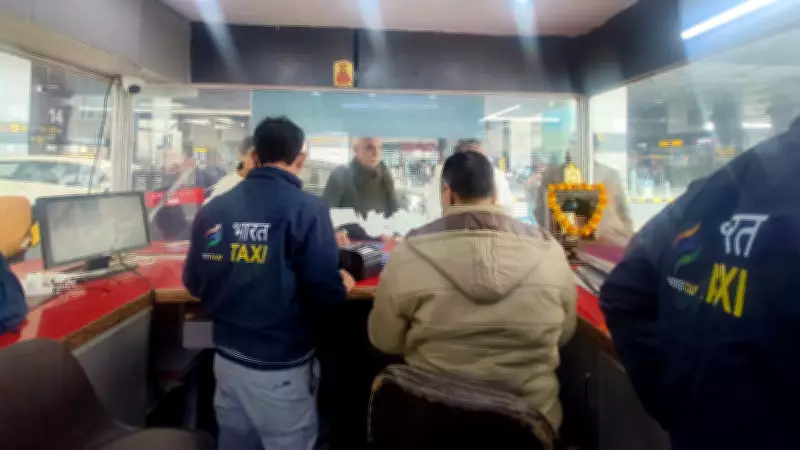
The government aims to make Bharat Taxi operational nationwide by 2029, positioning it as India's largest ride-hailing platform. To increase visibility, the app is establishing presence at high-footfall locations including airports, metro stations, and railway terminals. At Delhi airport alone, Bharat Taxi has taken over pre-paid taxi booths, handling an estimated 5,000 daily bookings through approximately 3,000 kaali-peeli taxis.
Pricing Strategy and Operational Challenges
Unlike private aggregators that often implement dynamic pricing, Bharat Taxi promises transparent and reasonable fares. "We don't want to be the cheapest, but the fairest price in the market," explained a government official involved with the project.
However, some early users have reported teething troubles. Anuroop Chauhan, a passenger at Delhi airport, mentioned longer queues due to operational inefficiencies and noted fare increases compared to previous services. Meanwhile, drivers like Nazir Mahervani from Rajkot hope the cooperative model will allow them to help establish fare rates that account for rising operational costs, including increased CNG prices and vehicle maintenance expenses.
Future Roadmap and Industry Impact
Starting February 2026, drivers will transition from completely free usage to a minimal daily subscription fee—approximately Rs 30 for taxis and Rs 18 for auto rickshaws. This nominal charge contrasts sharply with the 30-40% commissions typically extracted by private aggregators.

The government has actively promoted Bharat Taxi through official channels, encouraging central and state departments to facilitate promotional support within their premises. Strategic partnerships with organizations like Delhi Metro provide preferential treatment at select stations, while collaborations with IFFCO Tokio for insurance services demonstrate the advantages of government backing.
As Bharat Taxi expands to more cities including Ahmedabad—where 30,000 taxi and autorickshaw drivers registered within a week of its January 20 launch—it represents a bold experiment in cooperative mobility. By empowering drivers as stakeholders and prioritizing fairness over profit maximization, this initiative could fundamentally reshape how Indians commute while providing sustainable livelihoods for commercial vehicle operators across the nation.