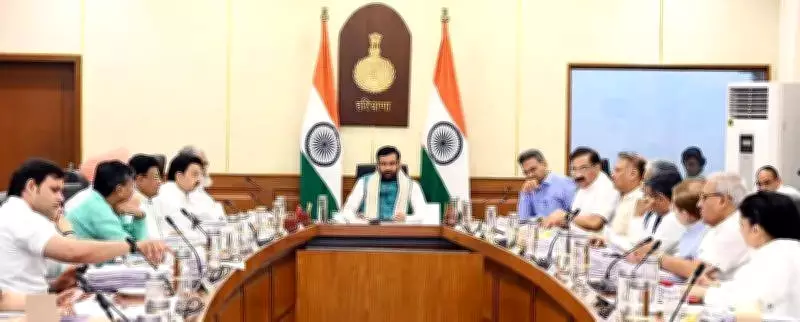
The Haryana cabinet, led by Chief Minister Nayab Singh Saini, has approved a stringent new regulatory framework for aggregators and delivery service providers in the National Capital Region (NCR). This move aims to boost clean mobility and control pollution in the region.
Key Provisions of the New Rules
Effective retrospectively from January 1, 2026, the new rules mandate that only CNG, electric vehicles (EVs), and other clean-fuel alternatives can be inducted into aggregator and delivery fleets within Haryana's NCR districts. This restriction specifically applies to three-wheeler auto-rickshaws, which must now be CNG or electric to join existing fleets.
Alignment with National Guidelines
The cabinet approved the substitution of Rule 86A of the Haryana Motor Vehicles Rules, 1993, aligning state law with the Ministry of Road Transport and Highways (MoRTH) guidelines and Commission for Air Quality Management (CAQM) directives. The updated framework introduces a mandatory licensing regime and strict onboarding norms for both drivers and vehicles.

Safety and Insurance Measures
The provisions include passenger safety measures, grievance redressal systems, induction and refresher training programmes, insurance coverage, and cyber security compliance for mobile applications. According to the rules, aggregators must provide minimum insurance coverage of Rs 5 lakh for passengers, health insurance of at least Rs 5 lakh for drivers, and term insurance of Rs 10 lakh for onboarded drivers.
Vehicle Requirements
The rules also mandate installation of vehicle tracking devices, panic buttons, first-aid kits, and fire extinguishers in applicable vehicles. Aggregators will have to operate 24x7 control rooms and call centres for passenger assistance and complaints.
Registration and Licensing
Registration and licensing will be processed through the official website cleanmobility.haryanatransport.gov.in.