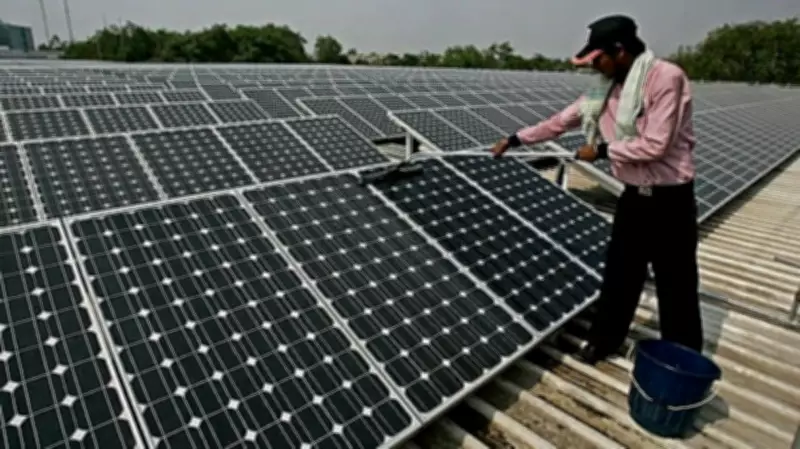
India has achieved a significant milestone in its renewable energy journey, with the total solar power capacity reaching 150 gigawatts (GW) after adding a record 44 GW in the past year. This development was highlighted by the Ministry of New and Renewable Energy (MNRE) in response to a representation made by the NatConnect Foundation to Prime Minister Narendra Modi on Earth Day.
Government Initiatives Driving Solar Growth
The MNRE stated that the government has launched several major programmes to promote solar energy across the country. These initiatives include the PM Surya Ghar scheme, which aims to install rooftop solar systems on residential buildings, and the PM-KUSUM scheme, designed to support solar pumps and grid-connected solar power plants for farmers. Additionally, the Solar Park Scheme facilitates the development of large-scale solar parks, while the Production Linked Incentive (PLI) Scheme for solar manufacturing encourages domestic production of solar components.
Record Capacity Addition
The addition of 44 GW of solar power in a single year marks a record for India, reflecting the accelerated pace of renewable energy adoption. This growth is part of the country's broader target to achieve 500 GW of non-fossil fuel capacity by 2030. The MNRE emphasized that these schemes are crucial for meeting the nation's climate commitments and ensuring energy security.

The NatConnect Foundation's Earth Day representation had urged the government to further scale up solar energy deployment. In its response, the MNRE outlined the progress made and reiterated its commitment to expanding solar infrastructure. The ministry also noted that the solar sector has seen significant investments and technological advancements, contributing to lower costs and increased efficiency.
India's solar capacity expansion is expected to continue, with upcoming projects under the various schemes adding more gigawatts in the coming years. The government's focus on renewable energy aligns with global efforts to combat climate change and reduce carbon emissions.