Delhi Makes History with India's First Operational Ring Metro Network
In a landmark development for urban transportation, Delhi has officially become home to India's first fully operational Ring Metro network. Prime Minister Narendra Modi inaugurated the crucial Majlis Park–Maujpur-Babarpur section of the Pink Line, completing a continuous loop around significant portions of the national capital.
Massive Infrastructure Investment of Rs 33,500 Crore
The inauguration ceremony marked a substantial infrastructure push for Delhi, with the Prime Minister inaugurating and laying foundation stones for development projects valued at approximately Rs 33,500 crore. This comprehensive package includes multiple metro corridors, housing redevelopment initiatives, and major infrastructure upgrades designed to transform connectivity and urban facilities across the city.
Key Metro Corridors Strengthen Capital's Transport Network
During the event, two significant Delhi Metro corridors were officially opened to the public:

- The Majlis Park–Maujpur-Babarpur stretch of the Pink Line
- The Deepali Chowk–Majlis Park extension of the Magenta Line
These additions are strategically positioned to enhance connectivity across multiple regions of Delhi, providing commuters with more efficient travel options.
Engineering Marvel Over the Yamuna River
The construction of the Majlis Park–Maujpur corridor represents a remarkable engineering achievement, featuring:
- A newly constructed bridge spanning the Yamuna River
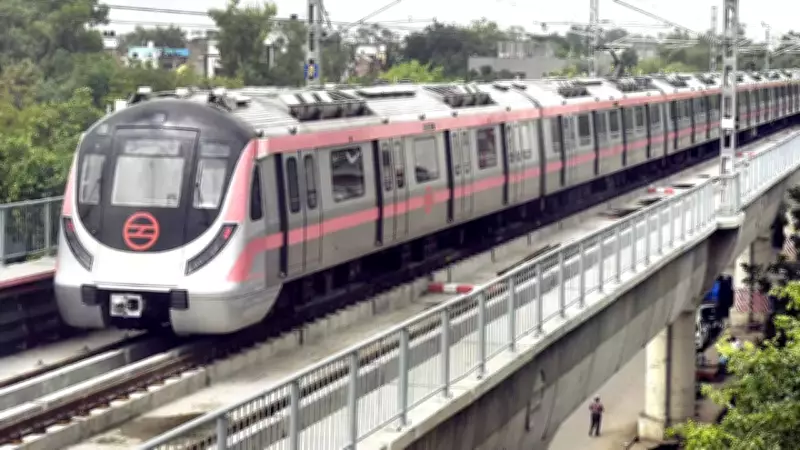
- A sophisticated double-decker viaduct that simultaneously carries both metro tracks and a road flyover
This structure becomes the fifth metro bridge to cross the Yamuna in Delhi, demonstrating advanced engineering capabilities in urban infrastructure development.
Expanded Pink Line Creates Comprehensive Ring Network
The newly inaugurated 12.3-kilometer Majlis Park–Maujpur-Babarpur corridor includes eight elevated stations and integrates seamlessly with the existing Pink Line infrastructure. With this extension, the Pink Line now spans approximately 71.5 kilometers, forming a complete ring that enables passengers to travel between multiple metro corridors with significantly fewer transfers.
Future Expansion with Phase V-A Corridors
Looking ahead, the Prime Minister laid foundation stones for three additional metro corridors under Phase V-A of Delhi Metro's expansion plan. These new corridors will collectively cover about 16.1 kilometers, further extending the reach and capacity of Delhi's rapidly growing metro network.
Enhanced Connectivity for Northern and Eastern Delhi
The new Ring Metro network promises substantial benefits for residents in several key areas, including:
- Burari
- Jagatpur-Wazirabad
- Khajuri Khas
- Bhajanpura
- Yamuna Vihar
Commuters from these neighborhoods will now enjoy faster, more direct metro access to various parts of the capital, reducing their dependence on road-based transportation.
Environmental and Urban Mobility Benefits
The expansion of Delhi Metro's network is expected to deliver multiple positive outcomes for the city:
- Reduced private vehicle dependency as more commuters opt for metro travel
- Decreased traffic congestion on Delhi's already crowded roads
- Lower pollution levels through reduced vehicular emissions
- More reliable public transportation options for millions of daily commuters
This historic development represents a significant step forward in Delhi's urban transformation, combining cutting-edge engineering with strategic urban planning to create a more connected, sustainable, and efficient capital city.