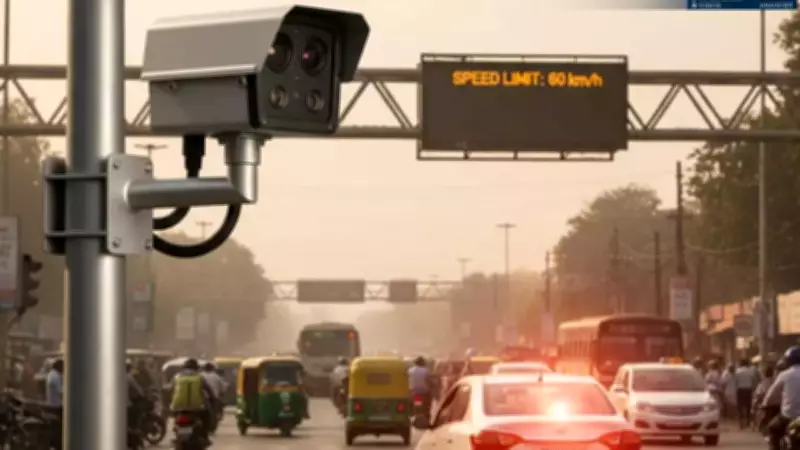
India's Digital Traffic Enforcement Revolution
A significant transformation is occurring beneath India's road networks. Repeat traffic offenses now carry consequences that were previously overlooked, with unpaid fines accumulating and receiving heightened attention. This evolution represents more than temporary enforcement spikes or crackdowns. A systematic pattern is emerging where checks are deepening and records are becoming more precise.
Digital technologies operate quietly behind this shift, pushing outdated practices into obsolescence. Central regulations are redefining what constitutes violations, and consequences now persist when drivers disregard established patterns. Even electric vehicles traversing urban landscapes feel this regulatory pressure indirectly. Order is gradually emerging where chaos once prevailed.
The Digital Enforcement Infrastructure
Five years ago, traffic enforcement relied predominantly on manual methods. Today, automated systems handle most monitoring tasks. Cameras now recognize patterns, license plate scanners operate without human intervention, and state databases integrate seamlessly online. This technological advancement has resulted in millions of digital fines being issued annually.

Official statistics reveal that automated enforcement generates crores of rupees in revenue each year. However, new citations continue accumulating faster than resolutions occur, leaving numerous outstanding violations unresolved across state boundaries. The current enforcement paradigm makes this challenge particularly evident.
Consequences of Non-Compliance
Under current regulations, payments or challenges to traffic violation notices must occur before established deadlines. When no action is taken, charges are considered accepted by default. License penalties escalate based on offense frequency, with repeat violations potentially leading to suspension or complete revocation.
Vehicles associated with unpaid tickets encounter various restrictions, including blocked ownership transfers, document renewal difficulties, driving permit complications, and potential seizure following proper legal procedures.
Why Electric Vehicle Fleets Face Greater Exposure
Across India, electric vehicles have moved beyond personal garages to power ride-sharing services, delivery networks, rental operations, and corporate transportation systems. These operational models differ fundamentally from traditional vehicle usage, existing within digital loan frameworks, data-tracking technologies, and intensive utilization environments. System failures in these contexts often create substantial financial impacts.
Unlike privately-owned petrol and diesel vehicles, electric vehicles in commercial fleets operate extensively in ride-hailing, last-mile delivery, quick commerce, shared mobility, and corporate leasing arrangements. This translates to significantly more daily operating hours in high-surveillance metropolitan corridors.
The mathematical reality is straightforward. While a private vehicle might travel 15 to 20 kilometers daily, a fleet electric vehicle typically covers 120 to 180 kilometers, often with multiple drivers operating the same vehicle and frequent crossings between municipal or state jurisdictions. More kilometers mean more traffic signals, more surveillance cameras, and greater violation opportunities, causing repeat offenses to accumulate rapidly and suspension thresholds to be reached unexpectedly.
Operational Impacts of Unresolved Violations
When traffic challans remain unresolved, insurance processes slow down, resale transactions encounter obstacles, refinancing becomes complicated, and fleet turnover grinds to a halt. For light-commercial electric vehicle companies operating with narrow margins and rapid vehicle turnover, even brief system disruptions affect operational hours and cash flow.
Fleet electric vehicles frequently move between cities and states, increasing the likelihood that violations across different legal jurisdictions might initially go unnoticed.

The Awareness-Enforcement Discrepancy
A significant gap exists between enforcement capabilities and public awareness. Despite rapid advancements in digital monitoring tools, compliance information remains scattered across various platforms and state databases. Vehicle owners and fleet operators often discover outstanding fines belatedly through routine events like license renewals, vehicle sales, loan applications, or insurance processes, where timely response becomes less feasible.
As regulations tighten, late discovery of violations creates greater financial strain and elevates operational risks.
Charging Infrastructure Compliance Pressures
Expanding charging networks are introducing new compliance considerations. Enforcement around charging stations is increasing, with violations such as illegal parking at charging points, exceeding permitted stay durations, blocking electric vehicle-only spaces, or parking near busy mall charging hubs becoming more common. These represent relatively new violation categories that previously existed at minimal scale but can accumulate quickly in high-utilization fleets.
From Sustainability to Regulatory Discipline
While India's transition to electric vehicles typically emphasizes energy conservation and carbon reduction, regulatory compliance has become equally crucial for operational credibility. Early intervention in traffic enforcement aims to reduce repeat offenses, improve driver behavior, and decrease court workloads through prompt resolutions. Since the electric vehicle industry positions itself as central to ethical transportation, regulatory alignment has quietly become integral to daily operations.
Electric Vehicle-Specific Compliance Considerations
Several compliance blind spots specific to electric vehicles often escape owner attention. High-speed electric two-wheelers exceeding specified motor or speed limits require proper registration and licensing, helmet regulations still apply to electric two-wheelers, and unauthorized performance modifications can incur penalties. Simultaneously, electric vehicles don't require Pollution Under Control certificates, necessitating updated compliance checklists rather than copied internal combustion engine vehicle routines.
Compliance Within the Digital Mobility Framework
As systems begin integrating enforcement data with transportation records, oversight is shifting from reactive checks toward proactive detection. Currently, understanding challan status matters as much for electric vehicle fleets as monitoring battery health or optimizing routes. When operators maintain prompt compliance, this influences vehicle valuation, pricing structures, and insurance coverage.
A Broader Governance Transformation
India's traffic regulations are evolving alongside the nation's push toward sophisticated digital systems. Technology will continue advancing enforcement capabilities, making regulatory delays increasingly untenable. Electric vehicle users and managers currently face a fundamental shift rather than temporary tightening. As electric vehicles gain prominence through technological advancement and societal change, compliance may seamlessly integrate into daily workflows.
Today, neglecting a challan payment represents more than delayed financial obligation—it potentially disrupts daily operations and creates cascading compliance complications.