

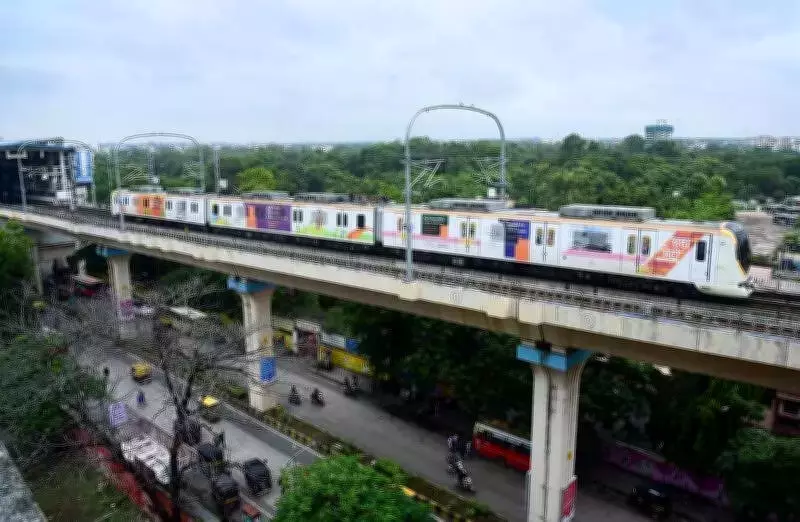
Nagpur Metro's Digital Payment Revolution: A Ticket Every Two Seconds
Digital payments are rapidly transforming the commuting experience on Nagpur Metro, emerging as the preferred mode of travel for thousands of passengers. According to official data from Maha Metro, the network is witnessing an astonishing pace of cashless transactions, with nearly one digital ticket being generated every two seconds during operational hours. This shift underscores a significant move towards a more efficient and modern transit system in the city.
Annual Ridership and Digital Revenue Insights
Figures from the Maha Metro Annual Report for 2024–25 reveal that the network recorded an impressive 2.69 crore passenger journeys in 2025, marking a 5% increase compared to the previous year. More notably, digital payment channels contributed a substantial 45% of the total fare box revenue during this period. These channels include National Common Mobility Cards (NCMC), Unified Payments Interface (UPI), and point-of-sale (POS) terminals, highlighting the diverse options available to commuters.
Breaking Down the Numbers: The Scale of Digital Adoption
A detailed analysis of the annual ridership data paints a vivid picture of this digital transition. With an average of around 73,700 passengers daily and trains operating for 16 hours from 6 am to 10 pm, the metro sees approximately 4,600 commuters per hour, or about 77 passengers per minute. Applying the 45% digital revenue share to this flow suggests that between 32 to 39 commuters per minute opt for cashless modes. In practical terms, this translates to nearly one passenger tapping, scanning, or swiping a ticket every two seconds, showcasing the rapid adoption of digital solutions.

Accelerating Digital Shift in the Current Financial Year
Metro officials have indicated that the digital transformation has gained even more momentum in the current financial year. A senior Maha Metro official clarified that the 45% figure only reflects data up to FY25, as captured in the annual report until March 2025. "Since then, digital usage has increased further and is now well above 50% of total ticketing transactions," the official stated, emphasizing the ongoing growth in cashless payments.
MahaCards Lead the Digital Charge
The official added that MahaCards are at the forefront of this digital surge, accounting for nearly 50% of all digital transactions. This is particularly true among regular commuters and pass holders, with over 1 lakh commuters currently holding MahaCards. The growing preference for these cards is attributed to their benefits, such as:
- Faster gate access, reducing wait times at entry points.
- Ease of recharge, minimizing queues at ticket counters, especially during peak hours.
UPI payments, WhatsApp ticketing, and POS-based card transactions make up the remaining share of digital transactions, offering commuters a variety of convenient options.
Broader Trends and Expert Perspectives
This trend in Nagpur mirrors a wider pattern within the Maha Metro network, similar to Pune where digital payments already constitute over 75% of total fare transactions. Urban mobility experts highlight that the rise in digital payments not only enhances operational efficiency but also brings several advantages:
- Improved revenue transparency, reducing discrepancies in cash handling.
- Lower cash handling costs, leading to potential savings for the metro system.
- Greater speed and convenience for commuters, making travel smoother and more efficient.
Future Outlook: Towards a Predominantly Cashless Commute
With ridership continuing to grow and digital transactions crossing the halfway mark this year, Nagpur Metro is poised for a significant transformation. Ticket counters may increasingly see fewer cash exchanges, replaced by quick taps at entry gates. This steady move towards a predominantly cashless commute signals a future where digital payments become the norm, enhancing the overall travel experience for passengers in Nagpur and setting a benchmark for urban transit systems across India.






