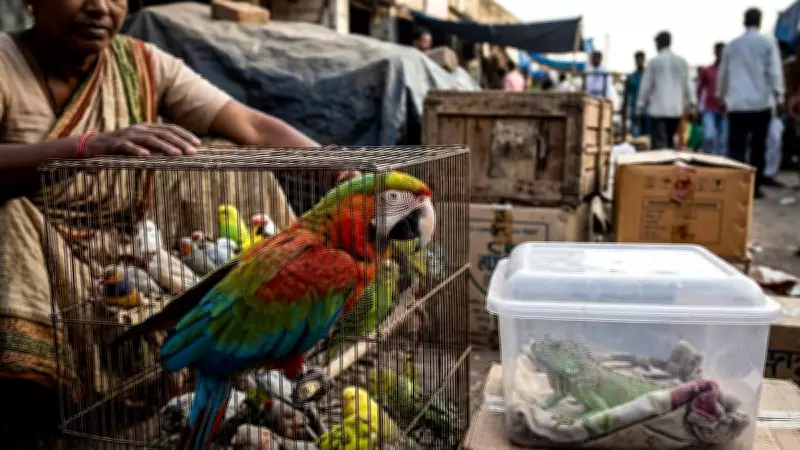
New Report Highlights Growing Threat of Exotic Pet Trade in India
A new report titled "Safeguarding Biodiversity and Public Health: A Policy Analysis of Exotic Pet Trade in India" has called for urgent policy reforms to address the country's rapidly expanding exotic pet trade. The report, released on July 1, 2026, warns that online platforms and encrypted messaging services are increasingly being used to bypass existing regulations and oversight.
Key Findings of the Report
The report highlights that the exotic pet trade in India has grown significantly in recent years, driven by rising demand for rare and unusual animals. It notes that many of these animals are sourced from the wild, often illegally, and that the trade poses serious risks to biodiversity and public health. According to the report, the use of digital platforms has made it easier for traders to operate outside the law, with encrypted messaging apps allowing them to conduct transactions discreetly.
Impact on Biodiversity and Public Health
The report emphasizes that the exotic pet trade is a major driver of biodiversity loss, as many species are taken from their natural habitats, often in unsustainable numbers. It also warns of the potential for zoonotic disease transmission, as many exotic animals carry pathogens that can be transmitted to humans. The report calls for stronger enforcement of existing laws, such as the Wildlife Protection Act, and for the development of new regulations specifically targeting online trade.

Calls for Policy Reform
The report urges the Indian government to take immediate action to curb the exotic pet trade. It recommends strengthening the legal framework, improving coordination between enforcement agencies, and increasing public awareness about the risks associated with keeping exotic pets. The report also calls for greater international cooperation to combat the illegal wildlife trade, which is often linked to organized crime.
Expert Opinions
According to the report's authors, "The current regulatory framework is inadequate to address the scale and complexity of the exotic pet trade in India. Urgent policy reforms are needed to protect both biodiversity and public health." The report also quotes a representative from India For Animals, who stated, "We are seeing a worrying trend where exotic animals are being traded like commodities, with little regard for their welfare or the broader ecological impact."
Conclusion
The report concludes that without immediate action, the exotic pet trade in India will continue to grow, with devastating consequences for wildlife and human health. It calls on policymakers, law enforcement agencies, and the public to work together to address this pressing issue.