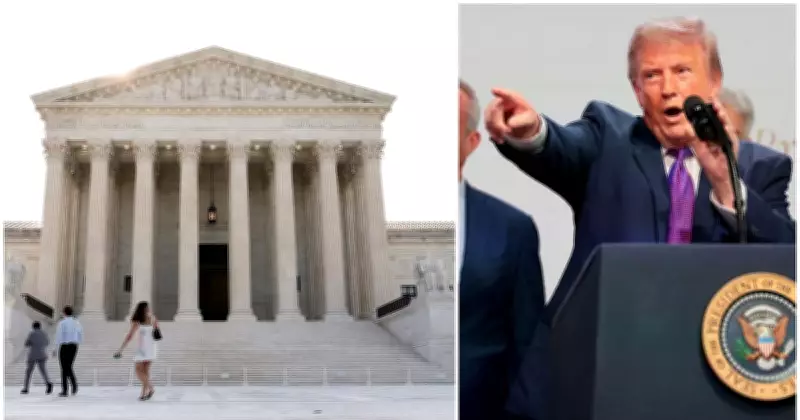
Supreme Court Blocks Trump's Birthright Citizenship Order
The United States Supreme Court has delivered a landmark ruling, striking down President Donald Trump's executive order that sought to restrict birthright citizenship. The decision upholds the principle that nearly all children born on American soil are automatically entitled to US citizenship, a move that brings immense relief to thousands of Indian families living in the country.
The ruling, announced on July 1, 2026, reaffirms the interpretation of the 14th Amendment to the US Constitution, which grants citizenship to all persons born or naturalized in the United States. The executive order, signed by Trump in early 2025, had attempted to deny citizenship to children born to non-citizen parents, sparking widespread legal challenges.
Impact on Indian American Community
According to Chintan Patel, Executive Director of Indian American Impact, the decision is a significant victory for the Indian diaspora. "This ruling ensures that thousands of Indian American families can continue to live without the fear of their children being stateless or denied basic rights," Patel said in a statement. The Indian American community, one of the fastest-growing immigrant groups in the US, has a high proportion of families on work visas, making them particularly vulnerable to changes in birthright citizenship policies.

Data from the Migration Policy Institute indicates that approximately 200,000 babies are born annually in the US to immigrant parents, with a substantial number from Indian households. The Supreme Court's decision secures the future of these children, allowing them access to education, healthcare, and other benefits from birth.
Legal and Political Ramifications
The ruling is a major setback for the Trump administration's hardline immigration agenda. The executive order had been challenged by multiple states, civil rights organizations, and immigrant advocacy groups, who argued that it violated the 14th Amendment and established legal precedent. The Supreme Court's 6-3 decision, with Chief Justice John Roberts writing the majority opinion, emphasized that "the Constitution's text and history are clear: birthright citizenship is a fundamental right that cannot be altered by executive action."
Justice Clarence Thomas, in a dissenting opinion, argued that the 14th Amendment's citizenship clause was intended to apply only to freed slaves and their descendants, not to children of non-citizens. However, the majority rejected this interpretation, citing the 1898 case of United States v. Wong Kim Ark, which established that children born in the US to non-citizen parents are citizens.
Reactions and Next Steps
Immigrant rights groups have praised the decision. The American Civil Liberties Union (ACLU) called it "a victory for the Constitution and for families across America." Meanwhile, the White House expressed disappointment, with press secretary Karoline Leavitt stating that the administration would explore other legal avenues to address immigration issues.
For the Indian American community, the ruling provides long-term stability. Many families on H-1B and L-1 visas, often facing long green card backlogs, now have certainty that their US-born children will not face citizenship challenges. The decision also has implications for other immigrant groups, particularly from Latin America and Asia, who similarly rely on birthright citizenship.