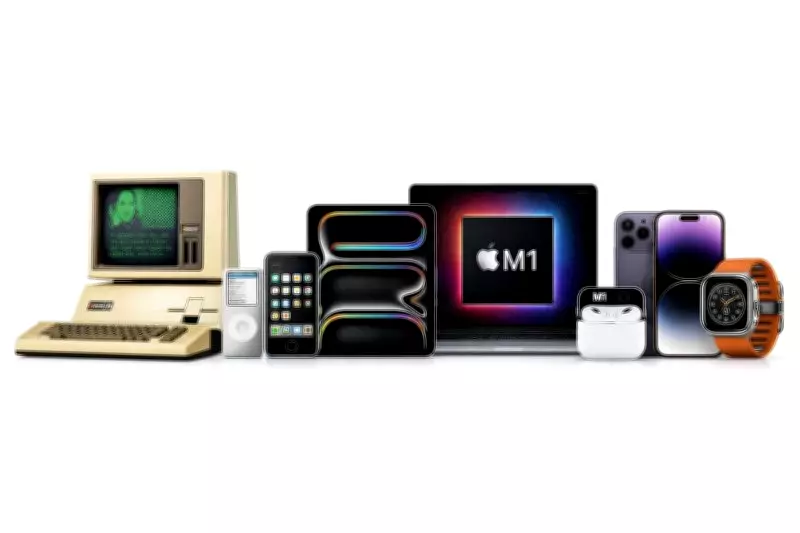
Apple's 50-Year Legacy: The Unwavering Force Shaping Technology
On April 1, 2026, Apple Inc. marked a monumental milestone: its 50th anniversary. In the fast-paced world of technology, where companies rise and fall with dizzying speed, reaching half a century is a rare achievement. Yet, Apple's significance extends far beyond mere longevity. The company has consistently served as the benchmark against which all other tech firms are measured, not necessarily by being the largest or the first to market, but by being the one that others inevitably follow.
A History of Pioneering Innovation
From its earliest days, Apple has demonstrated a remarkable ability to anticipate and shape consumer needs. The company's journey is punctuated by bold decisions that have fundamentally altered the technological landscape. One of the most significant shifts was the move away from physical keyboards, a design choice that redefined user interaction with personal computers and mobile devices. This was followed by the revolutionary introduction of tablets, which created an entirely new product category and changed how people consume media, work, and communicate.
Apple's influence is not measured by market share alone, but by its capacity to set trends that the entire industry must acknowledge. The company's approach has often been characterized by a willingness to eliminate familiar features in favor of what it perceives as superior alternatives, a strategy that has frequently been met with initial skepticism before becoming industry standard.

The Competitor's Dilemma: Reacting to Apple's Moves
The most compelling evidence of Apple's enduring impact can be observed in the behavior of its competitors. Major technology corporations, including Microsoft, Samsung Electronics, and Google, have repeatedly found themselves in a reactive position, adjusting their product development and marketing strategies in response to Apple's innovations. This pattern has persisted across multiple decades and product categories, from personal computing to mobile phones to wearable technology.
Apple's real narrative is not one of survival against odds, but of sustained influence over the direction of technological progress. The company has consistently demonstrated an ability to not just participate in the tech industry, but to actively redirect its trajectory. This has created a dynamic where Apple's announcements and product launches are closely monitored by both competitors and consumers alike, as they often signal the next major shift in technology.
Looking Forward: The Next Chapter of Influence
As Apple enters its sixth decade, questions naturally arise about its future role in shaping technology. The company faces an increasingly complex landscape with emerging fields like artificial intelligence, augmented reality, and sustainable technology presenting new challenges and opportunities. However, if history is any guide, Apple's approach will likely continue to emphasize integration, user experience, and design excellence—principles that have defined its first fifty years.
The technology industry has evolved dramatically since Apple's founding in 1976, yet the company's ability to influence that evolution remains remarkably consistent. Whether through hardware design, software ecosystems, or retail experiences, Apple has established patterns of innovation that competitors must either adopt or develop alternatives to, ensuring that the company's 50th anniversary is not just a celebration of past achievements, but a testament to its ongoing role as a trendsetter in the global technology arena.