Apple's M5 Pro and M5 Max Silicon: A Deep Dive into Performance and Capabilities
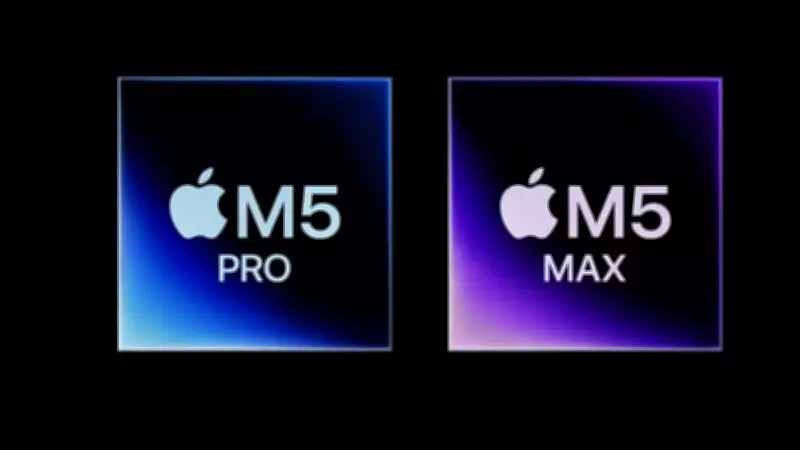
Apple has officially introduced its latest generation of silicon processors, the M5 Pro and M5 Max, marking a significant leap in computing power and efficiency. These chips are being touted as featuring the world's fastest CPU cores, capable of achieving an impressive clock speed of 4.61 GHz. This advancement positions Apple at the forefront of processor technology, promising unparalleled performance for demanding users and professionals.
Unmatched Processing Power for Complex Tasks
The M5 Pro and M5 Max are engineered to handle intensive computational workloads with ease. They excel in powering through massive datasets in professional applications such as MATLAB, enabling complex simulations and data analysis without bottlenecks. This makes them ideal for researchers, engineers, and data scientists who require robust processing capabilities for their work.
Enhanced Graphics with Third-Generation Ray Tracing
One of the standout features of these new chips is the integration of Apple's third-generation ray-tracing engine. This technology delivers a substantial 35 percent uplift in graphics performance compared to the previous generation. Users can now render intricate 3D designs with incredible detail and realism, benefiting creative professionals in fields like animation, architecture, and game development.

Key Aspects to Know About M5 Pro and M5 Max
- World's Fastest CPU Cores: With a clock speed of 4.61 GHz, these processors set a new benchmark for CPU performance.
- Advanced Data Handling: Designed to manage complex computations and simulations efficiently, supporting large-scale data processing.
- Graphics Innovation: The third-gen ray-tracing engine enhances visual fidelity, making it suitable for high-end graphic tasks.
- Professional-Grade Applications: Optimized for software like MATLAB, ensuring seamless operation in technical and scientific environments.
Released on March 4, 2026, the M5 Pro and M5 Max represent Apple's continued commitment to pushing the boundaries of silicon technology. These chips are expected to power future MacBook Pro models and other Apple devices, offering users a blend of speed, efficiency, and cutting-edge features for both professional and creative endeavors.