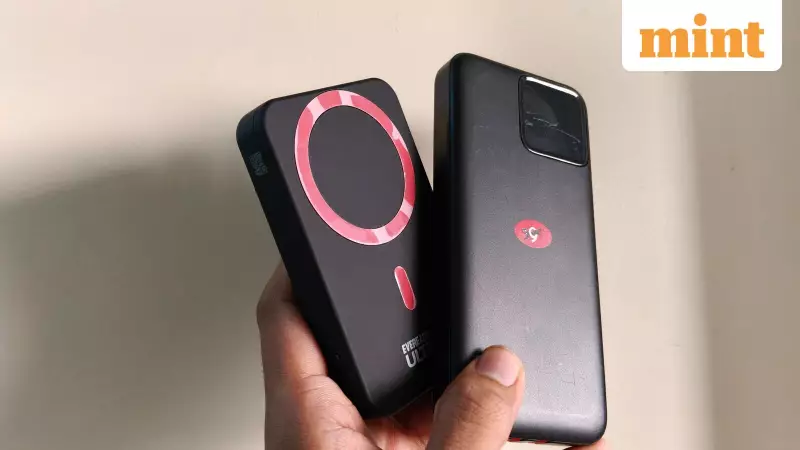
The trusted Indian name in batteries and lighting, Eveready, has officially stepped into the competitive powerbank market. The brand has launched its first two offerings: the Ultima PB 10 and the Ultima PB 31. After using both for several weeks, here's a detailed look at their design, features, and overall value to help you decide if they should be your next purchase.
Design & Build: Built-in Cables and a Wobbly Stand
Both the Eveready Ultima PB10 and PB31 pack a 10,000mAh battery capacity, a standard for the category. The Ultima PB 10 sports a conventional design with the Eveready branding prominently displayed. Its standout feature is the pair of built-in cables – one Type-C and one Lightning – eliminating the daily hassle of carrying separate charging cords. It also includes a convenient built-in display that shows the remaining battery percentage at a glance.
The Ultima PB 31, on the other hand, is a MagSafe-compatible powerbank. It has a rectangular shape similar to others in this segment and features an LED indicator on the back for battery status. The front has a circular patch for attaching to compatible smartphones. A unique addition is a built-in stand that pops out from the body, allowing your phone to stand upright while charging. However, in practice, the stand was difficult to set up and lacked sturdiness, making it unreliable for securely holding the device.

Performance & Charging Features
On the performance front, both powerbanks support 22.5W wired fast charging. The PB31 adds 15W wireless charging to the mix. The company mentions support for the Qi charging standard, but without specifying the version. Since there is no mention of Qi 2 or later, it is safe to assume it uses an earlier version of the standard.
When it comes to refueling, both units take a considerable 4 to 5 hours to charge fully, making overnight charging the most practical option. In terms of battery output, the PB10 was tested with a device sporting a 7,300 mAh battery. It managed to charge the device completely during active use and still had around 5% of its own power left. The PB31 offers a similar wired charging performance, but its battery optimization drops slightly when used wirelessly, attached directly to a smartphone.
Verdict: Should You Buy Them?
The listed Maximum Retail Price (MRP) for both models is over ₹4,000, which is excessively high for what they offer. However, in the real market, they are available at much more reasonable prices. The PB10 is typically found for around ₹1,200, and the PB31 retails for approximately ₹1,500.
At these street prices, both powerbanks present a decent value proposition. The PB10 is a solid, no-fuss option with its integrated cables, while the PB31 brings wireless convenience, albeit with a finicky stand. The main compromise is the lack of the latest Qi 2 standard, which would have been a significant advantage for compatible Android users. For the price, however, they are a credible entry from a well-known Indian brand into the powerbank space.