

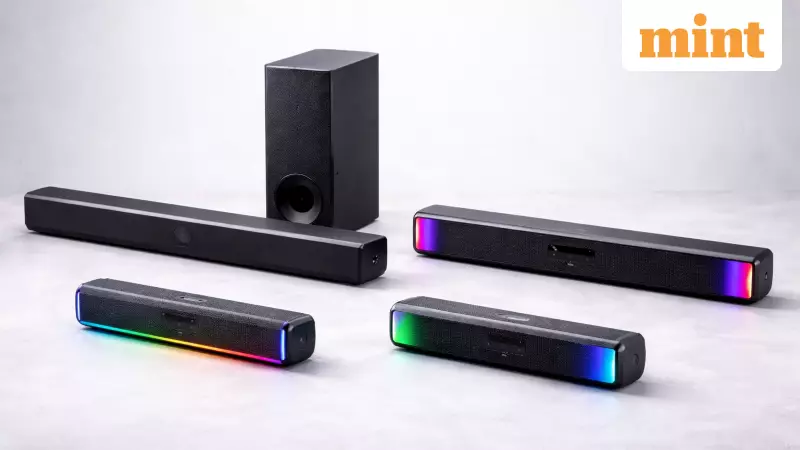
As a journalist and an avid consumer of audio content, I recently embarked on a personal quest. I wanted to upgrade my TV's lackluster built-in speakers without breaking the bank. My primary goal was clear: find a soundbar under ₹5,000 that delivered clear, immersive sound without the hollow, 'boxy' quality often associated with cheap audio products. This is what I learned from my deep dive into the budget audio market.
The Core Challenge: Avoiding the 'Boxy' Sound Trap
The term 'boxy' refers to a compressed, nasal audio quality where sounds seem to emanate from a small, enclosed space rather than filling the room. It's a common pitfall for inexpensive speakers. To combat this, I focused on key specifications and real-world performance over mere brand names. My research and testing revolved around several critical factors that directly impact sound quality and user experience at this price point.
First and foremost, connectivity options became a major deciding factor. I discovered that while most budget soundbars offer basic Bluetooth and an auxiliary (3.5mm) input, the inclusion of an HDMI-ARC (Audio Return Channel) port is a game-changer. HDMI-ARC allows for a single-cable connection to compatible TVs, enabling seamless control of the soundbar's volume with the TV remote and ensuring higher-quality audio signal transmission compared to optical or auxiliary cables.

Key Features That Make a Difference
Beyond just the input ports, the internal design and features play a huge role. I prioritized soundbars with dedicated drivers for different frequencies and those offering multiple sound modes. A 'Movie' or 'DTS' mode can significantly widen the soundstage, reducing that boxy feel for films. Similarly, a dedicated 'News' mode enhances dialogue clarity, which is a common weak spot.
Here are the essential elements I evaluated for every model:
- Driver Configuration: Look for separate woofers and tweeters, not just a single full-range driver.
- Sound Modes: Presets like Movie, Music, and News tailor the audio output for different content.
- Total Power Output (RMS): A higher wattage (e.g., 80W vs. 40W) often translates to louder, more dynamic sound without distortion.
- Build and Design: A wider cabinet can sometimes allow for better speaker placement and less resonant, boxy noise.
Brands and Models in the Budget Arena
My search led me to several prominent players in the sub-₹5,000 segment. Brands like Boat, Zebronics, Philips, and pTron offer numerous models. However, specifications can be misleading. For instance, a soundbar boasting '240W' of peak power might only deliver 40W of RMS (Root Mean Square) power, which is the true measure of continuous audio output. Reading the fine print is crucial.
I learned that investing in a model from a company with a proven audio heritage, even at a budget level, can yield better results. These brands often have more experience in tuning drivers and enclosures to minimize unpleasant resonances. The ultimate lesson was that detailed user reviews and expert opinions were more valuable than marketing claims on the box.
The Verdict and Final Recommendations
So, is it possible to find a non-boxy soundbar under ₹5,000? The answer is a cautious yes, but with managed expectations. You won't get cinematic, room-shaking bass or flawless high-fidelity sound. However, you can absolutely achieve a substantial upgrade over TV speakers—clearer dialogue, a richer audio texture for music, and a more engaging experience for movies.
The journey taught me to value HDMI-ARC connectivity, genuine RMS power, and multiple sound modes above all else in this price bracket. It's a segment where a little extra research goes a long way. By focusing on these technical aspects and tempering expectations, you can find a budget audio companion that truly enhances your daily viewing without succumbing to the dreaded 'boxy' sound, making your home entertainment setup far more enjoyable.






