

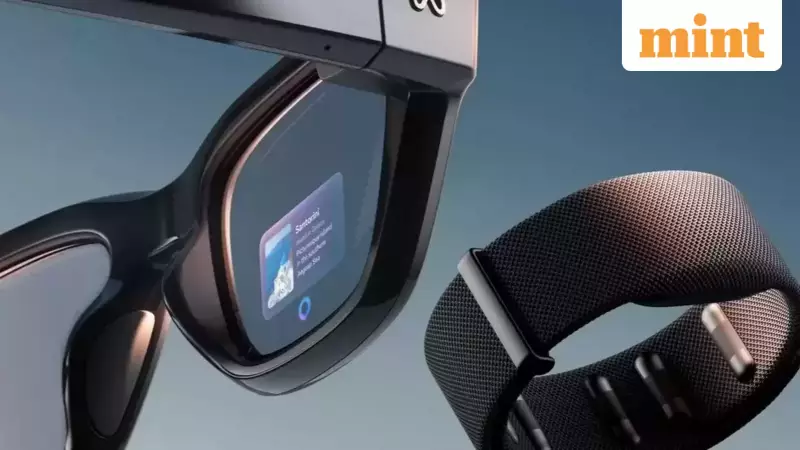
In a significant update announced at CES 2026, Meta has unveiled two major new features for its Ray-Ban Display smart glasses: a built-in teleprompter and an EMG-based "handwriting" input system. However, the company simultaneously delivered news that will disappoint international consumers, revealing a slowdown in the global rollout to prioritize supply for the United States market.
New Practical Features Aim for Everyday Use
The tech giant used the premier tech showcase to move its wearable device further from a novelty towards a practical tool. The first and most noticeable upgrade is an integrated teleprompter. This feature allows users to write notes on their paired smartphone and have them appear as simple text cards within their field of vision through the glasses' display.
Users can control these text cards using the Meta Neural Band wrist device, enabling hands-free scrolling without needing to touch the glasses' frames. Meta confirmed the teleprompter functionality will start its phased rollout this week. This directly addresses a common pain point for content creators, presenters, and professionals who rely on prompts but find traditional setups involving separate screens and stands cumbersome.

Solving the Reply Problem with Muscle Signals
The second, more futuristic upgrade is an Electromyography (EMG) handwriting input system. This technology enables users to "write" messages by tracing letters with their finger on any surface. The Neural Band on the wrist detects the subtle muscle movements and neural signals from these gestures and converts them into digital text.
Initially, this feature will be available through an early access program, starting with integration into Meta's own messaging platforms, WhatsApp and Messenger. This innovation tackles the persistent challenge of replying to messages on smart glasses, where voice input isn't always appropriate and touch controls are inefficient for longer texts.
This EMG input method represents Meta's vision for the glasses: not just as an occasional camera accessory, but as a device worn continuously to handle minor digital tasks that typically force users to pull out their phones.
Strong US Demand Puts International Expansion on Hold
Alongside these feature announcements came a strategic shift in availability. Meta stated it is delaying the international launch of the Ray-Ban Display glasses to concentrate its supply chain on meeting unexpectedly high demand in the United States.
According to reports from Reuters and Engadget, this means pausing plans to introduce the glasses in key markets including the United Kingdom, France, Italy, and Canada. The primary reasons cited are limited inventory and waitlists in the US that are already stretching into 2026. No new timeline for the international expansion has been provided.
This supply-side decision is telling. Companies rarely slow a global rollout immediately after a major promotional moment like CES unless compelled by circumstances. Meta's willingness to absorb the potential public relations setback of delaying international availability suggests that US demand is robust enough to justify focusing all available stock on a single market.
What This Means for the Future of Smart Glasses
This dual announcement reveals Meta's ongoing strategy to build compelling, everyday utility for smart display glasses. Features like a teleprompter and hands-free writing are less about flashy augmented reality demos and more about solving genuine user friction points, which is crucial for achieving mainstream adoption.
The rollout delay also highlights a recurring hurdle for the smart glasses category: manufacturing scalability. Unlike smartphones, where production can often be ramped up predictably, the complex optics and compact form factors of smart glasses create supply chain constraints. A sudden spike in demand can quickly lead to shortages.
The story from CES 2026 is clear: Meta is successfully adding real-world functionality to its Ray-Ban smart glasses, but consumer interest, at least in the US, is growing faster than the company's ability to produce and distribute the hardware globally.






