Satellite Calling in Cars: New Tech to End Highway Signal Blackouts
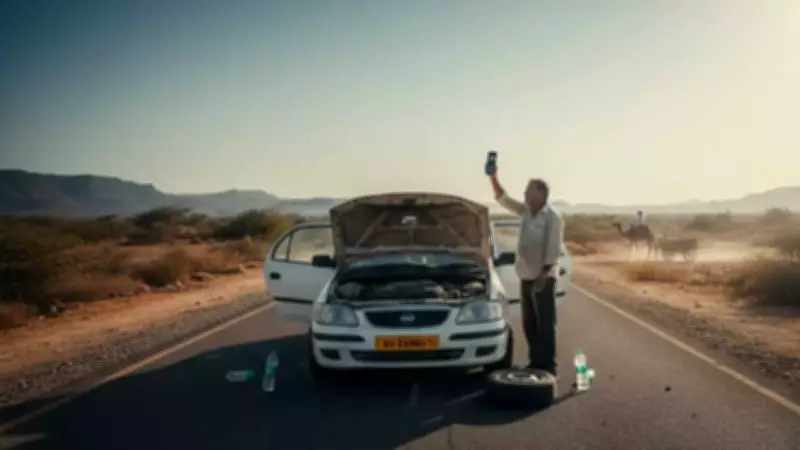
Every driver who has navigated long highway stretches has experienced this frustrating scenario. You are traveling smoothly when suddenly, the mobile network vanishes completely. Signal bars disappear, data connection drops, and you are left without any means to call for assistance.
This common occurrence happens frequently on hill roads, remote areas, parts of Ladakh, and even certain expressways where cellular coverage can drop unexpectedly without warning.
Breakthrough Technology Showcased at MWC Barcelona 2026
A revolutionary technology demonstration at Mobile World Congress Barcelona 2026 promises to eliminate this problem permanently. Technology company HARMAN has announced a strategic partnership with satellite communications provider Viasat to introduce in-cabin voice calling using satellite connectivity as a backup system.

How does this innovative technology function in practical terms?
Essentially, your vehicle will maintain the capability to make voice calls even when traditional mobile networks become unavailable. The system utilizes satellite communication as a reliable backup to conventional 4G and 5G cellular connectivity. When cellular coverage drops below usable levels, the car's communication system automatically switches to satellite networks for essential communication purposes.
Critical Importance for Indian Driving Conditions
This technological advancement holds particular significance for India's driving landscape. Numerous long-distance journeys traverse regions with weak or nonexistent cellular signals. Consider scenarios like vehicle breakdowns on remote highways during late-night hours, or medical emergencies occurring on isolated hill station roads. In these critical moments, the inability to make a simple phone call can escalate into serious safety concerns.
The new technological setup integrates HARMAN's Ready Connect Telematics Control Unit with Viasat's comprehensive Mobile Satellite Services network. The hardware architecture supports simultaneous 4G, 5G, and Narrowband Non-Terrestrial Network satellite connectivity through a unified base solution. Viasat functions as the Satellite Network Operator, providing access to its extensive satellite network along with licensed global spectrum rights.
Safety-First Communication Approach
The current technological focus centers on low data-rate, safety-relevant communication capabilities. This enables drivers and passengers to contact emergency services, summon roadside assistance, or notify family members during urgent situations. Importantly, this system is not designed to replace mobile networks entirely, but rather to function alongside them as a reliable backup.
Beyond basic voice calling, the partnership envisions expanded functionality including messaging services, emergency SOS features, and comprehensive telematics functions through satellite connectivity. Future implementations could enable services such as remote vehicle operation, stolen vehicle tracking capabilities, and remote diagnostics even in areas where traditional cellular coverage remains unreliable or unavailable.
While this may not represent a primary consideration for car buyers today, the next time network bars disappear during a crucial journey, this exact type of feature could prove invaluable for maintaining safety and peace of mind on the road.