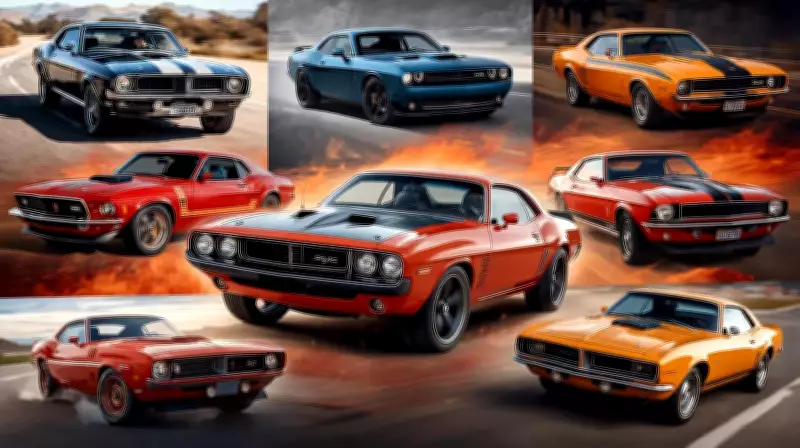
Top 7 Muscle Car Names That Defined an Era
The golden age of muscle cars produced some of the most memorable automotive names in history. These vehicles weren't just about raw horsepower and aggressive styling—their names became cultural touchstones that reflected the spirit of their time. From playful puns to predatory references, each name told a story about the car's character and purpose.
1. Dodge Super Bee
Positioned as an accessible entry into Dodge's performance lineup, the Super Bee shared its platform with the Plymouth Road Runner. This strategic move allowed Dodge to offer substantial muscle car performance at a more affordable price point. Even base models could be equipped with large displacement V8 engines, making true performance accessible to a broader audience. The name itself cleverly combined playfulness with serious performance intent, perfectly capturing the automotive zeitgeist of the late 1960s.
2. Plymouth Road Runner Superbird
Developed specifically for NASCAR competition, the Superbird featured radical aerodynamic enhancements including an extended nosecone and towering rear wing designed for high-speed stability. While these additions increased weight, they created one of the most visually striking profiles in automotive history. Named after the popular Warner Bros. cartoon character, the Superbird remains an iconic symbol of American racing heritage and automotive excess.

3. Ford Fairlane Thunderbolt
Commonly shortened to simply Thunderbolt, this limited-production drag racing special was built primarily to meet homologation requirements for competition. With only 100 units produced, each car represented pure racing purpose. Powered by a massive 7.0-litre V8 engine derived from Ford's racing program, official specifications listed 425 brake horsepower, though actual output was believed to be significantly higher. The Thunderbolt name perfectly matched the car's single-minded focus on explosive acceleration.
4. Plymouth Barracuda
The Barracuda debuted in 1964, taking its name from the fast, predatory fish found in tropical waters. While early models offered modest performance, later iterations evolved into serious muscle machines. Equipped with high-output V8 engines including a formidable 7.0-litre option producing up to 425 brake horsepower, the Barracuda developed a reputation that matched its sharp, aggressive name. This vehicle demonstrated how a well-chosen name could grow in significance alongside the car's performance capabilities.
5. Pontiac Firebird
Introduced in 1967 and built on the same platform as the Chevrolet Camaro, the Firebird quickly established its own distinct identity within General Motors' lineup. The name suggested both speed and spectacle, combining elemental imagery with a sense of drama. The Firebird reached its cultural peak in 1977 when the Trans Am version starred in Smokey and the Bandit, complete with the large bonnet decal that became emblematic of 1970s automotive style.
6. Dodge Challenger
Launched in 1970, the Challenger arrived as Dodge's direct response to the growing pony car segment dominated by Ford and Chevrolet. The name conveyed confrontation and competitive intent from the outset. Modern iterations such as the Hellcat and Demon variants have maintained this aggressive branding philosophy, reinforcing Dodge's preference for unapologetically forceful nomenclature. While the debate between Charger and Challenger preferences continues among enthusiasts, the latter name carries a particular clarity of purpose.
7. Mercury Cougar
Ford's upmarket Mercury division introduced the Cougar in 1967 as a more refined alternative to mainstream muscle cars. The name skillfully blended sophistication with aggression, drawing on the image of a powerful big cat while fitting neatly into the space-age aesthetic popular during that period. Though Mercury was often perceived as a more restrained extension of Ford, the Cougar carried a distinctly sharper edge that helped it stand apart in an increasingly crowded automotive market.

These seven names represent more than just marketing—they encapsulate an era when automotive manufacturers understood that a great name could become as legendary as the mechanical specifications. Each name contributed to building mythology around these vehicles, ensuring their place in automotive history long after production ended. The combination of evocative naming and formidable performance created icons that continue to resonate with enthusiasts today.