

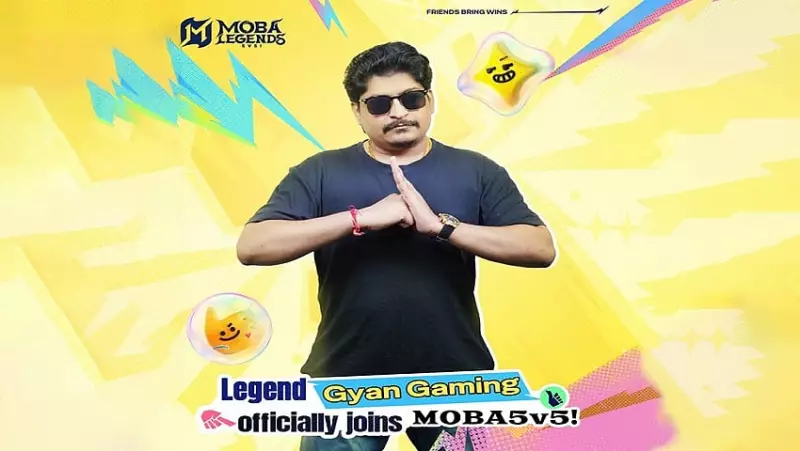
A significant strategic evolution is underway in India's dynamic esports arena. Two of the country's most celebrated gaming icons, Raistar and Gyan Gaming, are making a pivotal move, shifting their competitive focus towards the intensely strategic world of Moba 5v5 games. This transition marks a potential watershed moment for the industry, signaling where the next generation of Indian esports talent and audience interest may be headed.
From Battle Royale to Strategic Arenas
For years, the Indian gaming scene has been overwhelmingly dominated by the fast-paced, last-man-standing thrill of battle royale titles. Players like Raistar, renowned for his incredible agility and mechanical skills in games like Free Fire, and Gyan Gaming, a popular content creator and skilled player, became household names within this genre. Their massive fan followings were built on high-octane solo and squad gameplay.
However, the allure of the Multiplayer Online Battle Arena (MOBA) format is proving irresistible. Unlike the chaotic free-for-all of battle royales, Moba 5v5 games are built on deep strategy, precise team coordination, and complex character roles. This shift represents more than just a change of game; it's a fundamental change in the required skill set, moving from pure reflexes to tactical thinking, map awareness, and synchronized team play.

The Drivers Behind the Strategic Pivot
Several key factors are fueling this migration of top talent. Primarily, the global esports ecosystem has long been anchored by premier Moba titles like League of Legends and Dota 2, which offer structured, high-stakes international tournaments with million-dollar prize pools. Indian players and organizations are increasingly looking to compete on these prestigious global stages.
Furthermore, the rise of accessible, mobile-first Moba games has lowered the barrier to entry. Titles optimized for smartphones have introduced the strategic depth of the genre to a massive Indian audience previously accustomed to battle royales. This creates a ripe environment for pros like Raistar and Gyan Gaming to lead the charge, leveraging their existing influence to guide their fans into this new competitive domain.
The move is also a savvy long-term career decision. Mastering a Moba can extend an esports athlete's competitive lifespan, as success relies more on game knowledge and strategy than solely on peak reaction times, which can diminish with age.
Implications for the Future of Indian Esports
The transition spearheaded by these influencers is likely to have a ripple effect across the entire industry. Esports organizations may begin scouting for and nurturing talent specifically for Moba titles, building dedicated 5-player rosters. Coaching and analyst roles, crucial in Moba esports, will become more prevalent and professionalized in India.
For the audience, this shift promises a different kind of viewing experience. Esports broadcasts will focus more on draft strategies, objective control, and team fight execution, educating viewers on the nuanced layers of the game. This could cultivate a more deeply engaged and knowledgeable fanbase.
Ultimately, the journey of Raistar and Gyan Gaming into Moba 5v5 is a bold experiment being watched by the entire community. Their success or challenges in adapting will serve as a crucial case study. If they thrive, they could inspire a wave of professional players and aspiring amateurs to follow, fundamentally diversifying and strengthening India's position in the global esports hierarchy. The battle royale stage was where Indian gaming found its voice; the Moba arena might be where it learns to orchestrate a symphony.






