Spoiler warning: this discusses the full story of 007 First Light, ending included.
Iceland nearly lost me the game. A downed helicopter, a black volcanic plain, sparks falling through rain, a voice in Bond's ear telling him where to go. I've crawled through this exact opening in a dozen forgettable shooters, and for twenty minutes I was sure IO Interactive had taken the most storied license in entertainment and made it grey.
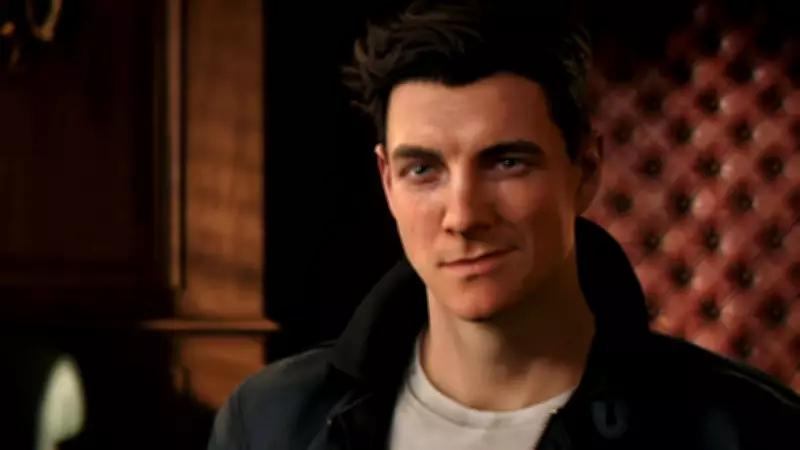
Then I noticed he wasn't listening. The handler says leave them; he goes back. Says extract; he finishes the job. He's nobody here—a Navy washout with a death wish and a stubborn streak, no gadgets, no number, no tuxedo. And that's the whole game, quietly announcing itself in the worst level it has. The raw material was never the spy. It's the stubbornness. Everything else gets built on top.

M watches it from across the wreckage and reopens the dormant Double-0 programme around him. The legend isn't born. It's recruited by accident, then assembled knot by knot.
Nobody, yet
The first real surprise is Malta, and it's a tutorial, which should be a warning. It isn't. Spy school here is one unbroken montage, a driving course flowing into a shooting range flowing into a sparring mat flowing into a getaway, the difficulty rising so gently you never feel taught, only sharpened. By the end your hands know things they didn't, and so do his. Most games treat the tutorial as a toll. This one treats it as a transformation, and it's the first sign the studio understands what it's actually making.
But the cleverer thing isn't how Malta teaches. It's who does the teaching. Two other recruits, Cressida and Monroe, run Bond through his paces, and then the game does something no Bond story has ever dared. It lets them become his friends. They share a flat. They needle each other over breakfast. For a few hours they're just three young people at the start of their lives, competitive and warm and oblivious.
Hold onto that, because it's the whole game in disguise.
Cinematic Bond is a man alone. He charms every room and belongs to none of them, beds women the next film forgets, takes orders from an M who's a desk and a frown. The solitude is the price of the work, a wound he carries so completely we never watch it open. First Light goes looking for the boy before the wound. It hands him people he can't afford to lose, and then it sets about taking them.
The deadliest thing about him was always his mouth
It starts taking them in Slovakia, but first it shows you how it plays. The cohort gathers at a chess tournament in a vast gilded mountain hotel, the kind of opulent set piece the series runs on, and tailing a suspicious guest through the Grand Carpathian is the closest First Light gets to the Hitman games in its DNA. A busy social space, everyone living their own little routine, and the joy is improvisation. Pose as press. Light a bin on fire to thin out a doorway. Listen at the edge of a conversation until a name drops, then walk up wearing it.
And when you're caught—which you will be, because the guards are placed so you can't simply tiptoe past—Bond doesn't reach for a weapon. He reaches for a lie. A button, a half-second window, and he blurts something so impeccably establishment that the guard's certainty wavers and the door opens anyway. It runs on a meter you fill with good spy work, so you can't lean on it forever, and it doesn't always land. When it does, it captures the one thing every film understood and no game ever managed. The deadliest thing about Bond was never the Walther. It was his mouth.
Then the bomb goes off, and the people you spent the last few hours learning to like are gone. The game stages it like the throwaway body count an action film spends in a prologue, except this isn't a prologue. It's a bereavement, because you knew them. You did the dishes in their flat. The friendships were built so precisely so that this could dismantle them, and walking out of that hotel I finally understood what First Light is. Not a game about a spy. A game about a young man learning, one loss at a time, why his older self will keep everyone at arm's length. The loneliness that defines the movies isn't his nature. It's scar tissue, and we're watching it form.

The oldest arc in fiction, and it still gets you
The man who picks up the pieces is the best thing here by a distance. John Greenway, played by Lennie James as a worn-down instructor who finds Bond insufferable and then, scene by scene, can't help himself. The arc is the oldest one going, gruff mentor and brazen upstart, and you see every beat coming. It doesn't matter. The performance is good enough and the writing sharp enough that the familiarity turns into comfort, and Greenway gathers a weight nothing else in the cast comes near. The films would have spent a man like this in the cold open, killed him to hand the hero a grudge. First Light makes you live the whole thing instead, the bickering and the grudging respect and the moments that edge toward something paternal, so that when Greenway dies at the end it isn't a device. It's the loss the story has been building toward all along, the one that finishes what Slovakia started.
By then Bond has learned, twice and the hard way, that the people he lets in are people he'll bury. That lesson is the man. That's the tuxedo.
The one relationship that doesn't work is, tellingly, the only one the formula insisted on. Roth, the cool, cat-like operator who keeps crossing his path under one false name and then a truer one, is written as a rival more than a romance, an equal in wits rather than a prize, and her eventual betrayal is the right instinct cleanly done. But the scenes that reach for heat go stiff and motion-captured into awkwardness—the single place the script slackens—and I think the game knows it. The Bond girl is the part of the myth it has the least use for, and you can feel how little it wants to fake her.
Everything funnels toward a story that couldn't be more 2026 if it tried. MI6 has spent a decade outsourcing its judgment to a quantum supercomputer called THEIA—a single phoneme from just saying 'the AI'—built by a beatific tech utopian, Sir Nicholas Webb, and enforced by his groomed, rotten son Damien, the man behind the golden mask Bond's been chasing the whole game. The reckless, instinct-driven boy is the obvious human counterweight to the cold machine and the colder men who own it, and the late turn, that the visionary father is the real villain and the whole thing is a coup aimed at the British state, mostly works, because the cost has been made personal before it's made political. Mostly. The Webbs are sharp on paper and rarely across the table from Bond long enough to frighten anyone, and the oldest rule in the genre holds: the longer a villain talks in the final act, the smaller he gets.
The best places, though, almost outshine the people in them. Aleph, a Mauritanian black market built into the carcasses of broken ships, is where I needed an obscene sum for a back-room auction and, being hopeless at the gambling on offer, simply found a crypto dealer cashing out and emptied his digital wallet through Bond's watch. A problem, a dozen angles, the game shrugging and letting me take the dishonest one. That's IO at the top of its game. It's a pity Lenny Kravitz's Bawma, the larger-than-life baron who runs the place and gets billed as a major threat, turns out to be a flat little cameo, so much less interesting than his own market.
What he'd do, before I'd decided to
And then there's the Pearl, a Vietnamese spa resort carved into a cliff, all infinity pools and obscene wealth, where Bond goes undercover as an insufferable rich tourist. I'd been doing it properly for an hour, eavesdropping, lifting keycards, talking past guards, when I turned a corner into a room full of men who weren't meant to be there. And instead of reloading to save my clean run, I just went. Fists. A bottle off the bar. A man driven backward over a desk and through the glass behind it, another's pistol turned on him before he'd raised it. When the room went still I was standing in the wreckage of someone's holiday, breathing hard, and I realised I hadn't decided to do any of it. It had only seemed like what he'd do.
That's the brawling, and it's the best thing the game does with a controller. Messy on purpose, closer to Sleeping Dogs than to the clockwork of Arkham, and the mess is the point. You start scanning rooms for loose objects the way you'd scan for cover anywhere else. If it isn't bolted down, it's going through someone's teeth. It isn't deep—just strike, parry on the prompt, sidestep the unblockable grabs—but it has weight, and on the standard difficulty it genuinely overwhelms you, the parry window mean, the bigger enemies soaking up far more than Bond can hand back.
The guns never get there. Firearms only unlock when an enemy draws first, under a 'Licence to Kill' rule that keeps reminding you this Bond doesn't execute for sport, and what's left is a competent, anonymous cover shooter. The trouble is the shootouts aren't about the men at all, they're about the bright red explosive thing standing next to the men, because grinding a crowd with guns that hold barely two clips is a chore. There's a night in London, three enormous public gun battles in a row, where the personality drains clean out of the game and you're just clearing rooms, and the only thing carrying you is the canister-hunting. It's the one stretch where First Light forgets who it is.
The driving's worse, which stings, because the cars are magnificent to look at and handle as though they're fighting you for the wheel. There's a chase that ends with Bond running down and wrecking an aircraft, a genuinely wild idea, and it keeps deflating itself with hard cuts between your hands and the cutscene's. These are the parts the studio plainly cared about least, and they're the parts that drag in the late game, when the conspiracy hauls you under the Antarctic ice to a Webb facility and the difficulty spikes into near-unkillable combat androids, which at least pay off all those hours of learning to brawl, even as you find yourself wishing you were back in a quiet hotel lying to a guard.
The credits aren't quite the end. There's a second mode, TacSim, run out of Q-Lab by Dr Selina Tan, that carves the campaign's locations into escalating challenge runs with their own progression and shop and leaderboards scored on time and flair and precision, and there, freed from the story's slow drip of tools, the improvisational combat finally gets to run loose. It's plainly the live engine IO means to feed for years the way they fed Hitman, and whether it has the legs is a question for the next few months. It also, awkwardly for a game so devoted to being a place you vanish into alone, locks a surprising amount behind an online connection, with login prompts and long checkpoint loads that grated in the quiet hours.
They tied the knot well
But that isn't what I carried out of it. What I carried out was the shape. A studio of lifelong Bond obsessives who understood the job was never to hand us the finished article—the martini and the smirk and the armour—but to let us watch the armour forged, fold by fold and friend by friend. He loses his friends in a Slovakian ballroom. He loses his mentor under the ice. He learns, twice and the hard way, the lesson the films open with him already carrying.
Which is why the bow tie is the last thing he learns. Near the end he stands in Q's lab with a strip of black silk in his hands, fumbling the folds while the old man talks him through each one, and it would be a throwaway in any other game. Here it's the whole point arriving quietly. He isn't learning to dress. The boy who went back for people in Iceland has become a man who's started to understand that going back for people is what gets them killed, and the hands tying that knot belong to someone with nothing left to lose.
The shooting's ordinary. The driving's worse. The villains talk too long. And I'd still tell anyone to play it, because the one thing that actually matters—the slow, costly manufacture of the loneliest hero in popular fiction—it gets achingly right. They tied the knot well.
007 First Light is out now on PS5, Xbox Series X|S and PC, with a Switch 2 version arriving later in 2026. It costs Rs 3,499 on Steam and the Epic Games Store, Rs 3,799 on Xbox, and Rs 3,999 on PlayStation.