

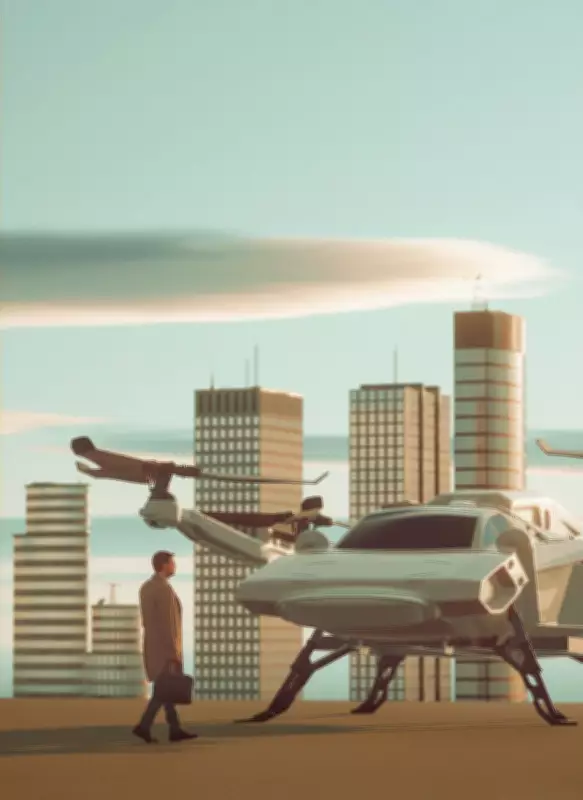
Air Taxis: A Revolutionary Leap or Overhyped Fantasy?
The concept of air taxis, often depicted in futuristic films, is rapidly transitioning from science fiction to tangible reality. These electric vertical take-off and landing (eVTOL) aircraft are poised to revolutionize urban transportation by offering a swift, eco-friendly alternative to ground-based congestion. However, as excitement builds around this emerging technology, critical questions arise: Is the air taxi a genuine breakthrough in mobility, or merely a high-flying hype bubble destined to burst?
The Promise of Urban Air Mobility
Proponents of air taxis highlight their potential to drastically reduce commute times in densely populated cities. Unlike traditional helicopters, eVTOLs are designed to be quieter, more energy-efficient, and capable of operating from compact vertiports integrated into urban landscapes. Key advantages include:
- Reduced Traffic Congestion: By taking to the skies, air taxis could bypass gridlocked roads, cutting travel time for short-haul trips.
- Environmental Benefits: Electric propulsion systems aim to lower carbon emissions compared to conventional aviation and road vehicles.
- Accessibility: Companies envision on-demand services that make air travel more affordable and convenient for the masses.
Major players like Joby Aviation, Archer Aviation, and Volocopter are investing billions in developing prototypes, with some targeting commercial operations within the next few years. Regulatory bodies, including the Federal Aviation Administration (FAA) in the United States, are actively working on certification frameworks to ensure safety.

Significant Challenges and Skepticism
Despite the optimistic projections, air taxis face formidable obstacles that cast doubt on their near-term viability. Critics argue that the technology is overshadowed by practical and economic hurdles:
- Regulatory Hurdles: Establishing comprehensive air traffic management systems for low-altitude urban flights is complex and time-consuming. Safety standards must be rigorously enforced to prevent accidents in crowded airspace.
- Infrastructure Limitations: Building vertiports requires substantial real estate and investment in cities already struggling with space constraints. Noise pollution concerns could also lead to public opposition.
- High Costs: Initial fares are expected to be prohibitively expensive, limiting adoption to affluent customers. Achieving economies of scale to lower prices will depend on widespread acceptance and technological advancements.
- Public Acceptance: Gaining trust in autonomous or piloted eVTOLs involves addressing fears about safety, privacy, and reliability. High-profile incidents could derail progress.
Moreover, some experts caution that air taxis might only serve niche markets, such as airport transfers or emergency services, rather than becoming a mainstream mode of transport. The energy requirements for frequent flights and battery limitations also pose technical challenges that need resolution.
Balancing Innovation with Realism
The debate over air taxis underscores a broader tension between technological ambition and pragmatic implementation. While the potential benefits are undeniable, realizing them demands coordinated efforts across multiple sectors:
- Collaborative Development: Governments, aviation authorities, and private companies must work together to create standardized regulations and infrastructure.
- Phased Rollout: Starting with pilot programs in select cities can help test feasibility and build public confidence before scaling up.
- Sustainable Integration: Ensuring that air taxis complement existing public transit systems, rather than exacerbating urban sprawl or inequality, is crucial for long-term success.
In conclusion, air taxis represent a bold vision for the future of transportation, but whether they constitute a big leap or high-flying hype hinges on overcoming substantial barriers. As development accelerates, stakeholders must balance innovation with realism to determine if this technology can truly take off or remain grounded in speculation.






