

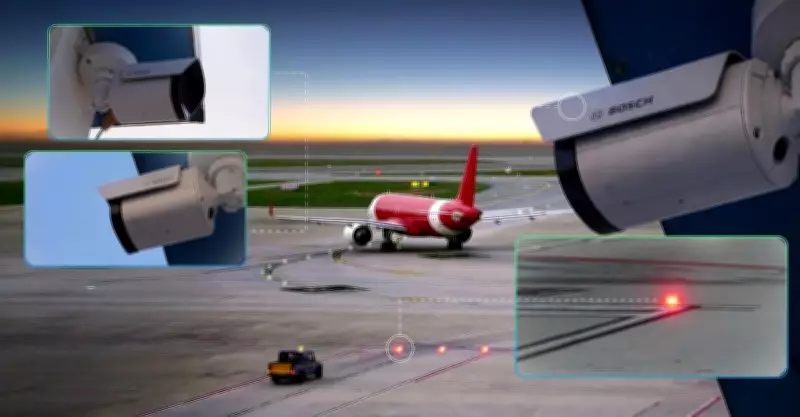
BENGALURU: In a major push to strengthen airside safety, Bangalore International Airport Limited (BIAL) has introduced an integrated Smart Airside Safety System at the Kempegowda International Airport. The system aims to reduce risks and improve coordination in the airport's most sensitive operational zones.
Focus on Critical Crossings
The newly deployed system focuses on Cross Service Roads (CSRs), which are critical intersections where aircraft taxiing paths intersect with ground vehicle movement. Traditionally, these zones relied on manual or semi-manual signalling, often leaving room for human error, delays, and limited visibility during high-traffic or low-visibility conditions. BIAL's solution replaces that dependency with a real-time, AI-driven framework. Using computer vision and intelligent automation, cameras installed at CSR intersections continuously monitor activity, detect vehicle movement, and assess potential right-of-way conflicts. The system can automatically trigger inset warning lights to prioritise aircraft movement and reset signals once the path is clear, all without human intervention. This shift is designed to create a data-driven separation layer between aircraft and vehicles, significantly reducing the risk of runway incursions or near-miss situations.
Why This Matters Now
The move comes amid growing global attention on airside safety lapses. In recent years, several airports worldwide have reported incidents involving unauthorised vehicle crossings, miscommunication between ground staff and cockpit crews, and near-collisions during taxiing in low-visibility conditions. A recent horrific crash involving an Air Canada Express flight and a fire fighting truck at LaGuardia Airport in New York on March 22 this year resulted in the deaths of both pilots and injuries to around 40 persons. On Sunday afternoon, a United Airlines flight hit a truck at Newark Airport in the US. India too has seen occasional concerns flagged by aviation regulators over procedural lapses and the need for tighter coordination in busy airports. While Bengaluru has maintained a strong safety record, the rapid increase in passenger traffic and aircraft movements has added pressure on ground operations, making automation and predictive systems increasingly critical. Kempegowda International Airport handles an average of 769 aircraft traffic movements per day.

What Changes on the Ground?
According to BIAL, with the new system:
- AI cameras interpret real-time movement at intersections
- Automated signals ensure aircraft always get right-of-way
- Non-compliant vehicle movement is instantly flagged
- Every event is digitally logged for audit, compliance, and analysis
A centralised dashboard now allows airport operators to monitor all CSR activity, identify patterns, and optimise traffic flow during peak hours.
Beyond Safety: Boosting Efficiency
Apart from reducing risk, the system is expected to improve turnaround times by minimising unnecessary stoppages for aircraft and service vehicles. Over time, the data collected will also help in predictive analytics: anticipating congestion, identifying recurring violations, and refining operational protocols. BIAL stated the initiative was part of its broader strategy to adopt next-generation technologies and position Bengaluru as a leader in smart airport operations.






