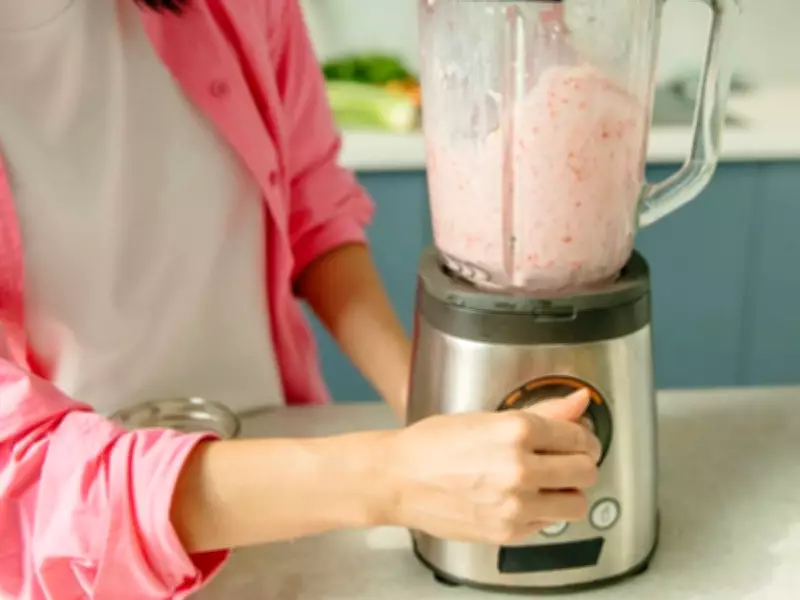
Today, we think of the blender as a familiar kitchen tool, but its origin story is far more practical and far less glamorous. Back in 1922, a man by the name of Stephen Poplawski invented a machine to mix malted drinks in drugstores.
According to a historical overview hosted by the University of Kentucky, the early device was built specifically to prepare malted beverages, which were popular in soda fountains at the time. Before the 20th century, drugstores were not only a place to buy goods but also social hangouts. Soda fountains increasingly sought faster and more consistent ways to prepare malted beverages, creating demand for mechanical mixing devices. Stephen Poplawski solved a very simple problem: how to effectively mix a malted beverage in a commercial environment as quickly as possible. It is important to note that this appliance was created as a service appliance at this point in history.
Adjustable Blade Angle
A key feature of Poplawski's design was the placement of rotating blades at the bottom of the container, which improved mixing efficiency. While the change sounds minor, it fundamentally improved how ingredients moved during mixing. This was a great improvement over the simple spinning action of previous machines. Engineering history and a journalism archive from the University of Wisconsin identify this 1922 model as the beginning of the modern electric blender. The beauty of the invention lies in its gradual process. This modification may seem insignificant, but it solved a very specific operational problem; a small tweak made a tremendous difference. There is little evidence that the eventual household success of the blender was apparent at the time of its invention.

Malted Drinks to the Mainstream
Once the appliance proved its worth mixing malted beverages in drugstores, the demand rapidly spread to soda fountains everywhere. The growth of soda fountains in the 1920s and 1930s helped create a market for mechanical blending equipment. This move demonstrated the transition from medicine to the wider world of modern beverages; the blender gradually expanded from one task to another rather than instantly jumping to home use. The success of the blended milkshake gave the appliance recognition, and it quickly became synonymous with modern, efficient, and clean service.
Industrial Redesign and Branding
While Stephen Poplawski provided the working prototype of the blender, further innovation by various inventors and companies was instrumental in making the appliance what it is today. The introduction of the Waring Blender by Fred Waring and Fred Osius in the late 1930s greatly popularized it in American homes and restaurants. An archive at the University of Wisconsin outlines a long list of gradual improvements and adaptations that were necessary before the blender found its way into the home kitchen. The John Oster Manufacturing Company was the manufacturer of the Osterizer blender, another model that became a standard kitchen appliance in American homes. It is critical to note here that design and market penetration are one thing, but invention and success are two other things. The success the blender saw as a mass market appliance owes largely to subsequent refinement, durability testing, and effective marketing.

The Significance of the Blender's Origin Story
The history of the blender is not just an aside. It shows that sometimes it takes just a small modification of a component to revolutionize something, and it is important that an invention does not necessarily succeed commercially and immediately at the time of invention. The blender began as an efficient tool and has found varied success in industries and in the home kitchen, each time because it continues to solve a specific problem well. Modern engineering histories rarely feature final products in full, but it must be remembered that most inventions were not created in their final state, and in fact came about as solutions to relatively simple, direct problems. From a small drug store invention in 1922, the blender has now transcended its utilitarian purpose, becoming a fixture in kitchens all over the world. While that modification to Stephen Poplawski's blade was small and understated, it led to a progression of advancements, commercial uses, and branding strategies that have truly created a whole new kitchen appliance category. What started out as a solution to one problem became a tool used to solve many more, which in turn shaped not only what the kitchen looked like but also how people interacted with their food and respective tasks within it.