Fibre-Optic Technology Poised to Transform Moonquake Detection on the Lunar Surface
The Moon, often viewed as a silent and static celestial body, is actually a dynamic world experiencing internal vibrations from tidal forces with Earth, meteorite impacts, and extreme temperature fluctuations. For decades, since the Apollo missions, scientists have relied on limited seismic instruments to monitor these moonquakes, but gaps in data have hindered a comprehensive understanding of lunar seismic behavior. Now, a groundbreaking development is on the horizon: fibre-optic technology is being adapted for use on the lunar surface, potentially ushering in a new era of moonquake sensing.
Historical Context: Apollo Missions and Early Seismic Discoveries
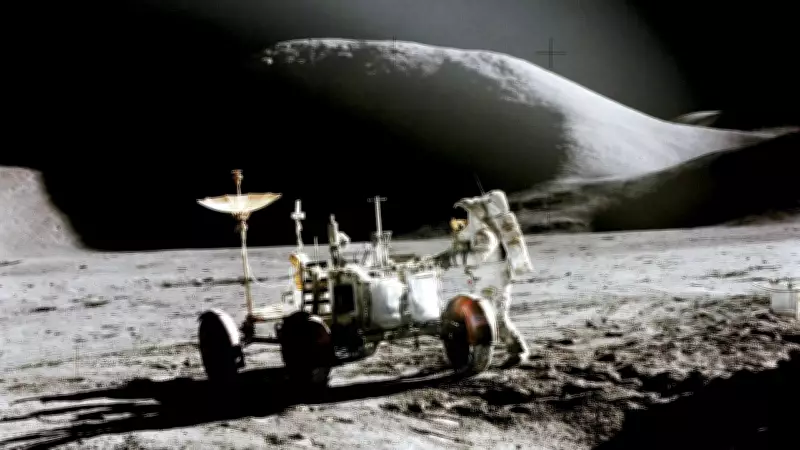
Seismic experiments conducted during the Apollo missions between 1969 and 1977 provided the first direct recordings of lunar seismic activity. Devices placed at various landing sites revealed that the Moon experiences several types of tremors, despite lacking tectonic plates. These seismic events are driven by multiple factors, including Earth's gravitational pull, thermal expansion and contraction due to temperature changes, and impacts from space debris. While this early data was invaluable, the sparse placement of instruments meant that a global picture of lunar seismic activity remained elusive.
Innovative Approach: Fibre-Optic Sensing with Distributed Acoustic Technology
Recent work associated with Los Alamos National Laboratory is exploring the potential of fibre-optic cables to overcome these limitations. This method relies on distributed acoustic sensing, where laser pulses travel through a cable and reflect in response to minute disturbances. Each vibration along the cable slightly alters the returning signal, enabling movement detection along its entire length rather than at isolated points.

This transforms a single cable into a long chain of virtual sensors, eliminating the need for multiple individual instruments across the lunar surface. By deploying an extended cable, seismic activity can be captured over large distances, reducing system complexity while significantly expanding the range of data collected. This approach aligns with ongoing lunar exploration efforts led by NASA, aiming to contribute to safer and more informed mission planning.
Technical Feasibility: Fibre-Optic Cables Under Lunar Conditions
On Earth, fibre-optic cables are typically buried to minimize interference from external sources. However, the Moon's lack of atmosphere and weather-related disturbances presents a unique opportunity: these cables can be placed directly on the lunar surface without such concerns. Tests using simulated lunar environments, such as crushed basalt, have been conducted to assess cable performance in detecting vibrations.
Research findings published in scientific journals like Icarus and Earth and Space Science indicate that fibre-optic cables are capable of effectively detecting seismic activity on the Moon. This opens up a promising avenue for enhancing our understanding of lunar geology and internal dynamics.
Challenges and Considerations in System Design
Designing such systems involves a careful balance between sensitivity and mass. Thicker fibre-optic cables can provide clearer and more powerful signals, but they also increase weight, which is a critical factor in space exploration missions. Launch costs are closely controlled, making it essential to optimize cable design to ensure both effectiveness and efficiency. As technology advances, these constraints are being addressed to make fibre-optic sensing a viable option for future lunar missions.
In summary, the adaptation of fibre-optic technology for moonquake detection represents a significant leap forward in lunar science. By offering a broader and more continuous method of monitoring seismic activity, it promises to fill the gaps left by earlier instruments and pave the way for deeper insights into the Moon's interior, ultimately supporting safer and more successful exploration endeavors.