

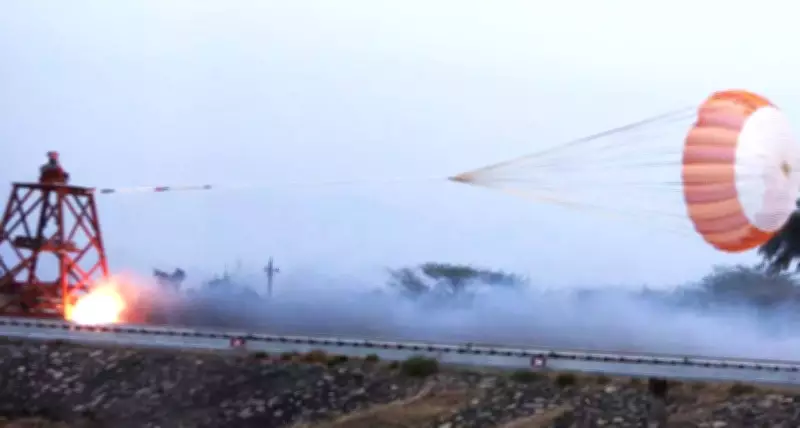
India's Gaganyaan Programme Achieves Critical Milestone with Drogue Parachute Test
India's ambitious human spaceflight initiative, the Gaganyaan programme, has received a significant boost following the successful completion of a qualification-level load test for its drogue parachute. This pivotal test was conducted at the Defence Research and Development Organisation's (DRDO) Rail Track Rocket Sledge (RTRS) facility located in Chandigarh.
Specialized Testing Facility and Collaborative Effort
The RTRS is a highly specialized dynamic test facility extensively utilized for high-speed aerodynamic and ballistic evaluations. On February 18, DRDO, in collaboration with teams from the Vikram Sarabhai Space Centre (VSSC), the Indian Space Research Organisation (ISRO), the Aerial Delivery Research and Development Establishment (ADRDE), and the Terminal Ballistics Research Laboratory (TBRL), executed this critical test.
Demonstrating Enhanced Safety and Design Expertise
The dynamic test simulated qualification-level loads that exceed the maximum flight loads anticipated during the actual mission. This rigorous testing demonstrates an additional design safety margin for the parachute system, ensuring reliability under extreme conditions. An official release highlighted that the test underscores India's growing expertise in the design and manufacturing of high-strength ribbon parachutes, a crucial component for safe spacecraft recovery.

Leadership Commendations and National Vision
Defence Minister Rajnath Singh and DRDO Chairman Samir V. Kamat extended their congratulations to DRDO, ISRO, and the involved industry partners for the successful qualification test. They emphasized that this achievement represents another significant stride in advancing the vision of an Atmanirbhar Bharat (self-reliant India), reinforcing the nation's capabilities in cutting-edge aerospace technology and indigenous development for its maiden human spaceflight endeavour.






