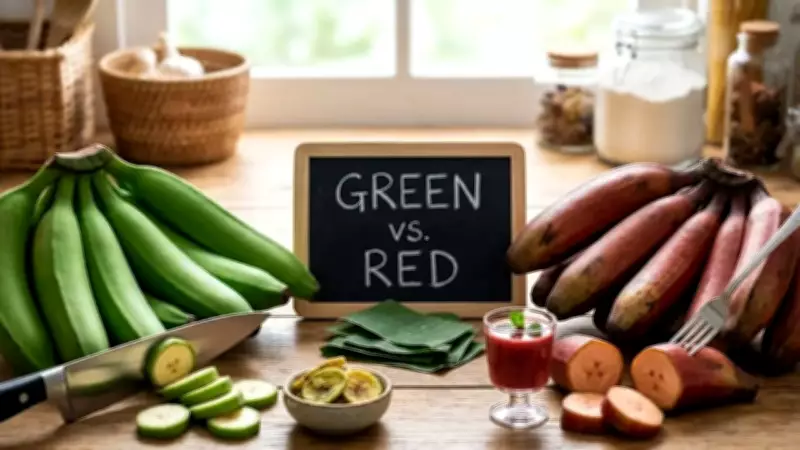
Most people think of bananas as a common kitchen staple, usually sticking with the yellow variety found in local supermarkets. However, there is an entire world of bananas that are not only different from the yellow banana but also offer incredible variety in cooking methods. By using unripe green bananas, with their firm and starchy texture, as well as red bananas, which have a creamy sweetness and berry-like notes, you can create entirely new culinary experiences. These different types of bananas can be used in savory dishes as a base or to create upscale, gourmet dessert options. The addition of these bananas brings versatility from a technical standpoint and introduces exciting new flavors to daily meals.
Green Banana: The Starch Powerhouse
In some parts of the world, green or unripe bananas are not just unripe; they are a culinary staple. According to the US Department of Agriculture (USDA) FoodData Central, green bananas are harvested when starch content is at its peak and sugar content is at its lowest. This gives green bananas a firm, waxy texture and a mild, neutral taste, making them excellent for savory cooking as they hold their shape well when boiled, steamed, or fried.
Red Banana: The Dessert Specialist
Red bananas are shorter and stockier than yellow bananas, with a deep maroon coloration, offering a completely different culinary experience. Once ripened, red bananas develop a creamy texture and a flavor profile with sweetness and notable raspberry or mango-like undertones. Therefore, red bananas are often used in the culinary world to add a gourmet touch to everything from fruit salads to baked goods.

Recipes for Green and Red Bananas
Recipe: Crispy Savory Green Banana 'Coins'
Green banana is treated like a potato in this recipe, serving as a neutral base for spices.
Ingredients: 3 green bananas, 2 tablespoons olive oil, 1 teaspoon ground cumin, 1/2 teaspoon turmeric, salt to taste.
Method:
- To peel the green bananas, cut the tips off and create several shallow slices down the length of the peel.
- Cut each green banana into 1/4-inch-thick rounds.
- Toss the rounds with the oil, cumin, turmeric, and salt until well coated.
- Place the rounds onto a baking sheet and bake at 200 degrees Celsius for approximately 20 minutes, turning halfway through, until the sides are crispy and the insides are tender.
Pro Tip: Keep your green bananas away from other fruit that emits ethylene gas, like apples or yellow bananas, until you are ready to cook them.
Recipe: Red Banana and Berry Smoothie Bowl
This recipe showcases the creaminess of red bananas, with flavors that pair wonderfully with other red fruits.
Ingredients: 2 ripe red bananas (with dark skins and slightly soft to the touch), 1/2 cup frozen raspberries, 1 cup Greek yogurt, honey for drizzling, and a handful of toasted almonds for topping.
Method:
- Peel the ripe red bananas and place them in a high-speed blender.
- Add the frozen raspberries, yogurt, and honey.
- Blend until completely smooth with no lumps.
- Spoon the mixture into a bowl and top with toasted almonds for crunch.
Pro Tip: If your red bananas are not fully ripe, allow them to sit at room temperature until they give off a pleasant aroma and yield easily when pressed lightly with your finger.
Storage Tips for Green and Red Bananas
Managing Green Bananas: To maintain their firm, savory nature, store green bananas in cool, dry places without access to sunlight. If stored next to other ripening fruits like apples or yellow bananas, limit exposure to ethylene gas to slow down the ripening process.
Ripening Red Bananas: For maximum flavor, allow red bananas to ripen until they change color, give off fragrances, and yield to gentle hand pressure.

Why Variety Matters in the Kitchen
To cook delicious meals at home, you have to be willing to try new foods. One of the easiest ways to do that is by diversifying the ingredients you use. Try cooking with starchier green bananas for big, hearty meals, and then switch to sweeter red bananas for making yummy desserts. This approach provides both technical versatility and a wider array of flavor profiles for your day-to-day cooking.