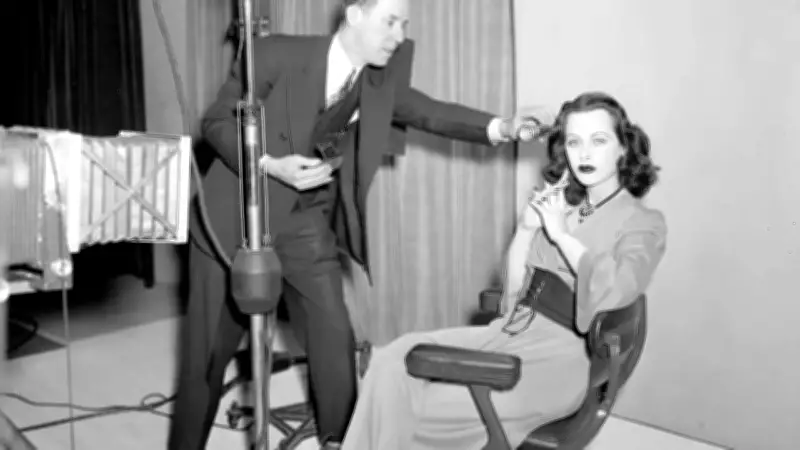
Hedy Lamarr: The Hollywood Star Who Pioneered Wireless Technology
Hedy Lamarr, born Hedwig Eva Kiesler on November 9, 1914, in Vienna, Austria, is celebrated not only for her cinematic achievements but also for her groundbreaking contributions to modern technology. While she captivated audiences with her beauty in films like Samson and Delilah and White Cargo, her intellectual prowess remained largely overshadowed by her fame as a movie star. Lamarr's innovative work eventually paved the way for wireless communication technologies such as WiFi, GPS, and Bluetooth, revolutionizing how we connect today.
Early Life and Hollywood Beginnings
Born into a wealthy Jewish family, Lamarr enjoyed a privileged upbringing. Her father, a bank director, fostered her curiosity by discussing machines and inventions during their walks, while her mother, a concert pianist, introduced her to music and the arts through early piano and ballet lessons. Lamarr's inquisitive nature was evident from a young age, as she famously took apart a music box to understand its workings.
Discovered by director Max Reinhardt at 16, Lamarr received acting training in Berlin. Her film career began with German movies, starting with Geld auf der Straße in 1930, and she rose to prominence in 1932 with the controversial film Ecstasy. Her personal life was complex; she married Austrian munitions manufacturer Fritz Mandl in 1933, a union that ended in divorce in 1937. This marriage, however, provided her with knowledge of munitions and military technology, which she later applied to her inventions.

Hollywood Success and Scientific Pursuits
After moving to London in 1937, Lamarr met Louis B. Mayer of MGM Studios, launching a successful Hollywood career that made her a renowned figure in American cinema. Despite her acting commitments, she maintained a keen interest in science, setting up a small laboratory in her trailer to continue inventing during film shoots. Her relationship with industrialist and aviation pioneer Howard Hughes further fueled her scientific curiosity, leading her to study aerodynamics and design a new wing inspired by fast fish and birds.
The Invention That Changed Wireless Communication
In 1940, Lamarr collaborated with composer George Antheil, known for his technical experiments, to develop a frequency-hopping communication system. This invention aimed to prevent the interception of radio-controlled torpedoes during World War II by using a synchronized method that made signals difficult for enemies to detect. In 1942, they were granted US Patent No. 2,292,387 for their creation.
Although the US Navy did not adopt the system at the time, it laid the foundational technology for modern wireless communications. Today, this innovation is recognized as a precursor to WiFi, GPS, and Bluetooth, demonstrating Lamarr's foresight and ingenuity.
Later Recognition and Lasting Legacy
Lamarr continued acting until 1958, but her technological contributions went largely unrecognized during her lifetime. She became a US citizen in April 1953, and as her patent expired, she focused on her personal life. In her later years, she finally received the accolades she deserved.
- In 1997, Lamarr and Antheil were awarded the Pioneer Award by the Electronic Frontier Foundation.
- She also received the Bulbie Gnass Spirit of Achievement Award, honoring her as a trailblazing woman in technology.
- After her death in 2000, she was posthumously inducted into the National Inventors Hall of Fame in 2014 for her role in developing wireless communication technology.
Hedy Lamarr's legacy is a testament to the power of combining artistic talent with scientific innovation, proving that true genius often lies beyond the spotlight.