

Hydrogen Cooking Stove Emerges as Alternative Amid Global LPG Crisis
Global tensions between the United States and Iran continue to create uncertainty in energy markets, with particular focus on the Strait of Hormuz. This critical maritime passage, controlled by Iran, serves as a vital chokepoint for approximately 20–25% of the world's oil supply. The potential closure of this strait adds significant pressure to an already volatile global energy landscape.
Cooking Gas Prices Surge Globally
Amid this geopolitical backdrop, cooking gas prices are experiencing dramatic increases worldwide. Indian households in particular are growing increasingly concerned about potential shortages of LPG cylinders and the financial burden of rising fuel costs. This combination of geopolitical instability and market pressures has created an urgent need for alternative cooking solutions that can provide reliable, affordable energy independence.
Innovative Hydrogen Cooking Technology
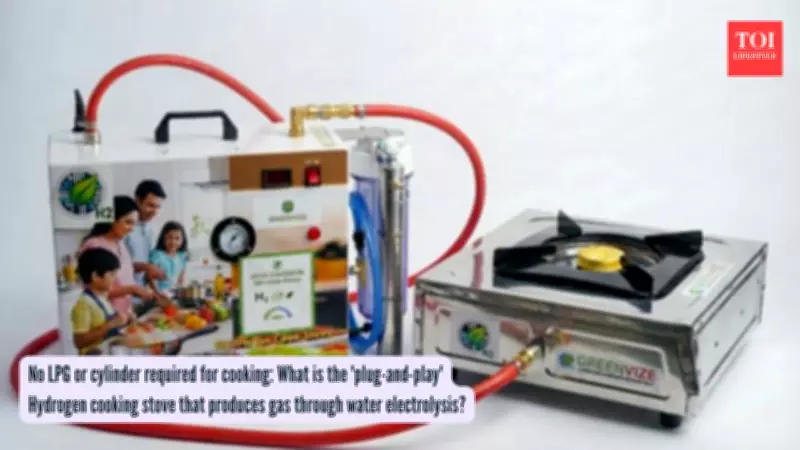
In response to these challenges, Indian clean-technology company Greenvize has introduced a revolutionary plug-and-play hydrogen cooking stove designed for both residential and commercial use. This innovative appliance represents a significant departure from traditional cooking methods by generating its own fuel directly from water.

The system incorporates a proton exchange membrane (PEM) electrolyser directly into the stove unit, enabling on-demand hydrogen production without requiring bulky storage tanks or complex pipeline infrastructure. According to detailed reports from PV Magazine, this integrated design allows users to simply turn a knob to initiate the electrolysis process, which splits water molecules into hydrogen for clean combustion and oxygen that freshens kitchen air.
Environmental and Practical Advantages
The environmental benefits of this technology are substantial. The only byproduct of the hydrogen combustion process is water vapor, making it an exceptionally eco-friendly cooking solution. Greenvize founder Sanjeev Choudhary explained to PV Magazine that the system requires just 100 ml of distilled or RO water combined with approximately 1 kWh of electricity to provide up to six hours of continuous cooking capability.
This represents a remarkable efficiency improvement compared to conventional cooking methods. While induction cooktops typically consume between 1.5-2 kW per burner (or 9-12 kWh for six hours of use), the hydrogen cooking system achieves similar results with just 1 kWh of electricity. Additionally, the hydrogen stove works with any standard cookware, eliminating the need for specialized magnetic pots required by induction systems.
Superior to LPG and Induction Cooking
The company positions its hydrogen cooking technology as a superior alternative to both LPG cylinders and electric induction systems, particularly for commercial applications such as hotels, restaurants, and community kitchens. "While both induction stoves and the Greenvize hydrogen cooking system use electricity, the efficiency, flexibility, and real-world usability are fundamentally different—especially for hotels, community kitchens, and high-demand cooking environments," Choudhary emphasized in his interview with PV Magazine.
The system's design allows for hydrogen to be generated and consumed in real-time during standard operation, completely eliminating storage requirements. However, Greenvize also offers optional configurations with hydrogen storage capabilities, including 200-300 bar cylinders or buffer tanks for high-demand commercial settings. This flexibility enables users to produce hydrogen during off-peak electricity hours or when solar generation is available, then utilize the stored fuel during periods of peak cooking demand.
Pricing and Market Positioning
The hydrogen cooking stove is available in two primary configurations. A single-burner model is priced at approximately INR 1,05,000 plus GST, while a double-burner version costs around INR 1,50,000 plus GST. While many large corporations are focusing on industrial-scale hydrogen applications, Greenvize has successfully miniaturized this technology for everyday household and commercial cooking needs.

This innovation arrives at a critical moment when traditional energy sources face both geopolitical and economic pressures. The hydrogen cooking stove represents not just an alternative cooking method, but a potential paradigm shift toward greater energy independence and environmental sustainability in kitchens worldwide.





