Groundbreaking Discovery: IISER Kolkata Scientists Uncover Plant Heat-Sensing Mechanism
In a significant breakthrough for agricultural science, researchers from the Indian Institute of Science Education and Research (IISER) Kolkata, in collaboration with Jawaharlal Nehru University (JNU) in New Delhi, have identified a crucial molecular 'switch' that enables plants to detect and respond to rising temperatures by rapidly adjusting their growth patterns. This discovery holds immense potential for developing climate-resilient crops as global warming intensifies.
The Molecular Mechanism Behind Plant Heat Response
The research team, led by Sreeramaiah N Gangappa, Associate Professor in IISER's Department of Biological Sciences, and Mukesh Jain from JNU's School of Computational and Integrative Sciences, pinpointed two specific enzymes—LRB1 and LRB2—that serve as master regulators in this thermal adaptation process. These enzymes differentially control two key proteins: Phytochrome Interacting Factor 4 (PIF4) and Elongated Hypocotyl 5 (HY5), which dictate whether plants respond positively or negatively to heat stress.
Understanding Thermomorphogenesis in Plants
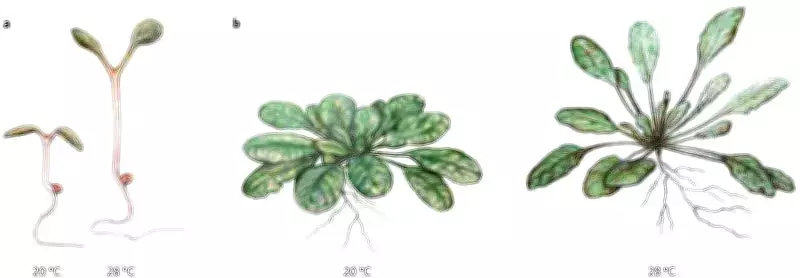
Rising global temperatures present a severe threat to agriculture, compromising plant health and diminishing crop yields. When plants encounter warmer conditions, such as a shift from 22°C to 27°C, they undergo a process called thermomorphogenesis. This adaptive response involves stem elongation driven by increased production of growth hormones like auxin and brassinosteroids. Gangappa emphasized, "Understanding the molecular switches that govern this response is critical for engineering crops capable of thriving under the pressures of climate change."

Dual Regulatory Role of LRB Enzymes
The study revealed that LRB enzymes operate through a sophisticated dual mechanism, targeting two essential transcription factors. By differentially regulating the stability of PIF4 and HY5, LRBs enable plants to prioritize elongation growth in warmer environments, effectively overriding photomorphogenic constraints. This regulatory flexibility allows plants to adapt their growth strategies dynamically in response to thermal cues.
Implications for Future Agricultural Innovation
This discovery opens new avenues for agricultural biotechnology, providing a foundational understanding that could lead to the development of crops with enhanced heat tolerance. As climate change continues to alter growing conditions worldwide, such innovations are vital for ensuring food security and sustainable agriculture. The research underscores the importance of molecular biology in addressing global environmental challenges, positioning Indian scientists at the forefront of climate-resilient crop research.