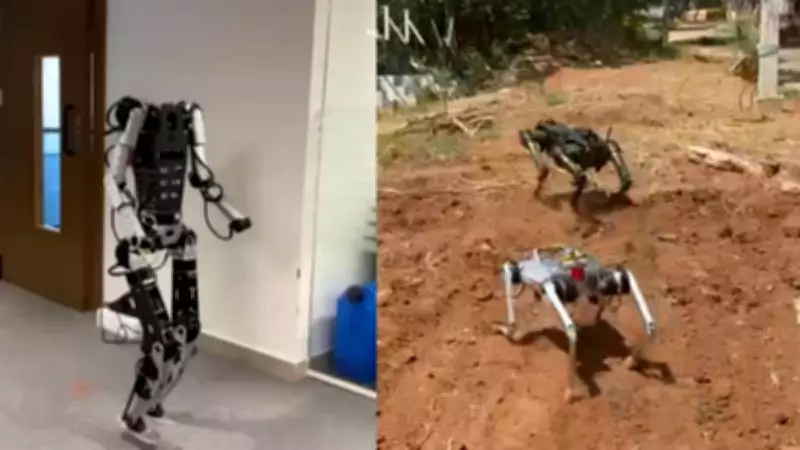
The Indian Army has successfully tested an indigenous robotic mule named 'Param' designed for high-altitude logistics support. Developed by the Defence Research and Development Organisation (DRDO), Param is an autonomous quadruped that can navigate rugged and snow-covered terrains, significantly reducing the physical burden on soldiers.
Key Features of Param
Param is equipped with advanced sensors and artificial intelligence, allowing it to follow soldiers autonomously or be remotely operated. It can carry up to 15 kilograms of payload, including ammunition, rations, and medical supplies. The robotic mule is designed to operate in extreme weather conditions, with temperatures as low as -20 degrees Celsius, and can climb slopes of up to 30 degrees.
Operational Capabilities
The recent trials were conducted in the Siachen Glacier region, one of the world's highest and most inhospitable battlefields. Param demonstrated exceptional stability and mobility on ice and rocky surfaces. Its battery-powered system ensures silent operation, reducing detectability in sensitive areas.

- Autonomous Navigation: Uses LIDAR and GPS for path planning and obstacle avoidance.
- Payload Capacity: 15 kg, with options for modular attachments.
- Endurance: Up to 4 hours of continuous operation on a single charge.
- Communication: Secure data link for real-time monitoring and control.
Significance for Indian Army
The induction of Param is a major step towards modernizing logistics in high-altitude warfare. Currently, mules and porters are used to carry supplies, but they face limitations due to fatigue, altitude sickness, and enemy threats. Param offers a reliable and cost-effective alternative, enhancing operational efficiency while minimizing human risk.
DRDO plans to further refine Param based on field feedback and aims to deploy multiple units in forward areas by 2027. The robotic mule is also being explored for search and rescue missions and disaster relief operations.
Future Developments
Future versions of Param may feature increased payload capacity, longer battery life, and integration with drone swarms for coordinated logistics. The Indian Army is also testing other robotic systems, including unmanned ground vehicles (UGVs) for surveillance and explosive disposal.
The successful trial underscores India's growing prowess in defense robotics and indigenous innovation, aligning with the 'Make in India' initiative.