

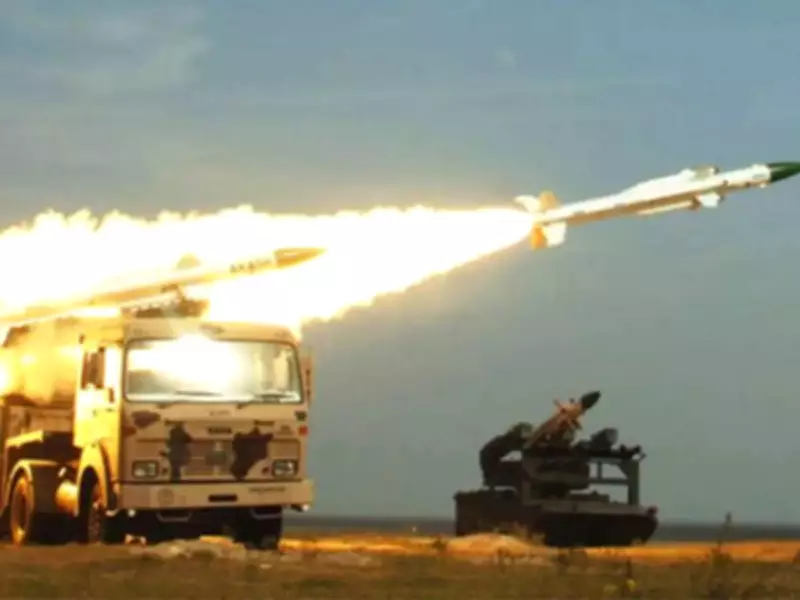
India is advancing its air defence capabilities with the development of a multi-layered shield called 'Sudarshan Chakra', aimed at countering missiles, drones, and rockets. The initiative, announced by Prime Minister Narendra Modi during his Independence Day address, reflects lessons from recent conflicts in Ukraine and West Asia where aerial threats have proven decisive.
Global Context and India's Response
The increasing use of drones, missiles, and rockets in modern warfare has elevated air defence from a supporting role to a critical component of national security. India has closely studied these trends and is now building a comprehensive air defence architecture. The Sudarshan Chakra project seeks to detect, track, and neutralise aerial threats across short, medium, and long ranges.
Armenia became the first foreign buyer of India's Akash missile system in 2022, signing a $720 million deal. This export underscores India's growing indigenous defence manufacturing capabilities.

Ballistic Missile Threats and DRDO Trials
With China and Pakistan expanding their missile arsenals, India faces an increasingly complex security environment. The Defence Research and Development Organisation (DRDO) conducted three consecutive flight tests on June 10 and 11, 2026, to demonstrate multi-layered defence against long-range ballistic missiles and anti-ship threats. The trials validated India's Ballistic Missile Defence (BMD) system, with interceptors successfully engaging designated targets. Officials stated that the tests showcased technologies designed to counter emerging aerial threats and further strengthen India's defence capabilities.
Operational Successes and Tactical Upgrades
India's operational air defence capabilities were demonstrated during Operation Sindoor, where long-range weapons struck enemy aircraft at distances exceeding 300 kilometres, and Pakistani rockets and missiles were intercepted mid-air. The Akash missile system was deployed to counter aerial threats during the operation. At the tactical level, air defence guns were used to detect and engage Pakistani drones.
As drone warfare evolves, India is developing Very Short Range Air Defence (VSHORAD) systems and upgrading existing gun platforms to improve responses to low-altitude threats. Additionally, the country is investing in directed-energy weapons, including laser-based systems, to counter drones more effectively.
Project Sudarshan Chakra: An Integrated Shield
Project Sudarshan Chakra represents a broader approach to air defence, integrating multiple layers to protect against the full spectrum of aerial threats. The initiative aims to build a deterrent capable of intercepting incoming missiles before they reach their targets, safeguarding both military infrastructure and civilian areas. India is focused on expanding its indigenous capabilities in this critical area of national security.






