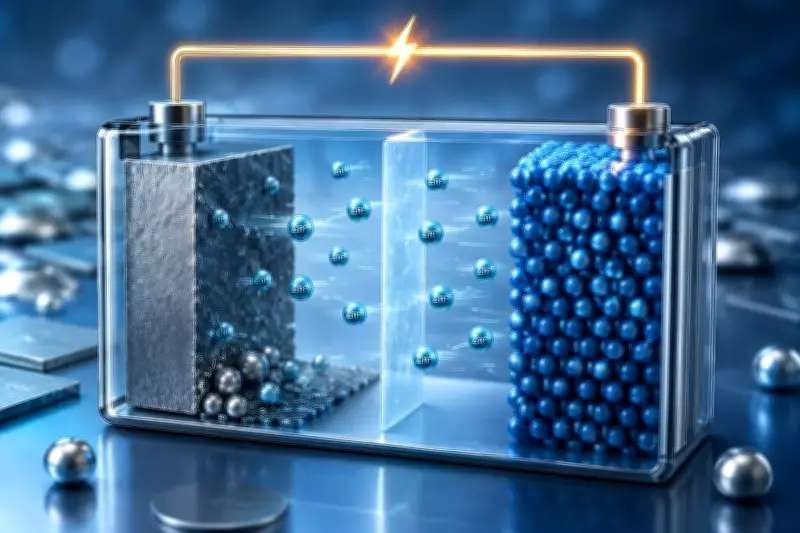
Breakthrough in Aqueous Zinc-Ion Battery Technology
Scientists from the Institute of Nano Science and Technology (INST), Mohali, have developed an electrolyte additive that enables the production of safer, longer-lasting, and more affordable rechargeable zinc batteries. This innovation addresses critical challenges that have hindered the commercialisation of aqueous zinc-ion batteries (AZIBs), which are considered low-cost, safe, and sustainable alternatives to lithium-ion batteries.
The research, led by Dr Ramendra Sundar Dey, Scientist E at INST, has been published in ACS Electrochemistry, an international peer-reviewed journal. The Ministry of Science and Technology shared details of the development on Monday, highlighting its potential for renewable energy storage, backup power systems, and grid-scale energy storage.
Overcoming Key Barriers to Commercialisation
Aqueous zinc-ion batteries face several technical obstacles, including zinc dendrite growth, hydrogen evolution reactions, corrosion, and poor cycling stability. These issues have limited their practical application despite their inherent advantages in cost and safety. The INST team tackled these problems through interface engineering rather than expensive material redesign, offering a practical and scalable strategy for extending battery life while maintaining low cost.

The electrolyte additive selectively adsorbs on zinc metal surfaces and regulates the innermost boundaries, known as the Helmholtz plane, in AZIBs. The researchers dissolved glutamic acid in sodium hydroxide and water, then added glyoxal, formaldehyde, and acetic acid. The mixture was heated at 70 degrees Celsius under nitrogen for 24 hours and extracted as a crystalline powder.
Mechanism of Action and Benefits
The additive contains multiple oxygen and nitrogen donor sites that strongly interact with zinc metal. During battery operation, it adsorbs on the negatively polarised zinc surface and occupies the Helmholtz plane. This adsorption displaces water molecules from the interface, reducing water-induced side reactions such as hydrogen evolution and corrosion. By suppressing these degradation processes, the technology enhances battery lifetime and reduces performance degradation, lowering maintenance costs and improving the reliability of sustainable energy infrastructure.
According to the Ministry of Science and Technology, improved zinc-ion batteries can be used for renewable energy storage, backup power systems, and grid-scale energy storage. The development is particularly significant for large-scale applications where safety and cost are critical factors.