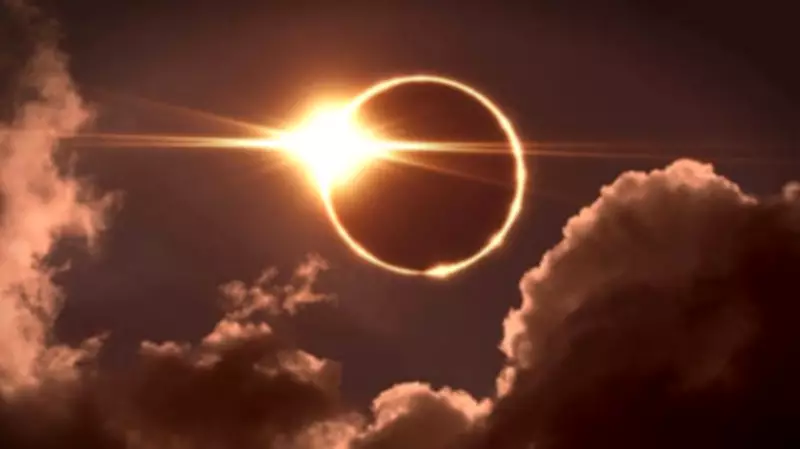
Total solar eclipses are a spectacular phenomenon visible from Earth, but are they unique to our planet? According to a recent analysis, Earth may be the only planet in the solar system where the moon appears exactly the same size as the sun, creating perfect total solar eclipses.
Why Earth's Eclipses Are Special
The key factor is the angular size of the moon relative to the sun. On Earth, the moon is about 400 times smaller than the sun but also about 400 times closer, making them appear nearly identical in the sky. This precise alignment allows the moon to completely block the sun's disk, revealing the corona.
Other planets have moons, but none match this perfect ratio. For example, Mars has two small moons, Phobos and Deimos, which are too small to fully cover the sun. Instead, they produce partial or annular eclipses.

Eclipses on Other Planets
Jupiter and Saturn have many moons, but their large sizes and distances from the sun mean that moons often appear much larger or smaller than the solar disk. For instance, Jupiter's moon Io can produce a total eclipse, but it appears much larger than the sun, blocking it for longer but creating a different visual effect.
Neptune's moon Triton could potentially create a total eclipse, but its orbit is tilted, making such events rare. Venus and Mercury have no moons, so no eclipses occur there.
Implications for Alien Life
The rarity of total solar eclipses may have implications for the search for intelligent life. Some scientists speculate that the awe-inspiring nature of total solar eclipses could influence cultural and scientific development. However, this remains speculative.
In summary, Earth's unique combination of moon size and distance makes total solar eclipses a distinctive feature of our planet, possibly unmatched elsewhere in the solar system.