ISRO Achieves Milestone with CE20 Cryogenic Engine Test at 22-Tonne Thrust
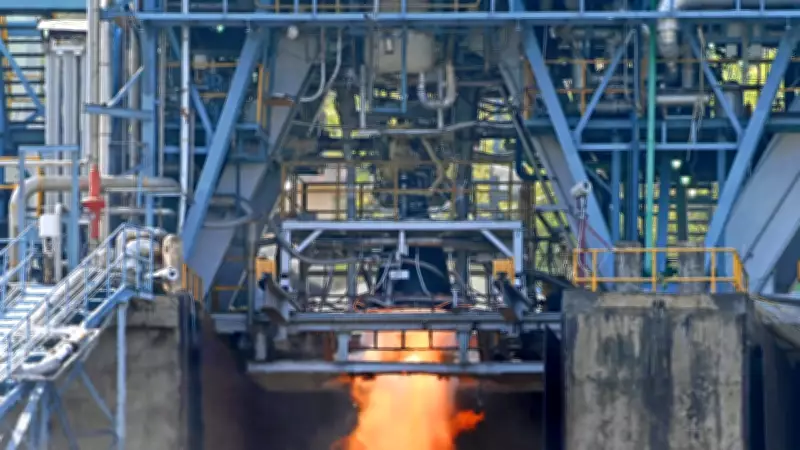
The Indian Space Research Organisation (ISRO) announced on Thursday that it has successfully conducted a sea-level hot test of its CE20 cryogenic engine at a thrust level of 22 tonnes. This critical test was performed at the ISRO Propulsion Complex on March 10, marking a significant advancement in the agency's propulsion capabilities.
Enhancing LVM-3 Launch Vehicle Performance
The CE20 engine is integral to the upper cryogenic stage of the LVM-3 launch vehicle. ISRO plans to operate future LVM-3 missions with an uprated C32 cryogenic stage that will deliver 22-tonne thrust from the CE20 engine. This upgrade is designed to substantially enhance the rocket's payload capacity, allowing for more ambitious space missions.
As a result, the flight acceptance test of the CE20 engine will also need to be conducted at this higher thrust level, ensuring reliability and performance under increased operational demands.

Overcoming Technical Challenges in Sea-Level Testing
Testing the CE20 engine at sea level presents significant technical hurdles due to its high area-ratio nozzle, which has an exit pressure of approximately 50 mbar. A primary concern during such tests is flow separation inside the nozzle, which can lead to severe vibrations and thermal stress at the separation point, potentially damaging the nozzle structure.
To address these challenges, the latest test utilized a nozzle protection system and a multi-element igniter. Earlier sea-level tests using the nozzle protection system were conducted at a thrust level of 19 tonnes, making this 22-tonne trial a crucial step forward in qualifying the engine for higher performance standards.
Record-Breaking Engine Performance and Technology Demonstrations
The cryogenic engine used in this trial has undergone an impressive record of 20 successful hot tests. These tests have enabled the demonstration of several key technologies using a single engine, including:
- Ignition using a multi-element igniter.
- Ignition margin demonstration for the Gaganyaan mission across a wide range of propellant tank pressures and pre-ignition chamber pressures.
- Engine qualification for Gaganyaan at the 20-tonne thrust level.
Additionally, the tests have qualified operation at 22-tonne thrust, the boot-strap mode start of the CE20 engine without a start-up system to enable in-flight restart, qualification of indigenous turbopump bearings and sensors, and qualification of the nozzle protection system for hot tests of a high area-ratio nozzle at sea level.
Test Duration and Future Implications
The recent test lasted for 165 seconds, with ISRO confirming that the performance of both the engine and the test facility remained as expected throughout the duration. This successful trial not only validates the engine's capabilities but also paves the way for more powerful and efficient space launches, supporting India's growing ambitions in space exploration and satellite deployment.