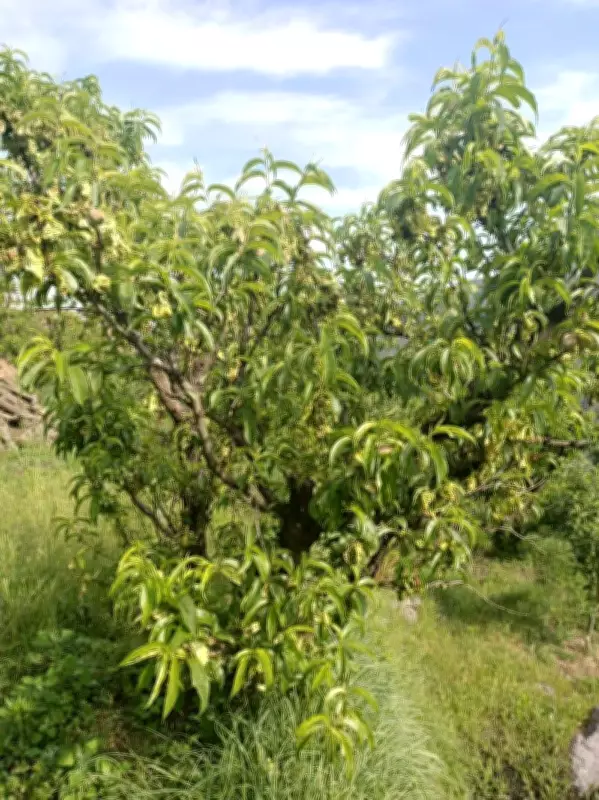
The cold, high-altitude region of Ladakh is emerging as a promising area for off-season, high-quality organic peach production, according to research by the Defence Research and Development Organisation (DRDO). Studies carried out by the Defence Institute of High Altitude Research (DIHAR) show that peaches planted at an altitude of 11,000 feet mature in mid-September, whereas traditional harvest periods in India's primary peach-producing states range from April to July.
Research Findings and Implications
DIHAR, a constituent laboratory of the DRDO based in Leh, focuses on cold-arid agro-animal technologies to supply fresh vegetables, milk, and meat to the Indian Armed Forces in extreme high-altitude regions. Its work also yields spin-offs for the local population. “The region provides optimal topography and climatic conditions for off-season peach production. The local climate is especially well-suited to growing peaches with intensely red skin,” the study states. “Promoting peach production in Ladakh could capitalise on the advantages of off-season and organic cultivation,” the study adds. This implies that fresh peaches could be available to consumers for a longer period annually, while also increasing national production and creating market opportunities for growers.
Global and National Peach Production Context
The peach ranks third among temperate fruits globally in terms of production, with the top three cultivators being China, the European Union, and the United States. India is not listed among the world’s major producers. Although India is the world’s second largest producer of fruits, peach trails in the list of varieties grown domestically. According to available literature, peach cultivation in India covers approximately 18,500 hectares, with production estimated at about 150,000 metric tonnes in 2025. Peaches are primarily grown in the hilly regions of northern India and the northeast, with Uttarakhand, Himachal Pradesh, and Jammu and Kashmir accounting for the bulk of production. Other states cultivating peaches include Sikkim, Arunachal Pradesh, Nagaland, Punjab, Haryana, and Tamil Nadu.

Altitudinal Effects on Fruit Cultivation
Cultivating fruit crops at higher altitudes offers opportunities for off-season production. Significant changes in temperature, moisture, atmospheric pressure, ultraviolet radiation, sunshine hours, wind, season length, and geology occur along altitudinal gradients, the researchers observed. Fruits grown at high altitudes tend to experience delayed flowering and ripening. For example, in the trans-Himalayan region, apricots show a delay of 3.3 days in flowering and 7.1 days in ripening for every 100-metre increase in elevation.
Current Peach Cultivation in Ladakh
The climatic conditions of Ladakh are well-suited for growing high-quality apricots and apples. Other fruit crops such as peaches, grapes, plums, mulberries, and walnuts are also cultivated in the area, the researchers said. However, production volumes are low, making these products difficult to find in the local market. The peach, known locally as ‘tra-kushu’, is a traditional minor crop in Ladakh, with a total production of only 34 tonnes. Native cultivars produce a small fruit with unattractive skin colour, hindering its popularity in the region.
Potential for Off-Season Production
“Despite these challenges, the changing agricultural landscape suggests that the Ladakh region has the potential to emerge as the ideal location for off-season peach production. From May to October, the region experiences long daylight hours with high light intensity, warm days, cool nights and low humidity, providing ideal conditions for peach cultivation,” the researchers said. This off-season window could allow Ladakh-grown peaches to reach markets when supplies from other regions are scarce, potentially commanding premium prices and boosting local incomes.