The Captivating Phenomenon of Lunar Eclipses
Every so often, the Moon presents us with a breathtaking spectacle that captures global attention. You step outside expecting to see the familiar silvery glow, only to find our celestial neighbor transformed into a dark, coppery, or even crimson orb. Social media floods with photographs, friends exchange excited messages, and suddenly everyone becomes an amateur astronomer. This dramatic celestial display is known as a lunar eclipse, and while the visual experience is stunning, the underlying science is equally marvelous in its elegant simplicity.
The Fundamental Mechanics of Lunar Eclipses
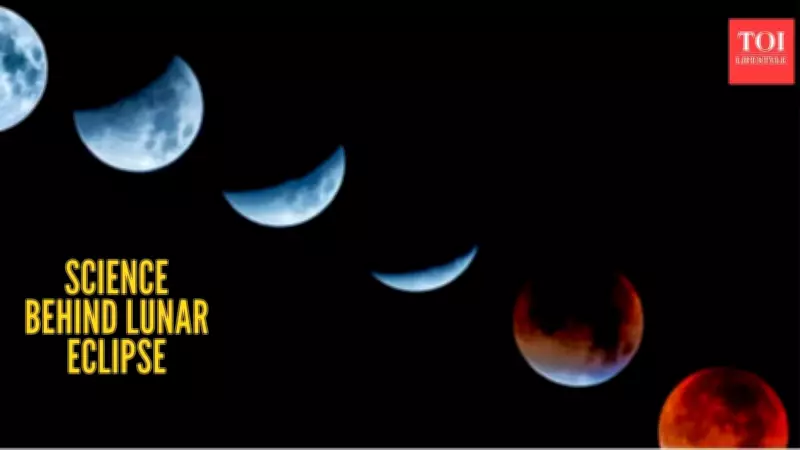
A lunar eclipse occurs when Earth positions itself precisely between the Sun and Moon, blocking sunlight from reaching the lunar surface. Normally, sunlight travels unimpeded through space, reflects off the Moon, and reaches our eyes, creating the familiar moonlit nights. During an eclipse, however, Earth intervenes, casting its substantial shadow into space. As the Moon traverses through this shadow, its bright appearance gradually fades, darkens, and often transforms into reddish hues.
In essence: A perfect Sun-Earth-Moon alignment creates a lunar eclipse. Simple geometry produces spectacular results.

Why Don't Lunar Eclipses Happen Every Month?
Many wonder why we don't experience lunar eclipses monthly since the Moon orbits Earth regularly. The answer lies in orbital alignment. The Moon's orbit around Earth is tilted approximately five degrees relative to Earth's orbit around the Sun. Consequently, during most full moons, the Moon passes either above or below Earth's shadow. Three specific conditions must align perfectly for a lunar eclipse to occur:
- It must be a full Moon phase.
- The Sun, Earth, and Moon must align almost perfectly.
- The Moon must pass through Earth's shadow plane.
This precise coincidence happens infrequently, making lunar eclipse events particularly special astronomical occurrences.
Understanding Earth's Shadow: Umbra and Penumbra
Earth's shadow isn't a single dark region but consists of two distinct parts:
- Penumbra: The outer, lighter shadow where sunlight is only partially blocked.
- Umbra: The central, darker shadow where sunlight is completely obstructed.
These shadow zones determine the different types of lunar eclipses:
Penumbral Lunar Eclipse: The Moon passes through Earth's faint outer shadow. The dimming is subtle, often unnoticed without careful observation.
Partial Lunar Eclipse: Only part of the Moon enters the dark umbra, creating the appearance of a dark "bite" taken from the lunar disk.
Total Lunar Eclipse: The entire Moon moves into Earth's umbra, resulting in the dramatic transformation to reddish colors rather than complete darkness.
The Mystery of the Red Moon Explained
You've likely heard the term "Blood Moon" associated with total lunar eclipses. While it sounds mysterious, the explanation involves straightforward physics. Although Earth blocks direct sunlight from reaching the Moon during totality, some sunlight still reaches the lunar surface indirectly. As sunlight passes through Earth's atmosphere, shorter blue wavelengths scatter in all directions (creating our blue skies), while longer red and orange wavelengths bend around our planet and illuminate the Moon.
During a total lunar eclipse, the Moon essentially reflects all the simultaneous sunrises and sunsets occurring around Earth. This filtered sunlight creates the characteristic coppery-red appearance—less supernatural than poetic, but no less magnificent.
Safety and Observation Tips
Unlike solar eclipses that require protective eyewear, lunar eclipses are completely safe to observe with the naked eye. You can gaze at the spectacle for as long as you wish without special glasses or filters. Simply step outside and look upward. While binoculars or a small telescope can enhance the experience by revealing subtle color variations and surface details, they're not necessary to enjoy this celestial event.

Duration and Viewing Experience
Lunar eclipses offer a more relaxed viewing experience than their solar counterparts. A total lunar eclipse can unfold over several hours, with the total phase (when the Moon appears red) typically lasting about an hour or longer. This gradual progression occurs because Earth's shadow is much larger than the Moon, allowing the lunar disk to move slowly through it. There's no need to rush outside at a precise moment—the celestial show develops leisurely, inviting extended observation.
Cultural and Historical Significance
Long before science explained eclipses, these events inspired awe and sometimes fear across ancient civilizations. Many early cultures interpreted lunar eclipses as ominous signs or divine messages. In Indian tradition, eclipses were associated with the mythological figures Rahu and Ketu. Other societies viewed them as portents or oracles of fate.
While modern science has replaced superstition with understanding, the emotional response remains remarkably similar. Watching the Moon darken still evokes wonder, reminding us of our connection to celestial motions occurring millions of kilometers away. It's a powerful demonstration of cosmic synchronization.
The Beauty of Celestial Alignment
Perhaps the most beautiful aspect of a lunar eclipse is what it represents: perfect alignment. Three celestial bodies—Sun, Earth, and Moon, constantly in motion—momentarily achieve ideal harmony. This isn't supernatural intervention or cosmic accident but predictable orbital mechanics following physical laws. Yet when the darkened sky reveals that crimson Moon, it feels nothing short of magical.
Science doesn't diminish wonder; it enhances it. When the next lunar eclipse occurs, you won't need complex equipment or technical expertise. Simply step outside, look up, and remember: you're witnessing Earth's shadow crossing the Moon in real time. It's a silent, beautiful reminder that even routine planetary motions can create extraordinary skyward spectacles.