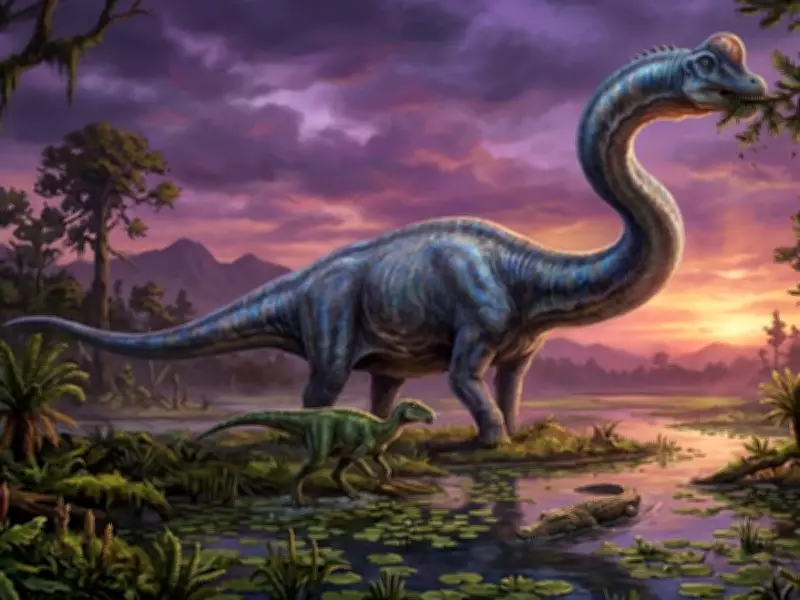
Imagine standing beneath a vast canopy of conifers 113 million years ago. The air is humid and thick with the scent of ferns. The ground suddenly vibrates with heavy, rhythmic footsteps. A creature so enormous that its back extends into the trees and its neck stretches upward like a crane. The Cretaceous Period was a reality in the region now known as Thailand. A newly discovered titan has rewritten the prehistoric history of this area.
Scientists have introduced Nagatitan chaiyaphumensis to the world, an enormous plant-eating dinosaur that holds the official title as the largest dinosaur ever discovered in Southeast Asia. This massive sauropod measured nearly 90 feet in length and weighed as much as five African elephants at adulthood, comparable to the length of a football field. While the discovery might seem like just another fossil, it provides a unique window into how these animals lived and grew.
The Titan in the Trees
Nagatitan's story began in Chaiyaphum, a province in northeastern Thailand. A local villager first discovered unusual stones, which later turned out to be ancient skeletal remnants. A team of scientists excavated the site over several years, unearthing pieces buried millions of years ago. They found parts of the pelvis and a humerus (a front leg bone standing nearly six feet tall), among other elements.

By analyzing the bones, the team estimated Nagatitan's weight between 25 and 28 tons. As a sauropod, it possessed the iconic giant silhouette: four pillar-like feet, a balancing tail, and an incredibly long neck for grazing at high altitudes.
A study in the journal Scientific Reports suggests Nagatitan was likely a "bulk browser." It did not spend much time picking at food; instead, it moved across the landscape like a giant vacuum cleaner, consuming vast amounts of soft plants such as seed ferns and conifers. These dinosaurs lacked complex teeth for chewing and relied on their large stomachs to break down fiber. This titan, the largest ever in Southeast Asia, roamed 113 million years ago, and its discovery sheds light on prehistoric ecosystems and the impact of a warmer Earth.
Survival of the Biggest
Size was paramount in the Cretaceous world. Nagatitan lived in a subtropical ecosystem of open shrublands and lush forests, which was far from peaceful. Pterosaurs patrolled the skies, rivers teemed with crocodiles, and predators lurked on land, including a fearsome relative of Carcharodontosaurus.
This meat-eater reached about 26 feet in length, but it was relatively small compared to a full-sized Nagatitan. Thitiwoot Sethapanichsakul, the lead researcher, notes that an adult Nagatitan had little to fear. Even the hungriest carnivores were kept at bay by the mere risk of being crushed.
The survival strategy was simple: grow as quickly as possible. According to the study, sauropods experienced rapid growth immediately after hatching. The faster they could grow from tiny eggs to multi-ton juveniles, the safer they became. The prize for winning this race was reaching a size where they were virtually untouchable.
The Warming of the World
Nagatitan is more than just a name added to the 14 other dinosaurs discovered in Thailand. Its discovery provides an important window into how life on Earth responds to climate change. During the period this titan walked, Earth experienced a rise in global temperature and atmospheric CO2.
Paul Upchurch, a coauthor of the research, points out a link between high temperatures in Earth's past climates and the appearance of giant dinosaurs around the world. Scientists are working to determine the exact cause, but it is believed that warm climates promoted the growth of plants that these herbivores depended upon.
Nagatitan was the last titan of its kind in the region. The Cretaceous era saw the area now comprising Southeast Asia begin to transform into a shallow ocean, ending their reign. By the time the famous asteroid struck 66 million years ago, the era of Thai Titans was already over.
The name Nagatitan pays tribute to the Naga, a serpent deity in Thai religion. It is fitting for a creature that seems more mythical than real—a living mountain that once walked the Earth. It reminds us of an era when the planet was hotter, greener, and more massive.