Global Water Scarcity: A Pressing Challenge of the 21st Century
Water scarcity stands as one of the most significant global challenges in the twenty-first century, impacting billions of people worldwide. According to estimates from the United Nations and the World Health Organization, more than 2.2 billion individuals still lack reliable access to safe drinking water in their homes. This crisis is particularly acute in dry or remote regions, where communities often depend on infrastructure like pipelines, treatment plants, or groundwater systems. When these systems are absent or inadequate, securing safe water supplies becomes a daily struggle.
Innovative Solutions: Atmospheric Water Harvesting
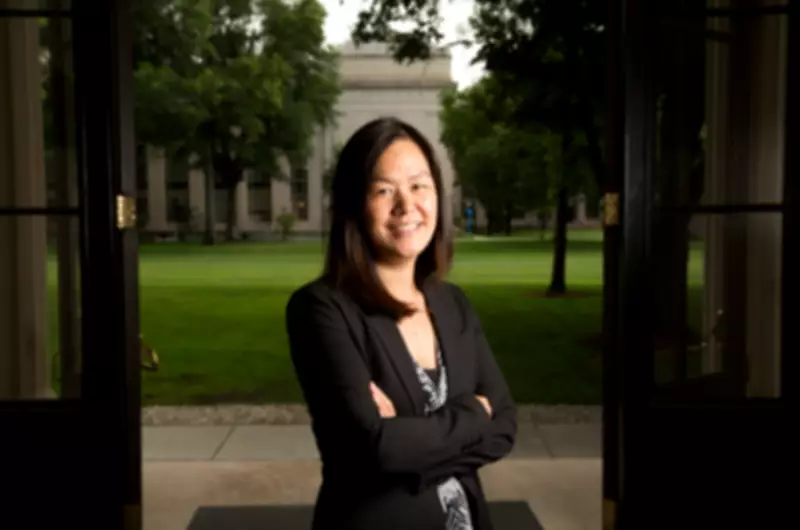
In response to this urgent need, scientists are exploring alternative methods to produce drinking water. One promising approach gaining attention is atmospheric water harvesting, a technique that collects water vapor from the air and converts it into liquid water. Leading this innovative field is Evelyn N. Wang, a mechanical engineer at the Massachusetts Institute of Technology, whose research focuses on developing technologies to extract drinking water directly from the atmosphere.
Who is Evelyn N. Wang?
Evelyn Ning Yi Wang is an American mechanical engineer and academic researcher currently serving as the Ford Professor of Mechanical Engineering at MIT. In April 2025, she was appointed Vice President for Energy and Climate at the institution. Her research spans heat transfer, energy systems, and materials engineering, with a significant emphasis on atmospheric water harvesting in recent years. This field involves capturing moisture from the air and transforming it into storable, usable liquid water.

Education and Academic Background
Wang completed her higher education in mechanical engineering at prestigious U.S. universities. She earned her Bachelor of Science in Mechanical Engineering from MIT between 1996 and 2000, followed by a Master of Science in Mechanical Engineering from Stanford University in 2001. She later obtained her Doctor of Philosophy in Mechanical Engineering from Stanford in 2006, with her doctoral research focusing on heat transfer and thermal systems, which became central to her academic work.
Career and Research Contributions
After her doctorate, Wang worked as a postdoctoral researcher at Bell Laboratories from 2006 to 2007, gaining early experience in thermal engineering and energy systems. She joined MIT as an Assistant Professor in the Department of Mechanical Engineering in 2007, progressing through roles as Associate Professor and Full Professor. From 2018 to 2022, she served as Department Head of Mechanical Engineering at MIT, overseeing research and academic initiatives. In 2023, she was appointed Director of the Advanced Research Projects Agency-Energy, a U.S. government agency supporting energy technology research, a position she held until January 2025. She now holds dual roles as Ford Professor of Mechanical Engineering and Vice President for Energy and Climate at MIT.
Turning Air into Drinking Water: Wang's Pioneering Work
Wang's research on atmospheric water harvesting has garnered significant interest. Her team studies how porous materials can absorb water vapor from the air and release it as liquid water when heated. In prototype systems, these materials capture moisture during cooler periods, and solar heat then triggers the release of water vapor, which condenses into collectible liquid water. Designed to operate without electricity, these solar-powered systems aim to provide local drinking water in areas with limited infrastructure.
Wang's work is part of a broader scientific effort to address global water shortages. While atmospheric water harvesting technologies are still under development, ongoing research aims to enhance efficiency and practicality for everyday use, offering hope for communities facing water scarcity.