

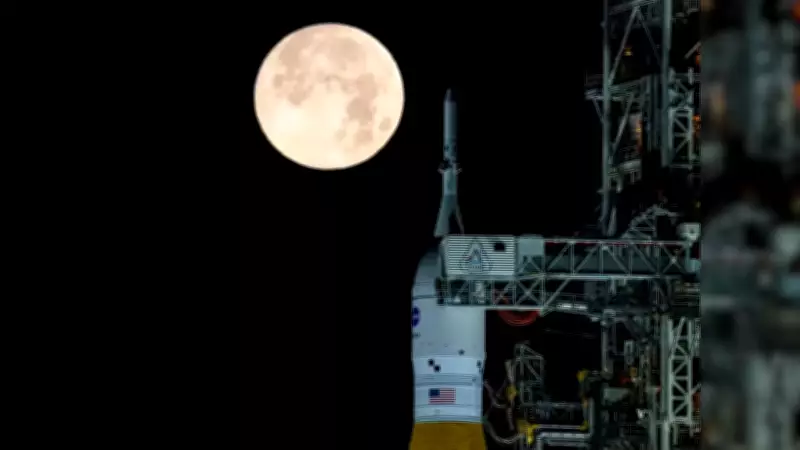
NASA Halts Artemis II Launch, Rolls Rocket Back to Assembly Building After Helium Flow Issue
NASA has announced a significant delay for its Artemis II mission, with plans to roll the Space Launch System (SLS) rocket back to the Vehicle Assembly Building (VAB) at Kennedy Space Center. This decision comes after engineers detected a critical interruption in helium flow within the rocket's Interim Cryogenic Propulsion Stage (ICPS), a fault that will almost certainly rule out the previously targeted March launch window.
Technical Fault Forces Immediate Rollback Decision
NASA Administrator Jared Isaacman revealed the postponement on social media platform X, stating, "After overnight data showed an interruption in helium flow in the SLS interim cryogenic propulsion stage, teams are troubleshooting and preparing for a likely rollback of Artemis II to the VAB at NASA Kennedy. This will almost assuredly impact the March launch window. NASA will continue to provide updates as they become available."
The issue emerged during routine operations on Tuesday evening, prompting immediate troubleshooting efforts. Engineers were unable to establish proper helium flow through the vehicle during a standard repressurization procedure, forcing NASA to place the Artemis II rocket in a safe configuration. The engines are now being purged using ground-based environmental control systems rather than the onboard helium supply.

Critical Role of ICPS Helium Systems
The ICPS helium bottles perform essential functions in NASA's lunar mission architecture:
- Purging the rocket engines to ensure proper operation
- Pressurizing the liquid hydrogen (LH2) and liquid oxygen (LOX) tanks
- Maintaining system integrity during critical flight phases
NASA confirmed that these systems functioned correctly during previous Wet Dress Rehearsals (WDR1 and WDR2), but the latest attempt revealed a failure signature disturbingly similar to one observed during the Artemis I mission.
Engineers Investigate Multiple Potential Causes
Technical teams are now examining several possible explanations for the helium flow interruption:
- A potential issue with the final filter between ground systems and the flight vehicle, located on the umbilical connection
- A malfunction in the quick-disconnect (QD) umbilical interface, which has been observed in previous missions
- A failed onboard check valve, mirroring the exact fault encountered during Artemis I
NASA had implemented corrective measures following the Artemis I mission to prevent recurrence of such issues, making this latest development particularly concerning for mission planners.
Regardless of the root cause, agency officials emphasized that access and remediation can only be carried out inside the VAB, necessitating the rollback operation. A comprehensive technical briefing outlining the recovery path for Artemis II and subsequent missions is expected later this week.
Historical Parallels with Apollo Era Setbacks
The Artemis II delay has disappointed space enthusiasts and agency personnel alike, though NASA officials noted that such setbacks are not uncommon in complex spaceflight operations. The agency drew historical parallels with the Apollo era, recalling that Neil Armstrong's Gemini 8 mission ended prematurely after less than 11 hours in space due to a technical fault—just three years before he became the first person to walk on the Moon.
NASA acknowledged that expectations are particularly high given the Artemis program's substantial cost and ambitious timeline, but emphasized that safety and technical integrity remain paramount considerations.
Artemis Program's Long-Term Objectives Remain Unchanged
Artemis II represents the first crewed mission of NASA's ambitious Artemis program, which aims to:

- Return astronauts to the lunar surface for the first time since 1972
- Establish a sustained human presence on the Moon
- Build infrastructure for a permanent lunar base
- Conduct continuous missions to and from the Moon
While initial flight rates and mission architecture may require adjustment following this setback, NASA officials reiterated that the program's long-term ambitions remain unchanged. The agency continues to work toward building lunar exploration capabilities that will eventually support missions to Mars and beyond.
NASA has committed to providing further updates as engineers complete their assessment and define the recovery timeline for the Artemis II mission. The space agency maintains that such technical challenges, while disappointing, are an inherent part of pushing the boundaries of human space exploration.





