NIT Trichy Team Pioneers Eco-Friendly Paver Blocks from Legacy Waste
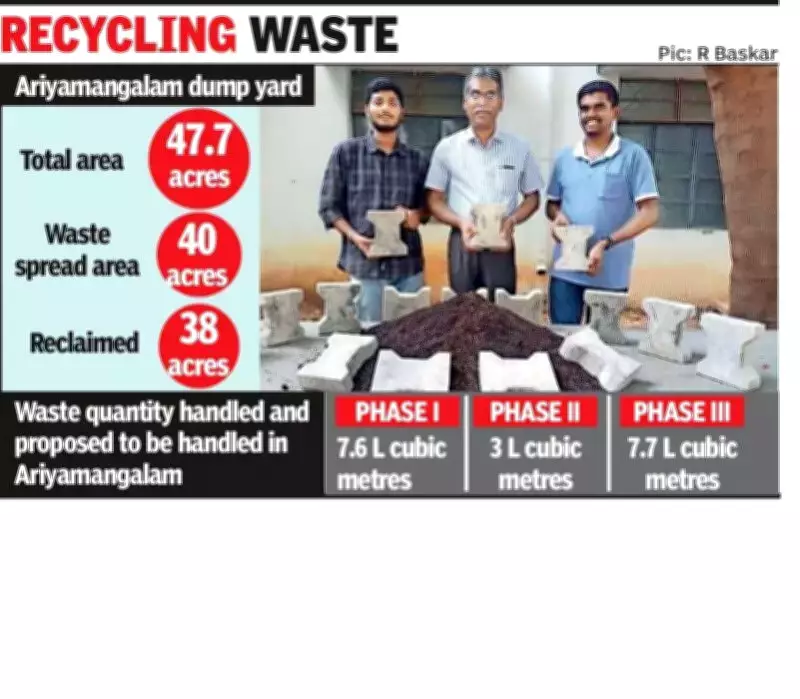
A groundbreaking innovation from the National Institute of Technology (NIT) Trichy is set to transform waste management and construction practices. A dedicated team from the institute has successfully developed eco-friendly paver blocks utilizing legacy waste extracted from the Trichy corporation's dump yard located in Ariyamangalam. This initiative marks a significant step towards sustainable urban development by repurposing municipal solid waste that has accumulated over years.
Innovative Use of Soil-Like Material
The core of this innovation lies in the use of soil-like material (SLM), which is recovered from waste through a process known as biomining. Traditionally, SLM, which constitutes approximately 53% of total legacy waste, is relegated to landfills, often in low-lying areas. However, this conventional method poses long-term risks, including soil contamination and the leaching of toxins into the ground, which can severely impact groundwater quality.
Professor S T Ramesh, who leads the team from the civil engineering department, emphasized the environmental benefits of this new approach. "Our innovation is designed to eliminate the leaching of toxins and prevent groundwater contamination," he stated. "By reusing long-accumulated municipal solid waste, we are addressing a critical issue in waste management while promoting sustainability."

Optimal Composition and Durability
The eco-friendly paver blocks incorporate around 15% to 20% of the SLM retrieved from the dump yard. According to the research team, this proportion ensures optimal strength and performance, making the blocks suitable for various applications. Durability studies have been completed, confirming the blocks' resilience and effectiveness in real-world conditions.
"We are in the process of commercializing the SLiM eco-friendly paver block," Professor Ramesh added, highlighting the team's progress towards making this innovation widely available. The project involves collaboration with key team members, including research fellow G Saravanan and M Tech scholar Devavarapu Chandu, who have been instrumental in the fabrication process.
Collaborative Efforts and Cost-Effectiveness
In partnership with the Trichy corporation and Zigma Global Environ Solutions, the company responsible for biomining at the Ariyamangalam dump site, the team has fabricated initial batches of paver blocks. These blocks are not only environmentally friendly but also economically viable. They are expected to be priced between Rs 5 to 6 apiece, which is lower than conventional paver blocks, making them an attractive option for public and private projects.
The NIT team is currently coordinating with the corporation to implement these paver blocks on a trial basis in public parks. This pilot project will assess their performance in real-world settings and pave the way for broader adoption.
Broader Implications for Waste Management
This innovation holds promise for addressing waste management challenges across Tamil Nadu and beyond. According to a 2020 report by the Tamil Nadu Pollution Control Board, the state has 143 dumpsites, highlighting the urgent need for sustainable solutions. The eco-friendly paver blocks offer a practical method for recycling and reusing material recovered from dump yards through biomining, potentially reducing the environmental footprint of waste disposal.
By turning legacy waste into valuable construction materials, the NIT Trichy team is contributing to a circular economy, where waste is minimized, and resources are efficiently reused. This project exemplifies how academic research can drive tangible environmental benefits and inspire similar initiatives globally.