Nature has long been a source of inspiration for human innovation, from the water-repelling properties of lotus leaves to the streamlined shape of kingfishers. Now, scientists are turning to polar animals to understand how they survive extreme cold, with the goal of applying these survival strategies to modern technology.
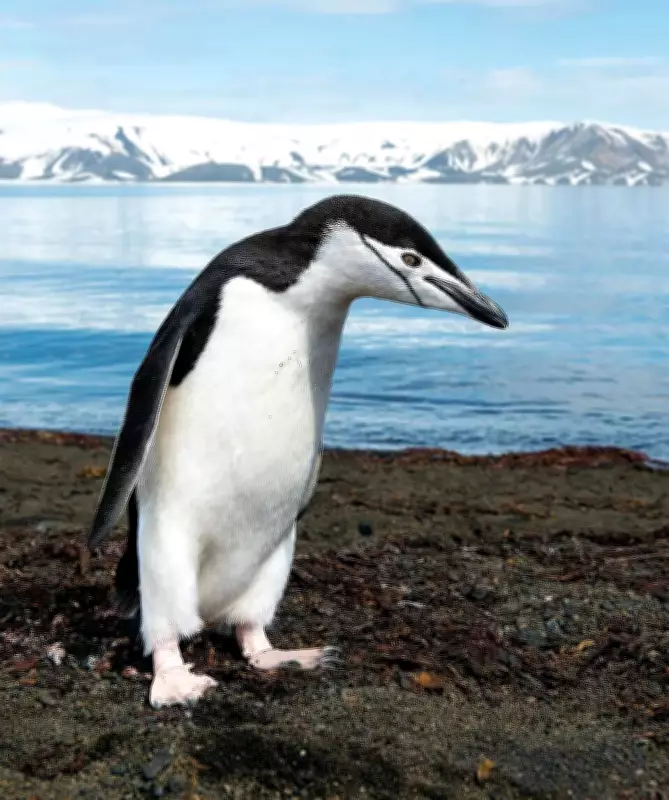
Certain marine birds thrive in frigid environments while maintaining remarkable warmth. Their feathers manage sunlight differently on each side to regulate heat. Engineers are replicating this design to create building coatings that adapt to temperature fluctuations.
These materials function as smart shields for external surfaces, changing their behavior based on environmental conditions without requiring external power. As energy demands for temperature control rise, this passive technology offers a sustainable alternative to traditional HVAC systems, potentially reducing reliance on mechanical heating and cooling and enabling more eco-friendly structures.

Penguin-Inspired Thermal Management Film
A paper published in Advanced Functional Materials, titled "Penguin-Inspired Janus Composite Film for Thermal Management Enabling Ultrahigh-Dynamic Broadband Microwave Modulation," describes a unique two-sided film that switches its thermal management properties depending on its surroundings. An international team created this film, which possesses high structural integrity and reacts differently to heat on each side.
The film incorporates a layer of vanadium dioxide. These layers trap air, much like penguin feathers insulate the birds, while repelling moisture. One side absorbs 94.5% of light for effective heat absorption. Meanwhile, the flip side stays cool by reflecting over 90% of solar heat and emitting excess warmth at an impressive 97.1% rate in the mid-infrared spectrum.
This allows the material to switch between heating and cooling modes based on its environment. In cold conditions, it warms up, while during hot days, it avoids overheating by radiating heat away. Due to its structure and chemistry, it changes how it regulates temperature, differing from conventional insulation. This 'smart shield' technology, also adept at handling microwave signals and repelling water, offers a sustainable alternative for buildings and electronics, reducing dependence on traditional energy-intensive systems.
Electromagnetic Signal Management and Environmental Resilience
Beyond temperature control, the material excels in meeting key requirements for modern communication equipment. Specifically, the vanadium dioxide component transitions from a metal to an insulator, boosting resistance by four orders of magnitude. This enables it to adjust broadband microwave signals across 8.2 to 40 GHz, making it useful for electromagnetic compatibility or microwave modulation.
The material mimics the natural lipid coatings and tiny textures found on birds, which keep them dry. This creates a highly hydrophobic surface on the film, preventing water buildup. Its texture also aids in anti-icing, de-icing, and self-cleaning, protecting the underlying infrastructure from environmental damage.
Manufacturing these coatings is scalable and suitable for a wide range of applications. By observing how biology solves problems, researchers gain insights for addressing engineering challenges. Studying polar animals is leading to the development of efficient, adaptable materials with significant potential for sustainable building and electronics.