

Rapidus CEO Atsuyoshi Koike Envisions Lunar Semiconductor Factory by 2040s
Atsuyoshi Koike, the leader of Rapidus, a Japanese government-backed technology company established in 2022, harbors an ambitious vision that extends beyond Earth. He aims to manufacture computer chips on the Moon, a goal he describes as literally out of this world. With billions of dollars in funding, Rapidus is determined to reclaim a top position in the global semiconductor industry, challenging established giants.
Lunar Manufacturing Advantages and Strategic Vision
According to a report in The Wall Street Journal, if plans proceed smoothly, Rapidus will commence mass production of cutting-edge microchips next year. However, Koike has set his sights further, predicting that lunar chip manufacturing could become a reality by the 2040s. He highlights the Moon's low gravity and natural vacuum environment as key factors that would simplify and enhance the production of highly sensitive semiconductors. I'm thinking about it very seriously. Of course, I like to show the great future, the big dream. But we have to show the actual data, the actual result. That is the key for my company, Koike emphasized regarding his lunar factory concept.
Rapidus Achieves 2nm Chip Milestone with IBM Collaboration
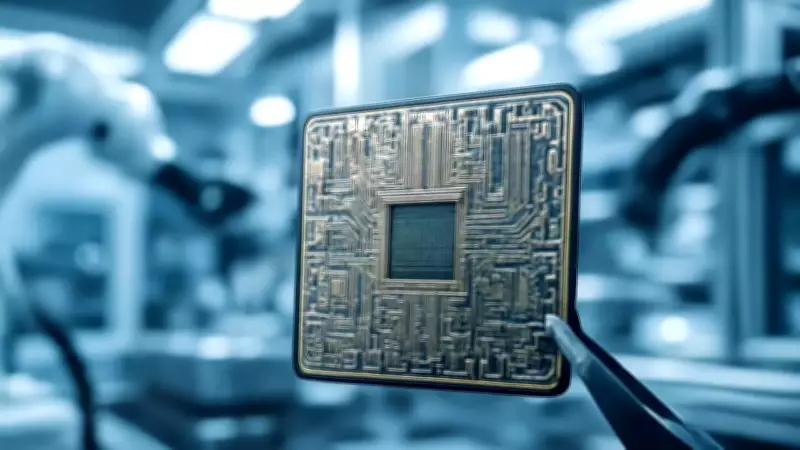
Rapidus has already marked a significant achievement by developing its first 2-nanometer prototype chip, utilizing technology co-created with American tech giant IBM. These advanced 2-nanometer chips represent the current gold standard in the tech sector, powering applications from AI data centers to smartphones and autonomous vehicles. Nonetheless, producing a prototype is merely an initial step. Currently, only industry leaders like Taiwan's TSMC and South Korea's Samsung Electronics can mass-produce such chips, indicating that Rapidus faces a substantial journey ahead. Koike believes the company's secret weapon to attract customers lies in speed.

Innovative Production Strategy and Shinkansen Fee Model
Traditional chip factories, known as fabs, process silicon wafers in large batches, moving them gradually through various stages to build chips layer by layer. In contrast, Koike states that Rapidus will adopt a different approach, processing one wafer at a time immediately. The company aims to reduce manufacturing time from the industry standard of 50 days down to just 15 days. For this express service, Koike plans to charge a premium, humorously comparing it to Japan's renowned high-speed rail system. I get a Shinkansen fee, he quipped, underscoring the value of rapid delivery.
Learning from Past Mistakes and Fostering Global Partnerships
Koike also reflected on the decline of Japanese chip makers, attributing it to excessive isolation. He labeled it a big mistake that they did not partner with U.S. firms earlier. To rectify this, Rapidus engineers are now undergoing intensive training alongside IBM experts in New York, fostering collaboration and knowledge exchange to strengthen their competitive edge in the global market.






