

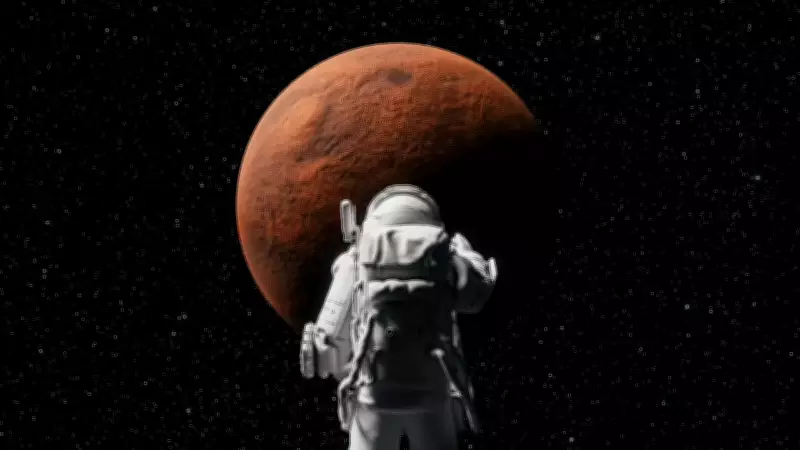
Russian Plasma Engine Could Revolutionize Mars Travel with 30-Day Journey
Long before humanity can attempt faster voyages to the Red Planet, scientists must overcome one of space exploration's most significant hurdles: propulsion technology. Conventional chemical rockets, which launch spacecraft from Earth, burn fuel rapidly and generate immense thrust for brief periods. However, these engines prove inefficient for the vast distances of interplanetary travel once in space. Consequently, current missions to Mars typically require six to nine months for transit.
Breakthrough in Propulsion Technology
In early 2026, global attention turned to Russia as reports emerged about a revolutionary propulsion system under development. Scientists at Rosatom, Russia's state nuclear corporation, are reportedly working on an advanced plasma propulsion engine that could dramatically shorten travel time to Mars. According to research projections, a spacecraft equipped with this engine might reach Mars in as little as 30 days.
It is crucial to emphasize that this 30-day estimate remains theoretical and has not been demonstrated in practice. The researchers involved confirm that the plasma engine is currently in the prototype phase, having undergone only ground-based testing. No spaceflight trials have been conducted yet. Nevertheless, the technology is based on established scientific principles and reflects growing international interest in advanced electric propulsion systems for deep-space exploration.

Understanding Plasma Engine Technology
According to NASA, plasma engines belong to a category known as electric propulsion systems. Unlike traditional rockets that burn fuel, these engines utilize electricity to transform a gas—typically xenon—into plasma. This plasma is then expelled at extremely high velocities using electric and magnetic fields, generating thrust. NASA explains that while electric propulsion systems produce substantially less force than chemical rockets, they can operate continuously for extended durations.
This steady acceleration enables spacecraft to gradually achieve very high speeds while consuming far less propellant. NASA has already validated and deployed this technology in space missions. The Dawn spacecraft employed ion propulsion, a variant of electric propulsion, to journey to the asteroids Vesta and Ceres. More recently, NASA's Psyche mission is utilizing solar electric propulsion to navigate through deep space. These missions demonstrate that while electric propulsion cannot launch rockets from Earth, it excels for prolonged space voyages.
Claims from Russian Researchers
Media reports indicate that Russian scientists claim their plasma engine design could theoretically accelerate charged particles to exceptionally high exhaust velocities. Based on computer modeling, they estimate that sustained acceleration could drastically reduce interplanetary travel times, potentially enabling a Mars transit of approximately 30 days.
However, experts caution that such performance metrics have not been independently verified. The engine has not been tested in space, and the projections rely on several assumptions, including continuous power availability and stable long-term operation.
Power Challenges for Plasma Engines
Power supply represents a major obstacle for plasma propulsion systems. Solar panels often prove inadequate for high-power electric engines, especially when operating far from the Sun. Reports suggest the Russian proposal involves using a compact nuclear power source to generate the electricity required for sustained plasma acceleration.
This concept is not exclusive to Russia. According to NASA and other international research organizations, nuclear-powered electric propulsion has long been investigated as a potential solution for deep-space missions, though no such system has yet been deployed for human space travel.

Cautious Approach to the 30-Day Mars Claim
While the prospect of reaching Mars in 30 days has captured public imagination, scientists stress that this remains a long-term objective rather than an imminent reality. Current Mars missions depend on proven chemical propulsion and orbital mechanics. Any new propulsion technology must undergo years of rigorous testing, including space-based demonstrations, before it can be considered mission-ready.
Spaceflight analysts note that even if plasma engines mature successfully, they would likely be deployed first for cargo missions or experimental probes before being considered for crewed spacecraft.
Implications for Future Space Exploration
The Russian plasma engine project underscores a broader trend in space research: the pursuit of faster, more efficient methods for traveling beyond Earth. According to NASA and the European Space Agency, reducing Mars transit time could decrease radiation exposure for astronauts and enhance mission safety.
For now, the plasma engine remains an experimental technology. The claim of a 30-day Mars journey should be interpreted as a theoretical possibility based on preliminary modeling, not as an immediate breakthrough. Nonetheless, ongoing research into electric and plasma propulsion could significantly influence the future of interplanetary exploration.





