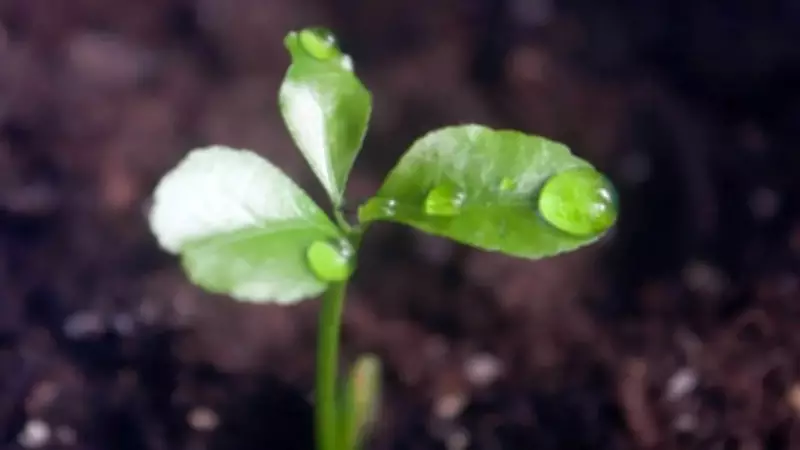
There is an old Japanese phrase: "Falling rain awakens the soil." After a recent study, that line feels far more literal. As per new research, seeds are not hearing music or voices, but they are absolutely tuned in to the rhythm of rain. It is the sound that tells them it is time to begin.
When rain falls, most people see it as the start of life for plants: water softening the soil, clearing the air, setting the stage. However, something much stranger is happening. Rain is not just watering seeds; it is actually "talking" to them. Researchers from the Massachusetts Institute of Technology (MIT) say they have found proof that some seeds can detect the actual sound of rain. No ears, no brains — just tiny structures inside the seeds that respond to vibrations. Seeds "hear" rain in their own way, and that cue is enough to kickstart their growth.
What did the study reveal?
Here is what the MIT researchers discovered: Rice seeds exposed to rain-like vibrations germinated up to 40% faster than seeds left in silence. The study, published in Scientific Reports on April 22, 2026, is being called the first direct evidence that seeds and seedlings respond to natural sounds in a way that matters for their biology. Plants have always been quiet geniuses. Scientists already know they react to light, touch, gravity, chemicals, and even threats from insects. But sound remained mostly hidden until now. The old rhythm of rain might be one of nature's oldest alarm clocks.

How the study worked
MIT Professor Nicholas Makris and Cadine Navarro wanted to know if seeds respond to the "sound" of rain, separate from the water itself. They used about 8,000 rice seeds, since rice grows both in soil and in water, so moisture was constant for all, and only the sound effect was tested. Seeds sat in shallow trays. Some were exposed to falling water droplets mimicking different types of rain (light, moderate, heavy), but placed far enough away that there was no splash, just vibrations. Another set remained wet but silent. The result: Rain-sound seeds germinated 30 to 40% more quickly than the quiet batch. So it was not just water doing the work; it was the sound itself.
How do seeds 'hear' without ears?
Here is the fascinating part: seeds do not hear the way humans or animals do. There are no ears, no brains decoding sound. Instead, they detect vibrations. When a raindrop lands, it sends sound waves and pressure through soil and water. Those vibrations reach seeds hiding under the surface. Inside each seed are statoliths, tiny gravity-sensing parts that normally help plants know which way is up or down. The researchers found that the sound from rain shakes these statoliths enough to trigger signals inside the seed, telling it to break dormancy and get growing. As Professor Makris summed up: "The energy of the rain sound is enough to accelerate a seed's growth." So the next time you hear rain tapping against the ground, imagine thousands of hidden seeds below, waking up to the world. For them, it is the sound of life itself.
Why this revelation matters
This is not just interesting; it is about survival. Seeds need to know when to sprout. Too early, and they risk drought or darkness. Too late, and they miss their chance. Listening for the sound of rain helps seeds judge if they are close enough to the surface, if there is enough moisture, and if it is time to wake up. The study found seeds nearer the surface reacted strongest, which makes sense because those seeds have the best chance at water and sunlight. Seeds are using rain sounds to decide: is now the right time?
Is this the first time plants were found to respond to sound?
Not exactly, but this is the first solid proof about seeds and natural rain. Previously, scientists observed plants reacting to caterpillar chewing by triggering bitter chemicals, or to the buzz of bees pollinating flowers like tomatoes and blueberries. Venus flytraps snap shut at a touch. Plants spread chemical warnings when attacked. However, seeds listening for environmental sound before they even sprout is a whole new layer. Life begins tuning in much earlier than most people guessed.

What is next?
The study is exciting, but there is still plenty to learn. So far, it only involves rice. Researchers want to know if wheat, barley, wild grasses, and other seeds react the same way. They are also curious if other natural sounds, like wind, flowing water, and leaf rustling, might influence seed growth. Finally, scientists are trying to figure out exactly how moving statoliths become a growth signal inside the seed. If they crack all this, it could change farming: for faster germination, better crops, and more efficient food production.