

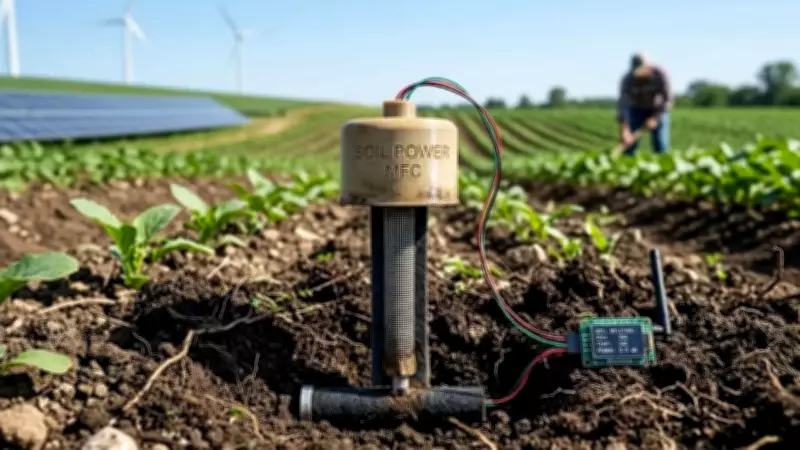
Northwestern University Pioneers Soil-Powered Microbial Fuel Cell Technology
Scientists have engineered a groundbreaking microbial fuel cell (MFC) that harnesses electricity from soil-dwelling microorganisms, delivering a reliable and continuous power source. This innovation aims to provide sustainable, long-term energy for precision agriculture and remote sensing applications, potentially replacing conventional batteries that pose environmental hazards due to their toxic components.
Revolutionary Design for Optimal Performance
The prototype features a unique perpendicular arrangement of the anode and cathode, enabling efficient operation across diverse conditions such as arid deserts and waterlogged environments. By converting energy from microbes decomposing organic matter, it supplies sustainable, low-maintenance power to Internet of Things (IoT) devices, as detailed in Northwestern University's study. Researchers anticipate this technology could generate electricity indefinitely as long as organic carbon is available, marking a significant advancement toward eco-friendly decentralized power systems that reduce reliance on complex global supply chains.
Overcoming Past Challenges with Enhanced Biofuel Cell Design
Addressing previous failures in low-moisture settings, this new biofuel cell (BFC) incorporates physical improvements in the anode (placed below ground) and cathode (positioned above soil) configuration. This design maintains adequate oxygen supply at the cathodes through air and soil moisture vapor flow while ensuring proper hydration of the anodes, allowing effective function in varying soil moisture levels, including during floods. According to research published in the Proceedings of the ACM on Interactive, Mobile, Wearable and Ubiquitous Technologies, the prototype produced 68 times more power than needed for basic sensor operations.

Empowering Communities Through Sustainable Computing
Beyond reliable performance, the BFC team focuses on mitigating environmental impacts from conventional batteries, such as lithium and heavy metals that contribute to global e-waste. Utilizing natural microorganisms for sustained power delivery to environmental monitoring sensors, these BFCs offer a biodegradable alternative. In an open-source initiative, the researchers have publicly released designs, tutorials, and simulation programs to foster continued development, aiming to provide affordable computing resources to underserved communities using locally sourced materials and avoiding vulnerabilities in global electronic supply chains.
Pathway to a Fully Biodegradable Future
Northwestern University reports that the team underwent a rigorous two-year development and testing phase, involving four design iterations and nine months of performance data analysis to finalize the prototype for reliability. The final design includes a protective 3D-printed cap that prevents debris from blocking airflow while permitting ventilation, tested outdoors to ensure durability. Building on this success, the team is now innovating toward fully biodegradable fuel cells by replacing more components with earth-friendly materials, striving for a circular energy system with zero waste for the expanding IoT landscape.






