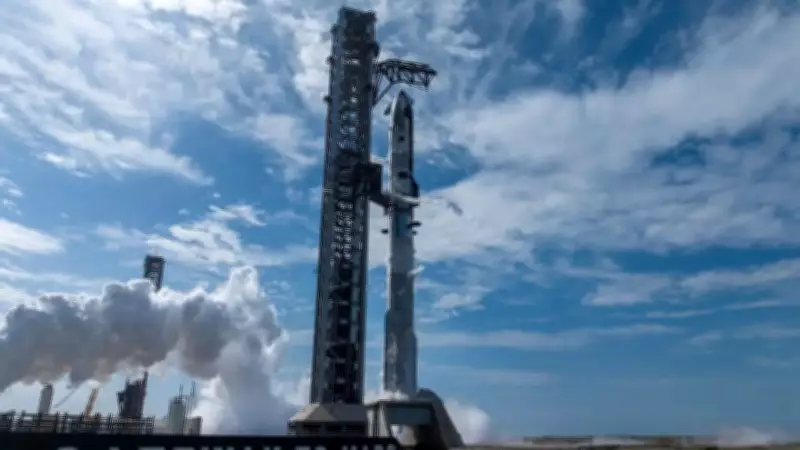
SpaceX's Starship test flight program has been building momentum for weeks, drawing intense interest from space enthusiasts globally. The company's massive Starship rocket, the largest and most powerful ever constructed, has become one of the most closely watched experimental space systems. However, the highly anticipated 12th flight test has been delayed by 24 hours, pushing the launch to Wednesday evening, according to USA Today. While the delay is relatively short, it has garnered significant attention due to the mission's importance and the debut of a new version of the rocket.
Starship Flight 12: New Launch Date and Time
The updated launch window for Starship Flight 12 is now set to open at 6:30 pm Eastern Time on Wednesday, May 20, 2026. If weather conditions are favorable, liftoff could occur shortly after the window opens, although SpaceX typically maintains flexibility until the final countdown stages. The launch will take place from SpaceX's Starbase facility in South Texas, near the US–Mexico border. This site has become the central hub for Starship development and testing over the past several years. SpaceX has not officially provided a detailed reason for the delay.
Why Flight 12 Is a Critical Milestone
This upcoming mission is expected to be one of the most significant Starship tests to date. It will feature what SpaceX describes as the Version 3 configuration of the spacecraft, marking a new phase in the rocket's evolution. The full Starship system stands over 400 feet tall when fully stacked, comprising the Super Heavy booster for initial thrust and the Starship upper stage designed for orbital flight and potential deep-space missions. The primary goals of Flight 12 include testing launch performance and evaluating how the upgraded hardware behaves under real flight conditions. SpaceX has indicated that this mission will help validate key systems necessary for future deep-space operations. According to reports and industry commentary, this version of Starship is also intended to support long-term objectives such as NASA's Artemis program, which aims to return humans to the Moon, as well as SpaceX founder Elon Musk's broader vision of eventual missions to Mars.

Starship Version 3: A Major Leap Forward
The Version 3 Starship design represents a major leap in the rocket's evolution. It incorporates structural improvements, new propulsion technologies, and other enhancements aimed at enabling more ambitious missions, including orbital refueling. If the launch proceeds as scheduled, attention will once again turn to Starbase in Texas as the countdown reaches its final stages. The event is expected to draw global interest, with live streams and real-time updates closely followed by space enthusiasts and industry watchers.
Delays are not uncommon in SpaceX's Starship program. The vehicle remains in an experimental phase, and each test flight often involves extensive pre-launch reviews. Engineers routinely examine propulsion systems, structural readiness, and flight software before granting final clearance. The updated timeline means fans and analysts will need to wait a little longer to see if this next-generation spacecraft can complete its planned objectives.