New Archaeological Evidence of the Plague of Justinian in Jerash
In the mid-sixth century, a devastating disease swept across the Byzantine world, altering the course of entire cities. This outbreak, now known as the Plague of Justinian, has long been described in historical records. However, recent archaeological findings from Jerash are making the story feel far more tangible and human. Researchers studying a mass grave in the ancient city are uncovering details that suggest how rapidly society collapsed during the crisis. The remains tell a story of urgency, movement, and sudden death. It appears that people were buried in extreme haste, with little or no ritual. Scientists say the evidence is helping them understand not just the disease, but also the lives of those caught in its path.
The Mass Burials of Jerash’s Ancient Hippodrome
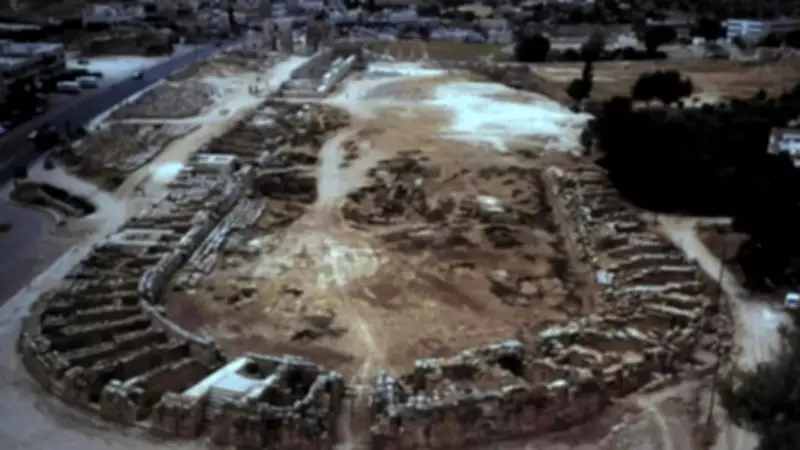
Jerash, once a lively and wealthy urban center in the Byzantine Empire, became one of the key locations affected by the plague. The city sat at an important crossroads of trade, connecting regions across the Mediterranean and beyond. When the outbreak began, the normal rhythm of daily life changed almost overnight. The ancient hippodrome, which had once hosted public events and later industrial activity, was transformed into a mass burial ground. Archaeologists say hundreds of bodies were placed there in a very short time. There was no formal burial process, no grave goods, and no signs of ceremonial practice. Experts suggest this reflects the overwhelming scale of the outbreak and the fear it generated among survivors.
What the Teeth Revealed About the Victims
Scientists performed an analysis of the teeth found at the site, which is perhaps one of the most important discoveries made by researchers. Using isotopes and DNA tests, they learned more about the people buried here, including information on diet, geographical origin, and mobility during childhood. According to the findings, most people consumed primarily wheat and barley products, which were common for this area. Oxygen isotopes present in enamel, however, show varying geographical origins: some individuals grew up drinking water from wells, others from cisterns, and still others from natural mountain streams. Moreover, DNA test results indicate a diverse population: the victims appear to have ancestry from Central Africa, Eastern Europe, and the present-day area of Turkey. This suggests that Jerash was an extremely diverse and mobile community, likely including merchants, workers, and even slaves. The pathogen found in the victims’ bones was Yersinia pestis, confirming that the same plague that affected later centuries killed this community.

How a Single Pathogen Strain Reveals the Speed of the Jerash Outbreak
Researchers say one of the most striking findings is the uniformity of the bacterial strain. All victims appear to have died from a single version of the pathogen. This indicates that the outbreak happened rapidly, with little time for the bacteria to evolve or mutate. Historical accounts from the period describe similar scenes of chaos, with people dying quickly and without clear warning signs. Although written centuries ago, these accounts now align closely with the archaeological evidence. Experts believe that the city’s strong trade connections may have played a role in how quickly the disease spread through the population.
Life, Migration, and Vulnerability in Jerash
The findings from Jerash also highlight how interconnected the ancient world truly was. The city was not isolated; it was part of a larger network of movement, commerce, and migration across the Byzantine Empire. Researchers suggest that people came to Jerash for many reasons. Some arrived for work opportunities, others for trade, and some may have been forcibly moved. When the plague struck, these mobile groups appear to have been among the most affected. The evidence shows that both locals and newcomers were buried together in the same mass grave, with no clear separation between them.

What the Mass Grave Signifies
The hippodrome site in Jerash is now considered one of the earliest known catastrophic plague burial sites in the Near East. The Plague of Justinian continued to affect the Byzantine world for centuries, but this site preserves evidence from one of its earliest and most intense waves. Archaeologists say the most powerful aspect of the discovery is not just the scale of death, but the speed at which it happened. The findings provide a unique window into a moment of crisis, revealing how a thriving urban center was brought to its knees by a single pathogen.