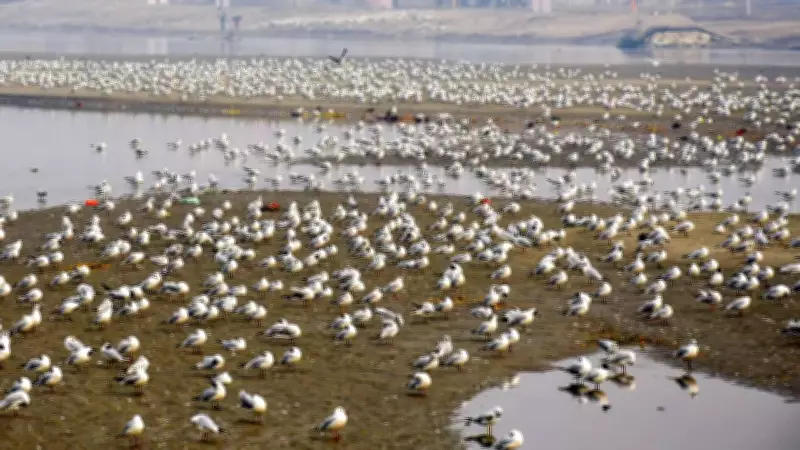
A new study has revealed that climate change is forcing seabirds into smaller habitats and requiring them to fly longer distances to survive. The research, published in the journal Nature Climate Change, analyzed how seabirds such as albatrosses, shearwaters, and petrels have historically responded to climate shifts and projected their future under global warming scenarios.
Key Findings
The study found that warmer oceans have historically caused fish and other marine species to shrink in size, and seabirds have experienced a contraction in their geographic range. Lead author Jorge Avaria-Llautureo, a postdoctoral researcher at the University of Reading in the UK, told AFP: "In both of the scenarios we saw the same answer: Every time, when the climate changed faster... the range of distribution (of seabirds) started to decrease, to contract, to be smaller."
Mechanisms of Impact
Climate change, driven by planet-heating fossil fuel emissions, is raising global temperatures and disrupting marine ecosystems as oceans warm. As climate change accelerates, the suitable habitat for these seabirds shrinks, and their mortality rate increases. Survivors will emigrate to find a "new liveable habitat that offers optimal conditions for survival and reproduction," Avaria-Llautureo explained.

The critical factor is the dispersal ability of seabirds. "The farther these suitable habitats are located in the future, the less likely it is that birds with limited flying capacity will successfully reach them, increasing their extinction risk under projected scenarios of rapid global warming," the researcher added.
Worst-Case Scenario
In a worst-case warming scenario, 70 percent of seabird species will reduce their range by 2100. Four species are most at risk of extinction: the Galapagos petrel, the Jouanin petrel, the Newell's shearwater, and the white-vented storm petrel.
The study examined more than 120 species of Procellariiformes, an order of seabirds that includes albatrosses, petrels, and shearwaters. The findings underscore the urgent need to address climate change to protect these vulnerable species and the marine ecosystems they depend on.