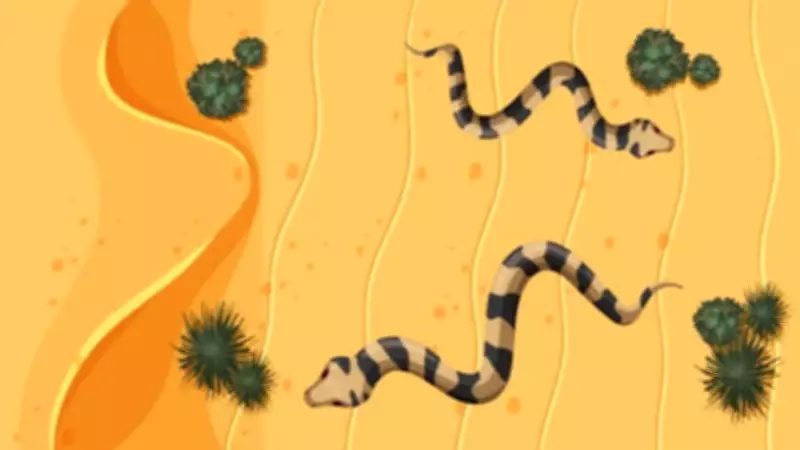
Deserts are among the most challenging environments due to extreme heat, loose sand, and scarce shade. Despite these harsh conditions, several snake species have adapted successfully using unique locomotion techniques. One of the most fascinating movements is "sidewinding," which leaves mysterious J-shaped tracks on dunes. This method allows snakes to move faster and avoid direct contact with scorching sand. Here are six facts about why desert snakes move sideways and the science behind their tracks.
Sidewinder Rattlesnake: The Snake Famous for Moving Sideways
The sidewinder rattlesnake is renowned for its sideways movement on sand dunes. Unlike other snakes, this desert species has evolved a unique locomotion suited to loose ground. Instead of typical slithering, the sidewinder throws sections of its body sideways, moving diagonally through the sand.
Sidewinding Minimizes Contact with Hot Sand
Desert sand temperatures can be extremely high, posing a danger to reptiles. By sidewinding, the snake keeps most of its body airborne, reducing contact with the burning surface. This technique helps conserve energy and allows the snake to travel farther in scorching conditions.

Loose Sand Complicates Ordinary Slithering
Unlike stable soil or rock, loose sand shifts under pressure. When a snake uses regular body loops, it may slide backward instead of moving forward. Sidewinding solves this by distributing weight differently and improving traction on sandy substrates.
Sidewinding Results in Mysterious-Looking Tracks
The tracks left by sidewinding snakes are unusual, consisting of separate loops in a J-shape. These differ significantly from the continuous trails of ordinary slithering. Wildlife experts and nature lovers find these tracks intriguing.
Sidewinding Aids Rapid Predator Evasion
Desert environments offer limited hiding places, so quick movement is essential. Sidewinding allows snakes to move rapidly across open terrain while maintaining balance. Scientists note that sidewinders can also make sharp turns without changing their movement mode.
Not All Snakes Can Sidewind
Only certain snake species have developed this ability. Most snakes are adapted to forests or grasslands and use typical slithering. Sidewinding is a specialized adaptation for life in sandy areas.
Disclaimer: This article is for general informational and wildlife awareness purposes only. Snake behavior varies by species, habitat, temperature, and conditions. While sidewinding is common in some desert snakes, not all display it. Readers should not approach or disturb wild snakes. For snake-related concerns, contact local forest departments or wildlife rescue organizations.