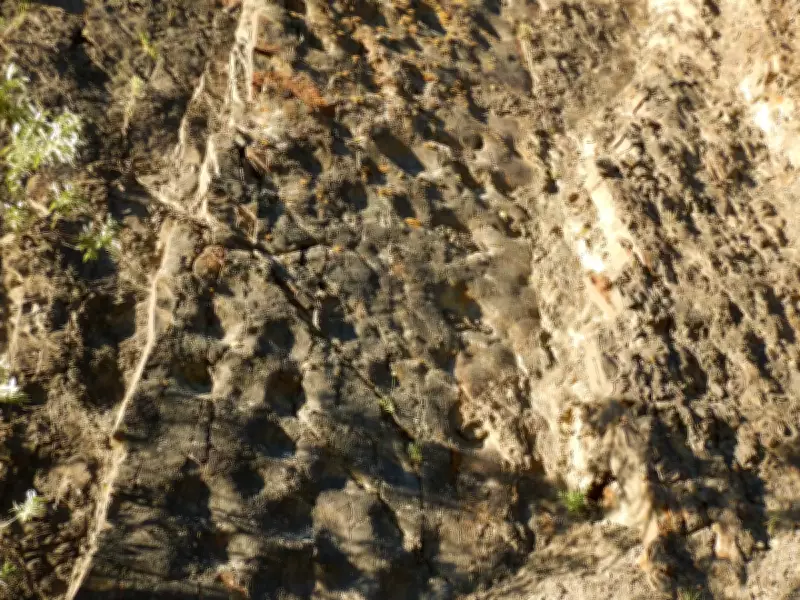
Imagine trekking through the rocky wilderness and breathtaking nature that is Denali National Park and Preserve. The cool Alaskan air envelops you while towering rocky cliffs surround you. At first sight, it appears similar to any other stunning mountain range within Interior Alaska. One could walk past it without a second thought. This is precisely what a group of scientists did, until the sun's evening rays dipped beneath the horizon and altered the way we think about ancient history.
The twilight light struck the rock's face at just the perfect angle, revealing an undiscovered world. The stone that seemed ordinary transformed into thousands of fossilized footprints, unveiling the largest known dinosaur track site in Alaska. Popularly referred to as "The Coliseum," this vast site is a playground of the past. It offers an extremely detailed glimpse into an environment that flourished about 70 million years ago during the Late Cretaceous period. Alaska was an incredibly bustling area for the largest animals ever to roam Earth.
The Secrets of Sunset on the Alaskan Cliffs
The discovery of the Coliseum reads like a scene from an adventure film. Researchers from the University of Alaska Fairbanks trekked to the location and were initially unimpressed. The huge rock walls, towering over 20 stories high, concealed their secrets effectively in midday sunlight. Pat Druckenmiller, director of the University of Alaska Museum of the North, stated that his team could only see faint tracks near the bottom of the structure at first. As the sun began to set, the changing light cast shadows that stretched across the ground. In an instant, hundreds, then thousands of footprints emerged from nothing.

The site resembles a small mall, but instead of retail shops, it is crammed with layers of prehistoric footprints. Millions of years ago, this cliff was a flat floodplain of mud. Dinosaurs of all shapes and sizes walked through the sandy sediment, leaving profound impressions. Over millions of years, tectonic eruptions linked to the growth of the Alaska Range buckled the Earth and thrust these hardened mud layers skyward. This natural shift now allows examination of a vertical timeline of life. Some tracks are etched directly into the rock, while others are natural castings formed as sediment filled the footprints and solidified over millennia. The preserved remains are so clean that distinct patterns of toes and the texture of dinosaur skin are still discernible.
Reconstructing a Lost World
The amazing results, presented in a study published in the Journal of Historical Biology, show that the Coliseum was much more than a mere pathway. By studying fossilized plants, ancient pollen grains, freshwater shellfish, and tiny insect tracks, researchers can recreate the past world. If you could travel back 70 million years, you would not find the frozen, snow-capped mountains of modern Alaska. The climate was much warmer and pleasant. The landscape resembled the lush green forests of the contemporary Pacific Northwest. Coniferous and deciduous trees swayed overhead, while dense carpets of vibrant ferns and giant horsetails covered the damp soil. This lush ecosystem provided an endless feast for hungry herbivores.
Giant Plant-Eaters Dominated the North
Who inhabited the Coliseum? Most footprints belong to huge, gentle plant-eating dinosaurs. Duck-billed dinosaurs, scientifically known as hadrosaurids, were the absolute rulers of the area, alongside magnificent horned dinosaurs. What makes this site unique for paleontologists is its huge variety of sizes. The tracks include both fully grown adults and small juveniles, suggesting that many generations of dinosaur families used this muddy floodplain as a migration route and refuge for thousands of years. To understand how these creatures thrived in northern environments, scientists often study global data. For instance, a well-known study of hadrosaurid populations published in Paleobiology emphasizes how studying the abundance and diversity of dinosaur fossils helps researchers understand the evolution and life patterns of these giant duck-billed beasts.

Naturally, wherever plant-eaters thrive, predators are not far behind. Researchers also discovered distinctive, sharp footprints of carnivores, including fast raptors and massive tyrannosaurs. The mud was strewn with these giant footprints, as well as the small, delicate tracks of ancient birds and reptiles, proving that the sky was as active as the ground. The study of how footprints persist over time is a field in itself. Researchers tracking ancient tracks often rely on advanced mapping methods, similar to those used to digitally preserve fragile fossils in studies published in Geosciences, which analyze how technology aids in documenting and protecting these delicate traces.
This amazing slice of prehistoric existence is protected by the National Park Service. Scientists continue to strip away layers of time, uncovering Alaska's secrets. The Coliseum will reveal more details about the incredible species that once called Alaska home.